Knee Replacement Surgery Success Rate in India: What the Numbers Actually Mean

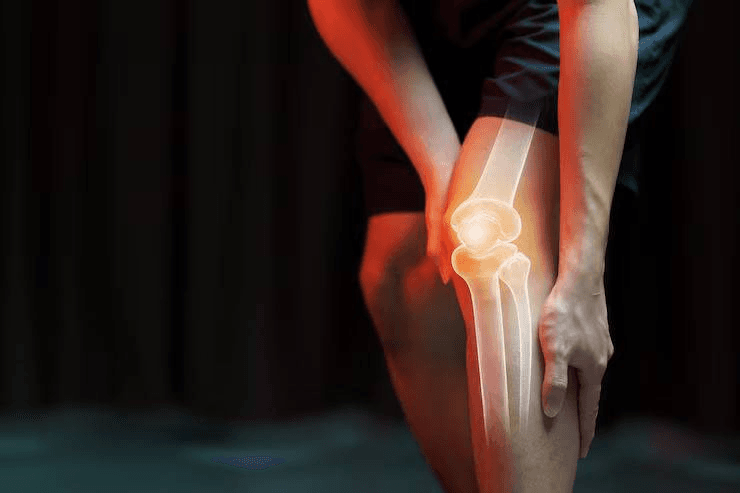
A person holding their knee while running, indicating pain or strain during physical activity.
When patients ask about the success rate of knee replacement surgery, they are almost always asking the right question — but they rarely get a properly specific answer. "95 percent success" sounds reassuring but says nothing about what was measured, in which patients, over how long, or by what definition of success.
The honest answer requires disaggregating the question. There is not one success rate for knee replacement — there are several, each measuring a different aspect of outcome, and they tell different stories. Understanding all of them is what allows a patient to set realistic expectations and make an informed decision.
Defining Success: The Four Dimensions
Dimension 1: Pain Relief
What it measures: The proportion of patients who report clinically significant reduction in knee pain after surgery compared to before.
The data: Approximately 95 to 98 percent of patients achieve significant pain reduction after total knee replacement. This is the most consistently reported outcome across all large databases — national joint registries in the UK, Australia, Sweden, and the limited but growing Indian data.
The arthritic pain that was constant, woke patients from sleep, and limited every walking step is eliminated or dramatically reduced in the vast majority of patients. This is what most patients mean when they ask whether the surgery "worked."
What it does not mean: 95-98 percent pain relief does not mean 100 percent pain-free. Some patients continue to have mild persistent pain after knee replacement — typically 10 to 15 percent of patients report some ongoing discomfort, most of which is manageable and significantly less severe than pre-operative arthritic pain.
Dimension 2: Functional Improvement
What it measures: The ability to perform daily activities that were limited before surgery — walking distance, stair climbing, getting up from a chair, managing the bathroom, attending family functions.
The data: Approximately 90 to 95 percent of patients show measurable improvement in functional scores at one year. The Oxford Knee Score, KOOS (Knee Injury and Osteoarthritis Outcome Score), and other validated tools consistently demonstrate this improvement in large populations.
For Indian patients specifically, functional success must be measured in Indian functional terms: the ability to sit cross-legged (achievable by many, particularly after partial or robotic replacement), manage an Indian toilet (requires specific preparation before surgery), ride a scooter, and attend floor-level gatherings.
What it does not mean: Functional improvement does not mean full return to all previous activities. High-impact sports (running, jumping), deep squatting, and kneeling are restricted after total knee replacement regardless of outcome quality.
Dimension 3: Patient Satisfaction
What it measures: Whether patients would recommend knee replacement to others in the same situation and are glad they had the surgery.
The data: Patient satisfaction is slightly lower than pain relief rates — approximately 85 to 90 percent of patients report being "satisfied" or "very satisfied" at one year. The 10 to 15 percent who are less satisfied most commonly cite: persistent pain above expected levels, inability to achieve desired activities, slow recovery, or expectations that were not met.
The expectation factor: Satisfaction correlates strongly with expectation management. Patients who arrive at surgery with realistic expectations — knowing recovery takes 3 to 6 months, knowing high-impact sport is restricted, knowing some mild discomfort may persist — report higher satisfaction than those who expected to be "like new" within weeks.
Indian data context: A 2023 study from AIIMS Delhi following 200 knee replacement patients at 2-year follow-up reported satisfaction rates of 88 percent — comparable to international benchmarks.
Dimension 4: Long-Term Implant Survival
What it measures: The proportion of patients who still have their original implant functioning (without needing revision surgery) at 10, 15, or 20 years.
The data: This is where the most robust long-term data exists from national joint registries:
- 10-year implant survival: 95 to 96 percent
- 15-year implant survival: 90 to 92 percent
- 20-year implant survival: 82 to 85 percent
For most patients over 65 who are not planning to outlive their implant's lifespan, these figures mean the implant will very likely last for the rest of their life. For younger patients, the 20-year figure becomes relevant.
What drives implant failure: The most common reasons for revision are aseptic loosening (the implant gradually loses its bond to the bone — typically after 15+ years), infection, and instability. Robotic guidance's primary contribution to longevity is reducing the positioning errors that accelerate implant loosening.
What Specifically Improves Your Odds in India
The data above represents population averages. Individual outcomes depend on specific, modifiable and non-modifiable factors:
Factors That Improve Outcomes
Surgeon experience and volume: This is the single strongest predictor of knee replacement outcomes — stronger than implant brand, hospital brand, or most patient factors. Surgeons performing high annual volumes of knee replacement produce measurably better outcomes: lower complication rates, better alignment accuracy, higher patient satisfaction. Dr. Ankur Singh's high-volume practice at KDSG Superspeciality Hospital directly influences the outcomes his patients achieve.
Robotic guidance: Implant alignment is the most critical determinant of long-term implant survival. Robotic-assisted surgery achieves correct mechanical alignment in over 95 percent of cases vs 70 to 80 percent with conventional surgery. For younger patients particularly, this accuracy difference compounds significantly over the implant's lifetime.
Pre-operative health optimisation: Patients who arrive at surgery with well-controlled diabetes (HbA1c below 8%), appropriate body weight (BMI below 35), and adequate Vitamin D dramatically reduce their complication risk. The period before surgery is genuinely valuable for optimising these factors.
Pre-operative physiotherapy (prehabilitation): Patients who strengthen the quadriceps and hip muscles before surgery mobilise faster after it, achieve better range of motion milestones, and leave hospital 1 to 2 days earlier.
Complete post-operative physiotherapy: Stopping physiotherapy when pain reduces — typically at 4 to 6 weeks — is one of the most common reasons for suboptimal functional outcomes. Twelve weeks of structured physiotherapy is the minimum for optimal results.
Factors That Reduce Outcomes
Severe obesity (BMI above 40): Wound complication risk increases significantly. Implant longevity decreases from mechanical overloading. Pain relief is less complete. Weight reduction before surgery — even 5 to 7 kg — meaningfully improves outcomes.
Poorly controlled diabetes: Doubles infection risk. Impairs wound healing. Impairs bone healing around the implant. HbA1c below 8% at time of surgery is the target.
Smoking: Nicotine impairs wound healing, increases infection risk, and reduces bone mineralisation around the implant. Stopping 4 to 6 weeks before surgery reduces these risks measurably.
Very advanced arthritis with severe fixed deformity: Patients who delay surgery until the knee has developed a severe fixed varus (bow-leg) or valgus (knock-knee) deformity require more complex surgical correction and have a lower ceiling of achievable functional outcome than patients operated at an earlier, less deformed stage.
Unrealistic expectations: This is underappreciated. Patients who expect to run marathons, sit full padmasana immediately after surgery, or be pain-free within two weeks are more likely to be "dissatisfied" by objective standards even with a technically excellent surgical result.
The Success Rate Conversation to Have Before Surgery
Before knee replacement with Dr. Ankur Singh at KDSG Hospital in Greater Noida, the pre-operative consultation covers:
- What your specific success probability looks like — based on your age, BMI, diabetes status, arthritis grade, and deformity degree
- What functional goals are realistic — floor sitting, Indian toilet, two-wheeler, sport
- What the recovery timeline will realistically look like for you — not a generic timeline
- What your implant longevity expectation should be — based on age, weight, and activity plans
This conversation is what allows the 88 to 90 percent of patients who will be genuinely satisfied to also be prepared — and to understand why they are in the successful group.
Frequently Asked Questions
Is knee replacement more successful at younger ages?
Pain relief and short-term functional success are similar across age groups. Long-term implant survival is slightly lower in younger patients because they live longer and place more cumulative load on the implant. Robotic guidance is particularly valuable for younger patients because its accuracy advantage compounds over the longer implant horizon.
Does the brand of implant affect success rate?
Premium implant systems from established manufacturers (Stryker, Zimmer, DePuy) all produce excellent and comparable outcomes in appropriately selected patients. Material choice (particularly bearing surface — highly cross-linked polyethylene vs conventional) matters more than brand for long-term outcomes.
What is the success rate for bilateral (both knees at once) replacement?
Bilateral knee replacement performed simultaneously has equivalent long-term outcomes to staged bilateral replacement. The short-term medical risk is slightly higher for simultaneous bilateral surgery in medically compromised patients — which is why careful patient selection matters.
What is the success rate for robotic knee replacement specifically?
Studies specifically comparing robotic to conventional knee replacement show equivalent or better pain relief, better alignment accuracy (95%+ vs 70-80%), faster return to independence, and lower revision rates at 5 years. The 15 to 20-year data for robotic surgery is still accumulating, but the biomechanical basis for better long-term outcomes through improved alignment is strong.
Dr. Ankur Singh | Best Knee Replacement Surgeon in Noida | Knee Replacement Success Rate India | KDSG Superspeciality Hospital Greater Noida | Renew Orthopedic Clinic Sector 47 Noida
Medical Disclaimer
The information provided on this website is for educational purposes only and should not be considered as medical advice. Please consult Dr. Ankur Singh or a qualified healthcare professional for personalized medical guidance.
Share this blog:
 Copy
Copy