Cartilage Damage In The Knee: Can It Be Repaired Without Replacement?

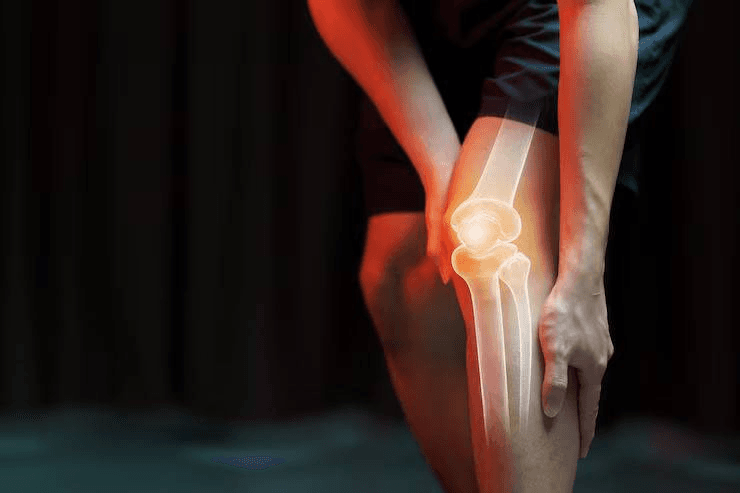
A person holding their knee while running, indicating pain or strain during physical activity.
When a patient in their 30s or 40s receives an MRI report showing "chondral damage" or "cartilage defect" in the knee, the first question is almost always the same: Does this mean I need a knee replacement?
The answer, in most cases at that age, is no. Not yet, and possibly not for many years — if the right treatment is applied at the right time.
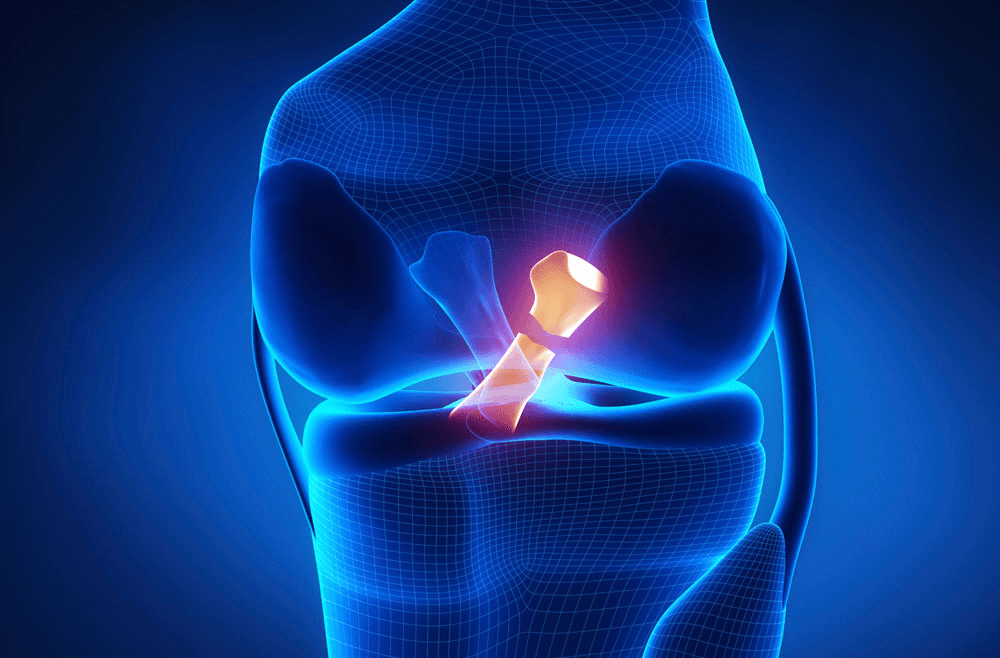
Articular cartilage — the smooth, glassy tissue that covers the bone ends inside the knee — has very limited capacity to repair itself. It has no blood supply and very few cells capable of regeneration. Once it is damaged, left alone, it does not grow back. But "limited capacity to heal" does not mean "nothing can be done." Several well-established surgical techniques stimulate cartilage repair or restore the cartilage surface, and for the right patient with the right type of damage, they can provide years of significantly improved knee function — delaying or even preventing the need for replacement.
This guide explains how knee cartilage is graded, what the repair options are, who benefits from each, and when the trajectory leads toward knee replacement instead.
How Knee Cartilage Damage Is Graded
Articular cartilage damage in the knee is graded on the International Cartilage Repair Society (ICRS) scale from 0 to 4:
Grade 0: Normal, intact cartilage.
Grade 1: Superficial softening or fissuring of the cartilage surface. Minor damage, often detected incidentally on MRI. Typically asymptomatic or minimally symptomatic.
Grade 2: Partial-thickness defect involving less than half the cartilage depth. The underlying bone is not exposed.
Grade 3: Deep cartilage defect reaching more than half the depth, or down to the subchondral bone (the hard bone layer beneath the cartilage) without penetrating it.
Grade 4 (Full-thickness defect): The cartilage is completely absent in a focal area, exposing the bone. This is the stage most amenable to cartilage repair procedures.
The important distinction: this grading describes focal defects — discrete areas of cartilage loss within an otherwise intact joint. This is different from diffuse osteoarthritis, where cartilage loss is widespread across multiple surfaces. Cartilage repair is designed for focal defects, not for generalised arthritis.
Who Is a Candidate for Cartilage Repair?
Cartilage repair procedures work best when:
- The patient is relatively young (typically under 50)
- The cartilage defect is focal and contained — not widespread across the joint
- The surrounding cartilage is healthy
- The knee is properly aligned (significant varus or valgus deformity may need to be corrected simultaneously)
- The ligaments are stable (a knee with an untreated ACL tear cannot protect a cartilage repair)
- The patient is committed to the post-operative rehabilitation protocol, which is non-negotiable for repair success
- Body weight is within a reasonable range (excessive load accelerates repair tissue failure)
Patients who do not meet these criteria — older patients, those with multi-compartmental cartilage loss, or those with uncorrected alignment problems — are generally better served by managing symptoms conservatively or, when appropriate, proceeding to joint replacement.
Conservative Management: The Starting Point
Before any surgical intervention is considered, conservative management should be optimised:
Physiotherapy: Strengthening the quadriceps, hamstrings, and hip muscles reduces the load transmitted through the damaged cartilage surface. This is genuinely effective for managing symptoms from Grade 2 and even Grade 3 defects in many patients.
Activity modification: Reducing high-impact loading (running, jumping, heavy weightlifting) while maintaining low-impact fitness (swimming, cycling, walking) preserves function while protecting the damaged area.
Weight management: Every kilogram of body weight lost reduces approximately four kilograms of load across the knee. Even modest weight loss produces measurable symptom improvement.
Injections: Hyaluronic acid injections (viscosupplementation) provide a lubricant effect and modest symptom relief in early-stage chondral damage. PRP (platelet-rich plasma) injections — derived from the patient's own blood — deliver concentrated growth factors that may support cartilage health and reduce inflammation. Evidence for both continues to evolve, and results vary between patients.
Surgical Options for Cartilage Repair
1. Microfracture
The most commonly performed cartilage repair technique globally, and the one most available in India.
How it works: Using small arthroscopic instruments, the surgeon creates multiple tiny holes (microfractures) in the subchondral bone beneath the cartilage defect, spaced approximately 3 to 4 mm apart. These holes allow bone marrow stem cells and blood to reach the defect surface. A blood clot forms over the defect, and over three to four months, this clot matures into fibrocartilage — a repair tissue that is not identical to native hyaline cartilage but provides meaningful pain relief and functional improvement.
Best for: Small defects (less than 2 square centimetres) in younger patients (under 40–45). The quality of fibrocartilage produced is adequate for small defects; in larger defects, it tends to break down over time.
Recovery: Non-weight-bearing (crutches) for six weeks while the blood clot organises. Cycling begins early to maintain a range of motion. Full recovery takes four to six months.
Important limitation: Microfracture produces fibrocartilage, not true hyaline cartilage. Results deteriorate over five to eight years in a proportion of patients, particularly those with larger defects or heavier demands on the joint. It is often described as a procedure that "buys time" rather than a permanent fix.
2. OATS (Osteochondral Autograft Transfer)
How it works: A cylindrical plug of healthy bone with cartilage is harvested from a non-weight-bearing area of the knee (usually the sides of the femoral notch) and transplanted into the defect site. The plug fills the defect with living hyaline cartilage — the same material that lines the rest of the joint.
Best for: Small, well-defined defects (typically less than 3 cm²) where a limited number of plugs can restore the surface. Produces true hyaline cartilage at the repair site.
Limitation: Donor site availability is limited. Using too many plugs leaves the harvest site vulnerable to symptoms.
3. ACI / MACI (Autologous Chondrocyte Implantation)
A two-stage procedure: in the first surgery, a small cartilage biopsy is harvested arthroscopically. The cartilage cells (chondrocytes) are cultured in a laboratory for four to six weeks, multiplying into large numbers. In the second surgery (open or arthroscopic), the cultured cells are implanted into the prepared defect, where they generate new hyaline-like cartilage over the following months.
Best for: Larger defects (2–10 cm²) in younger patients where microfracture or OATS would be inadequate. Produces better-quality repair tissue than microfracture for larger areas.
Limitation: Two surgeries, higher cost, longer recovery (12 months to full activity), and availability is limited in India compared to Western centres.
4. PRP with Microfracture
An emerging adjunct — PRP is injected into the microfracture site to enhance the quality of repair tissue by delivering growth factors that support chondrocyte differentiation. Early results are encouraging, and this is increasingly offered alongside standard microfracture.
When Does Cartilage Damage Lead to Knee Replacement?
Not every young patient with cartilage damage avoids replacement, but the timeline can often be significantly extended with appropriate management.
Knee replacement becomes the appropriate answer when:
- Damage is diffuse across multiple knee compartments rather than focal
- Conservative management and cartilage repair procedures have failed to provide adequate pain relief
- The patient has reached the stage of bone-on-bone contact on weight-bearing X-ray (Grade 4 osteoarthritis)
- Age and general health make joint replacement a realistic, appropriate option
The goal of cartilage repair in younger patients is to protect the joint through the most active decades of life and enter the knee replacement age range (typically 55–65) rather than needing it at 38 or 42.
Cartilage Treatment at Dr. Ankur Singh's Practice in Noida
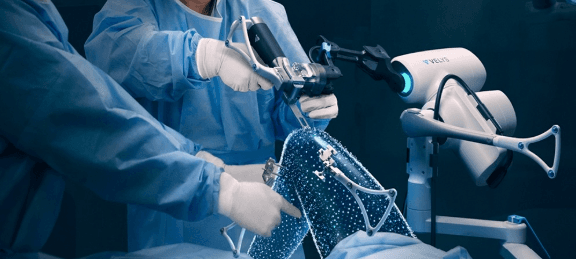
Dr. Ankur Singh performs arthroscopic cartilage procedures — including microfracture, debridement, and chondroplasty — as part of his knee arthroscopy practice at KDSG Superspeciality Hospital in Greater Noida. Conservative management with physiotherapy and PRP injection is coordinated alongside surgical options for patients who are not yet at the stage requiring surgery.
If you have been told you have cartilage damage in your knee and you are unsure what it means or what to do next, a specialist evaluation provides a clear plan.
To book a consultation with Dr. Ankur Singh for knee cartilage treatment in Noida or Greater Noida, call the number listed on this website.
Frequently Asked Questions
Can cartilage grow back after microfracture?
Microfracture stimulates the formation of fibrocartilage — a repair tissue that fills the defect and provides meaningful pain relief and function. It is not identical to native hyaline cartilage and may deteriorate over time in larger defects. For small defects in young, lighter patients, the results can be durable.
Is PRP injection effective for cartilage damage?
PRP injections can reduce inflammation and may support cartilage health in early-stage chondral damage. They are not a substitute for surgery when a focal full-thickness defect needs structural repair, but as a conservative management tool or adjunct to surgery, the evidence is increasingly supportive.
Does being overweight make cartilage damage worse?
Yes. Load across the knee joint is several times body weight during walking and much higher during running. Excess weight accelerates cartilage wear and significantly reduces the success rates of cartilage repair procedures. Weight management is a clinical priority.
Is cartilage repair surgery available in Greater Noida?
Yes. Dr. Ankur Singh performs knee arthroscopy and cartilage procedures at KDSG Superspeciality Hospital in Greater Noida.
Dr. Ankur Singh | Best Orthopedic Surgeon in Noida | Knee Cartilage Repair | Microfracture Surgery Noida | KDSG Superspeciality Hospital, Greater Noida
Medical Disclaimer
The information provided on this website is for educational purposes only and should not be considered as medical advice. Please consult Dr. Ankur Singh or a qualified healthcare professional for personalized medical guidance.
Share this blog:
 Copy
Copy


/surgeons-passing-scissors-each-other-compressed.jpg)

