Hip Replacement Alternatives in India: What to Try — and When It's Too Late to Try

Hip-preserving options work only before advanced arthritis or femoral head collapse sets in.
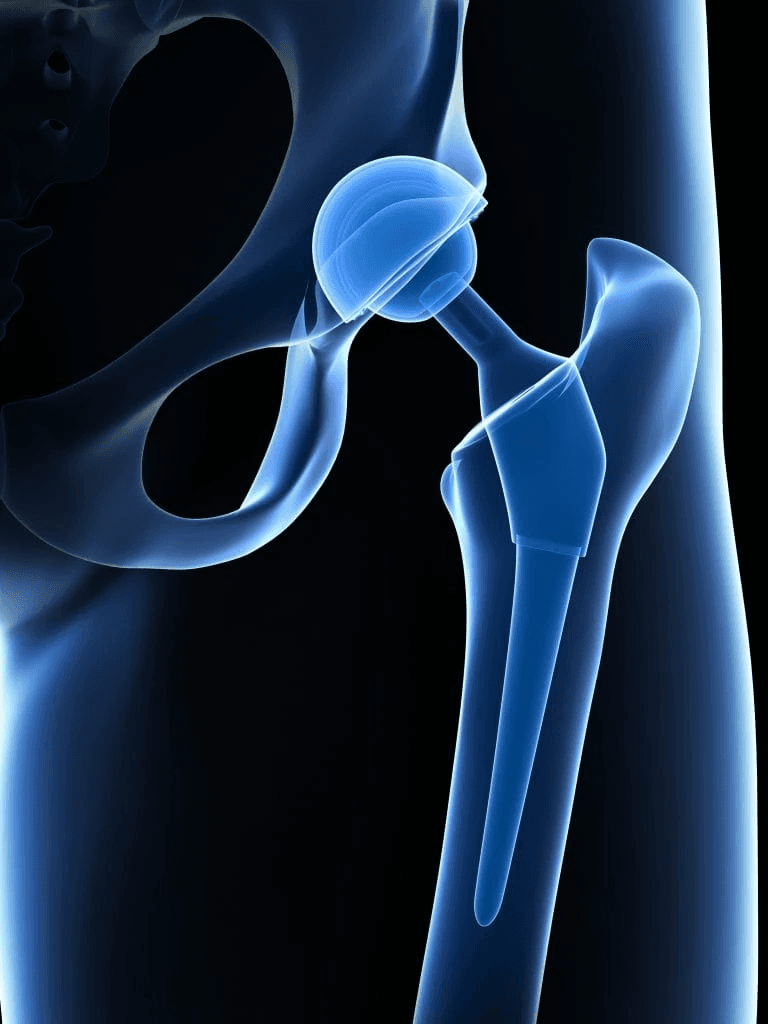
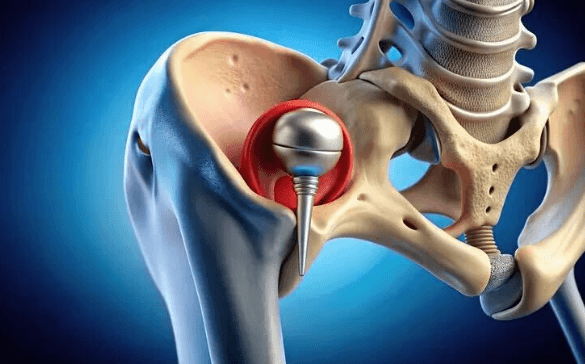
Hip replacement is one of the most transformative surgeries in medicine — but it is also a major irreversible procedure. For any patient who has been told they need it, the instinct to first explore alternatives is entirely rational. The question is not whether to look for alternatives. It is whether any effective alternatives exist for your specific hip problem, at this specific stage of its progression.
The honest answer: meaningful alternatives exist, but only for certain diagnoses and certain stages. For a patient with Stage 1 or 2 avascular necrosis, core decompression can save the native hip. For a patient with mild hip impingement in their 30s, hip arthroscopy can resolve symptoms without joint replacement. For a 65-year-old with Grade IV hip osteoarthritis and bone-on-bone contact who has failed conservative management, the alternatives have been exhausted.
This guide maps the available alternatives to the specific conditions and stages where they genuinely apply.
First: The Diagnosis Matters More Than in the Knee
The hip is not a single-diagnosis joint. The conditions that cause hip pain requiring surgical consideration include:
- Hip osteoarthritis (OA): Progressive cartilage loss, most common cause in adults over 55
- Avascular necrosis (AVN): Blood supply disruption leading to bone death; common in younger Indian adults (steroid use, alcohol, post-COVID)
- Hip dysplasia: Abnormal socket shape causing early arthritis; often presents in 30s and 40s
- Femoroacetabular impingement (FAI): Bone shape abnormality causing labral tears and early arthritis in young active adults
- Hip labral tear: Tear in the cartilage rim of the socket; often from FAI or trauma
- Inflammatory arthritis (RA, ankylosing spondylitis): Immune-mediated hip joint destruction
The alternative that is appropriate depends entirely on which of these is actually present. Generic "conservative management" applied uniformly to all hip pain is one of the most common management failures in Indian orthopedic practice.
Alternative 1: Weight Management — The Universal First Step
For hip OA, every kilogram of weight reduction reduces the load on the hip joint with every step. While the mechanical advantage is less dramatic than in the knee (hip geometry distributes load differently), maintaining a healthy BMI significantly slows radiological OA progression and reduces pain intensity.
For AVN, weight management reduces the mechanical load on an already-weakened femoral head, potentially slowing the progression from earlier stages to collapse. It is not curative but may extend the window during which hip-preserving surgery remains feasible.
Alternative 2: Physiotherapy and Exercise Modification
For hip OA, physiotherapy targeting hip abductor and gluteal strengthening reduces the dynamic load on the hip joint during walking, reduces pain, and improves functional capacity. The evidence base is solid for Grade I to II OA — significant cartilage remaining, significant symptom benefit achievable.
What works: Hip abductor strengthening (side-lying leg raises, clamshells, resistance band abduction), gluteus medius and maximus strengthening, core stabilisation. Walking in a pool (hydrotherapy) is particularly well-tolerated as water offloads the joint during exercise.
What is less effective: Generic physiotherapy that consists primarily of heat and massage without specific strengthening. Range-of-motion exercise is useful, but strengthening around the hip is the primary mechanism of symptom improvement.
For hip impingement and labral tears in young adults: Physiotherapy targeting hip rotator and core strengthening can manage symptoms in patients with mild structural abnormality. This is particularly relevant for early FAI where surgical intervention is being considered — adequately treated physiotherapy should come before hip arthroscopy in most mild to moderate cases.
Alternative 3: Anti-Inflammatory Medications
NSAIDs — diclofenac, naproxen, etoricoxib — reduce the inflammatory component of hip OA pain. For acute flares of hip OA, a course of NSAIDs provides meaningful pain reduction.
The same limitations apply as in knee OA: long-term daily NSAID use carries GI, renal, and cardiovascular risks, and does not slow disease progression. NSAIDs are appropriate for symptom management during conservative management, not as a permanent substitute for surgical decision-making when the joint has reached advanced damage.
Alternative 4: Hip Injection — Intra-Articular Corticosteroid
A guided corticosteroid injection into the hip joint (always under ultrasound or fluoroscopy guidance because the hip is deep and cannot be accurately injected by palpation alone) reduces intra-articular inflammation and provides 3 to 6 months of meaningful pain relief in the majority of patients with hip OA.
The honest scope: Hip steroid injection is a bridge tool. For patients approaching surgery who want a few more months of pain management, or for patients whose surgery needs to be deferred for a period, hip injection is appropriate. For patients with Grade III to IV OA who are surgical candidates, using repeat injections to indefinitely postpone surgery is not in their long-term interest.
Injection frequency: a maximum of three per year in the same joint is a reasonable limit.
Alternative 5: Core Decompression for AVN — The Hip-Saving Procedure
For avascular necrosis of the hip at Stage 1 to early Stage 2 (before significant femoral head collapse has occurred), core decompression is the primary hip-preserving surgical alternative to hip replacement.
One or more channels are drilled into the necrotic area of the femoral head, reducing intraosseous pressure and potentially allowing revascularisation. Combined with bone grafting (autologous bone or synthetic substitute), it provides structural support to the weakened area.
Appropriate candidates:
- Stage 1 AVN (normal X-ray, abnormal MRI)
- Early Stage 2 AVN (X-ray changes but intact femoral head)
- Lesion occupying less than 30 to 50 percent of the femoral head
- No joint space narrowing (no secondary acetabular changes)
- Patient able to reduce weight-bearing on the hip for 6 weeks post-procedure
Expected outcomes: Approximately 60 to 70 percent of Stage 1 patients and 50 to 60 percent of early Stage 2 patients achieve satisfactory long-term outcomes (avoiding hip replacement at 5 to 10 years) with core decompression.
The time window: Core decompression must be performed before significant collapse. Once the femoral head has collapsed (Stage 3 to 4), the biological foundation for revascularisation is compromised and joint replacement becomes necessary. This is why MRI screening of at-risk patients — those who received COVID steroid treatment, those on long-term oral steroids, heavy alcohol users — is clinically important before symptoms become severe.
Alternative 6: Hip Arthroscopy for Impingement and Labral Tears
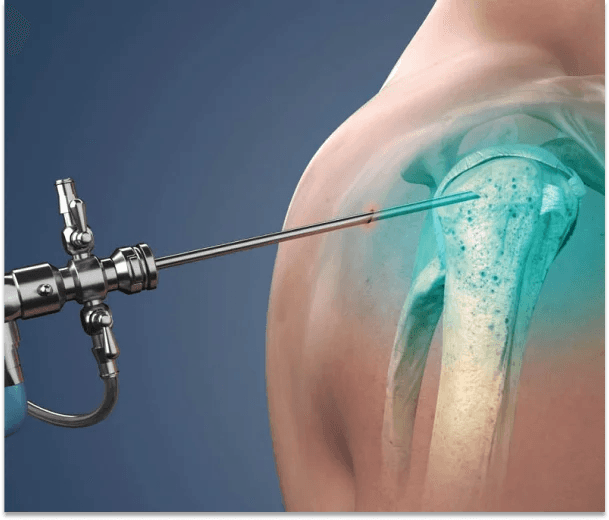
For young adults with femoroacetabular impingement (FAI) — abnormal bone geometry causing pincer or cam type impingement — and associated labral tears, hip arthroscopy is a joint-preserving surgical alternative that may prevent the development of early hip arthritis.
During hip arthroscopy, the surgeon:
- Repairs or reconstructs the torn labrum (the cartilage rim of the socket)
- Reshapes the femoral head (osteochondroplasty) to remove the cam deformity
- Trims the acetabular rim (rim trimming) to remove the pincer impingement
The evidence base for hip arthroscopy for FAI with labral tears has strengthened significantly since 2015. Success rates of 75 to 90 percent at 2 to 5 years are reported for well-selected patients. The most important caveat: arthroscopy is appropriate for patients with minimal or no chondral (cartilage) damage. When significant cartilage loss has already occurred, arthroscopy outcomes are less predictable.
Alternative 7: Periacetabular Osteotomy (PAO) for Hip Dysplasia
Hip dysplasia — where the acetabulum (socket) is insufficiently deep or incorrectly oriented, providing inadequate coverage of the femoral head — is a significant cause of hip arthritis in young adults (typically presenting in the 20s to 40s).
Periacetabular osteotomy (PAO) is a major hip-preserving surgical procedure where the acetabulum is cut free from the pelvis and repositioned to provide better coverage of the femoral head. When performed before significant cartilage damage has occurred, PAO can substantially delay or prevent hip replacement — with published outcomes showing 80 to 90 percent hip survival at 10 years.
PAO is a complex procedure, requiring significant surgical expertise and a centre with specific experience. It is appropriate for carefully selected young patients with symptomatic dysplasia and preserved cartilage.
When Alternatives Have Run Their Course
The decision that alternatives are no longer appropriate — that hip replacement is genuinely the next step — is reached when:
- Hip OA is Grade III to IV on X-ray (significant joint space narrowing or bone-on-bone contact)
- Conservative management has been genuinely tried for 6 to 12 months without adequate quality of life
- Pain is disrupting sleep consistently
- Walking distance is significantly limited
- AVN has progressed to Stage 3 to 4 with significant femoral head collapse
- Hip arthroscopy has been performed and symptoms have not adequately resolved
At this point, continuing to pursue alternatives risks allowing further deterioration — increasing deformity, worsening bone loss, muscle wasting from inactivity — that makes the eventual surgery more complex.
The consultation at Renew Orthopedic Clinic, Sector 47 Noida specifically addresses where each patient sits on this spectrum — with a clear assessment of which alternatives remain genuinely available and which are no longer appropriate for their specific situation.
To book: call the number listed on this website.
Frequently Asked Questions
My doctor said I need hip replacement "urgently." Do I? Hip replacement is almost never a true surgical urgency (unlike a hip fracture). If the recommendation is for non-emergency planned replacement, taking 4 to 8 weeks to get a second opinion and explore whether any hip-preserving alternatives remain applicable is entirely reasonable. The exception is rapidly progressive AVN approaching Stage 3 — where delay genuinely closes the window for hip-preserving surgery.
Is PRP useful for hip arthritis? PRP for hip OA has less evidence than for knee OA, primarily because the hip is deeper and harder to inject accurately. The published data for hip PRP shows modest short-term benefit in early OA but is not as robust as the knee OA data. For young adults with early hip OA, PRP is a reasonable trial option before committing to arthroscopy or replacement.
Dr. Ankur Singh | Hip Specialist Noida Greater Noida | Hip Replacement Alternatives India | Hip Preserving Surgery Sarvodaya Healthcare | Renew Orthopedic Clinic Sector 47 Noida
Medical Disclaimer
The information provided on this website is for educational purposes only and should not be considered as medical advice. Please consult Dr. Ankur Singh or a qualified healthcare professional for personalized medical guidance.
Share this blog:
 Copy