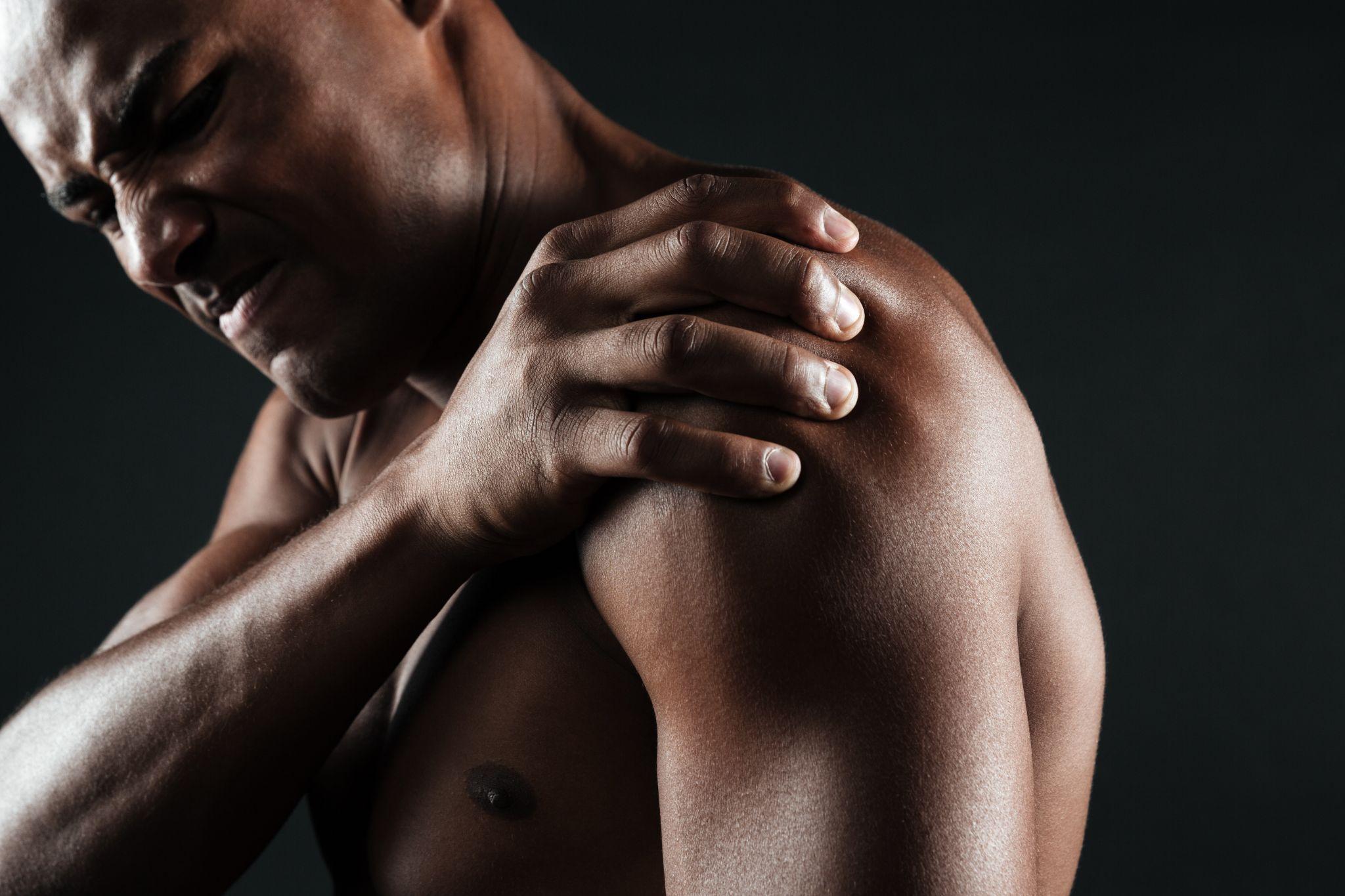
Rotator Cuff Tear: When Surgery Is Needed and When Physiotherapy Is Enough

Most rotator cuff tears involve the supraspinatus tendon, which runs across the top of the shoulder.
The rotator cuff is a group of four muscles and their tendons — supraspinatus, infraspinatus, teres minor, and subscapularis — that surround the shoulder joint like a cuff, stabilising the ball (humeral head) within the socket (glenoid) while also powering specific shoulder movements. When one or more of these tendons tear, the result ranges from a mild weakness hardly noticeable in daily life to a shoulder so compromised the patient cannot lift their arm above waist height.
The decision about whether a rotator cuff tear needs surgery, and when, is one of the most genuinely nuanced decisions in shoulder medicine. It is not a binary "torn = operate." It involves the type of tear, its size, the specific tendon involved, the patient's age and activity demands, how long the symptoms have been present, and what conservative management has achieved.
This guide gives a specific, honest framework for that decision.
What Gets Torn and How
Supraspinatus — The Most Commonly Torn
The supraspinatus tendon runs across the top of the shoulder and is responsible for initiating the first 30 degrees of arm raising (abduction). It passes through a narrow space between the humeral head and the acromion (the bony roof of the shoulder) — the subacromial space. Repeated compression in this space causes impingement that progressively damages the tendon.
Most isolated rotator cuff tears involve the supraspinatus. They are most commonly a combination of degenerative change (the tendon weakening over decades) overlaid with a specific provocative event — a fall on an outstretched arm, lifting something heavy unexpectedly, or a direct blow to the shoulder.
Infraspinatus, Teres Minor, Subscapularis
These tendons are less commonly torn in isolation but are involved in larger "massive" tears, in traumatic injuries, and in tears associated with shoulder dislocation. Subscapularis tears (the front rotator cuff tendon) require specific diagnosis as they are often missed on clinical examination.
Partial vs Full Thickness Tears — The Most Important Classification
Partial Thickness Tears
The tendon is damaged but not completely divided. Some intact tendon fibres cross the tear and continue to transmit force. Subdivided by which surface is torn (bursal-side vs articular-side) and by what proportion of tendon thickness is involved.
Clinical significance: Partial thickness tears under 50 percent of tendon thickness respond well to conservative management in most patients. Tears above 50 percent thickness are at higher risk of progressing to full thickness without treatment, and the surgical decision becomes more pressing.
Full Thickness Tears — Small, Medium, Large, Massive
A full-thickness tear means the tendon has a hole through it from the bursal surface to the articular surface. Classified by size:
- Small: Less than 1 cm
- Medium: 1 to 3 cm
- Large: 3 to 5 cm
- Massive: More than 5 cm (or involving 2 or more tendons)
Size directly affects both the urgency of repair consideration and the likelihood that a repair, if performed, will heal successfully. Large and massive tears are under higher tension (the torn tendon retracts), and retraction over months causes the muscle belly to atrophy — the muscle becomes fatty and fibrotic, and its ability to heal even if surgically repaired diminishes over time.
This last point is clinically critical: the window for successful surgical repair of large and massive tears is time-limited. Waiting too long — beyond 6 to 12 months in large tears — reduces the biological capacity for a durable repair.
The Decision Framework: Operate or Manage Conservatively?
The Strong Argument for Conservative Management First
A key fact that is often omitted in discussions with patients: many rotator cuff tears are asymptomatic. MRI studies of adults over 60 with no shoulder pain show rotator cuff tears in 20 to 40 percent. The tear exists; the shoulder functions normally without the person knowing it. This means not every tear on an MRI scan represents a problem requiring surgical correction.
For tears that are causing symptoms, physiotherapy addressing scapular mechanics, rotator cuff strengthening (of the intact tendons), and pain management produces satisfactory outcomes in a large proportion of patients — particularly those with partial thickness tears and small full-thickness tears in older patients with lower activity demands.
Strongly favour conservative management:
- Partial thickness tear under 50 percent of tendon thickness
- Small full-thickness supraspinatus tear in a patient over 65 with low activity demands
- Patient who cannot safely undergo general anaesthesia or shoulder surgery
- Symptoms present less than 6 to 8 weeks (acute injuries may improve substantially with time)
- Modest functional limitation with acceptable quality of life
The Arguments That Favour Surgical Repair
Acute traumatic tear in a young active patient: A previously healthy tendon that tears acutely from a fall or significant trauma in a patient under 50 has not undergone the degenerative changes that reduce repair success. The tendon quality is good, the muscle has not atrophied, and the biological capacity for a successful repair is at its best. This group should generally be offered early repair rather than extended conservative management.
Large or massive tear with progressive weakness: Large tears that remain unrepairable allow progressive tendon retraction and muscle atrophy. Within 6 to 12 months, many large tears that were repairable become biologically unrepairable — the muscle is too atrophied to re-approximate. This is the "closing window" argument: early repair while the tissue is viable gives significantly better outcomes than delayed repair or non-repair.
Significant functional limitation despite adequate conservative management: If 3 to 4 months of specific physiotherapy has not produced adequate functional improvement, and the patient's quality of life remains significantly impaired, surgical repair is appropriate.
Active overhead athletes or manual workers: A cricket fast bowler with a partial or small full-thickness supraspinatus tear cannot return to bowling with adequate strength and control without surgical repair. An electrician whose work requires overhead reaching cannot function adequately with significant rotator cuff weakness. Activity demands are a legitimate factor in lowering the threshold for surgical intervention.
What Arthroscopic Rotator Cuff Repair Involves
At KDSG Superspeciality Hospital, rotator cuff repair is performed arthroscopically — through three to four small incisions (portal sites) around the shoulder. A camera and instruments allow the tear to be visualised and repaired without opening the shoulder fully.
The torn tendon is reattached to its bony footprint on the humeral head using suture anchors — small metallic or bioabsorbable screws with sutures attached that are inserted into the bone. The sutures are passed through the tendon and tied to pull the tendon back to the bone and hold it while it heals.
Procedure duration: 60 to 90 minutes for most isolated supraspinatus repairs; longer for complex multi-tendon reconstructions.
Post-operative: A sling is worn for 4 to 6 weeks to protect the repair during the early healing phase. The tendon heals to the bone over 3 to 4 months. Physiotherapy begins within the first week (pendulum exercises) and progressively increases through 3 to 6 months. Return to sport or manual work: typically 6 to 12 months depending on demand level.
Success rates: 85 to 92 percent of patients with small to medium tears achieve good to excellent outcomes. Healing rates (the repaired tendon actually staying attached on MRI follow-up) vary by tear size — small tears have 90-plus percent healing rates; large and massive tears have 60 to 75 percent.
The Missed Diagnosis: Subscapularis Tears
Subscapularis tears (the front of the rotator cuff) are the most commonly missed rotator cuff tear in clinical assessment. The standard shoulder examination focuses on supraspinatus (the most common tear) and may miss subscapularis involvement.
Specific features of subscapularis tear:
- Pain at the front of the shoulder
- Weakness with internal rotation (rotating the arm inward toward the body)
- Weakness with the belly press test (pressing into the abdomen while rotating the shoulder)
If a patient has an MRI showing isolated subscapularis tear or combined tear involving the subscapularis, this warrants specific assessment by a shoulder specialist before management is planned.
Frequently Asked Questions
If I do physiotherapy first and it doesn't help, will surgery still work? For small to medium tears, yes — surgery is equally effective after failed conservative management. For large tears, the caution is the progressive retraction and muscle atrophy with time: the longer a large tear goes unrepaired, the less favourable the biological environment for successful repair.
Can rotator cuff tears heal without surgery? Partial thickness tears under 50 percent can stabilise with physiotherapy and appropriate management. Complete full-thickness tears do not heal — the gap in the tendon does not close with conservative management. What can happen is that the intact remaining tendons compensate adequately, providing sufficient function without pain, in some patients.
I am 70 years old with a full-thickness supraspinatus tear. Do I need surgery? Not necessarily. A 70-year-old with a small full-thickness tear who is functioning adequately with physiotherapy and has acceptable shoulder function does not need surgery. The calculation changes if the tear is large (retraction risk), if the functional limitation is significant, or if the pain is poorly controlled. Age alone is not the determining factor.
Dr. Ankur Singh | Shoulder Specialist Noida | Rotator Cuff Tear Surgery India | Shoulder Arthroscopy KDSG Greater Noida | Renew Orthopedic Clinic Sector 47 Noida
Medical Disclaimer
The information provided on this website is for educational purposes only and should not be considered as medical advice. Please consult Dr. Ankur Singh or a qualified healthcare professional for personalized medical guidance.
Share this blog:
 Copy
Copy