Exercises After Knee Replacement Surgery: The Complete Week-by-Week Programme

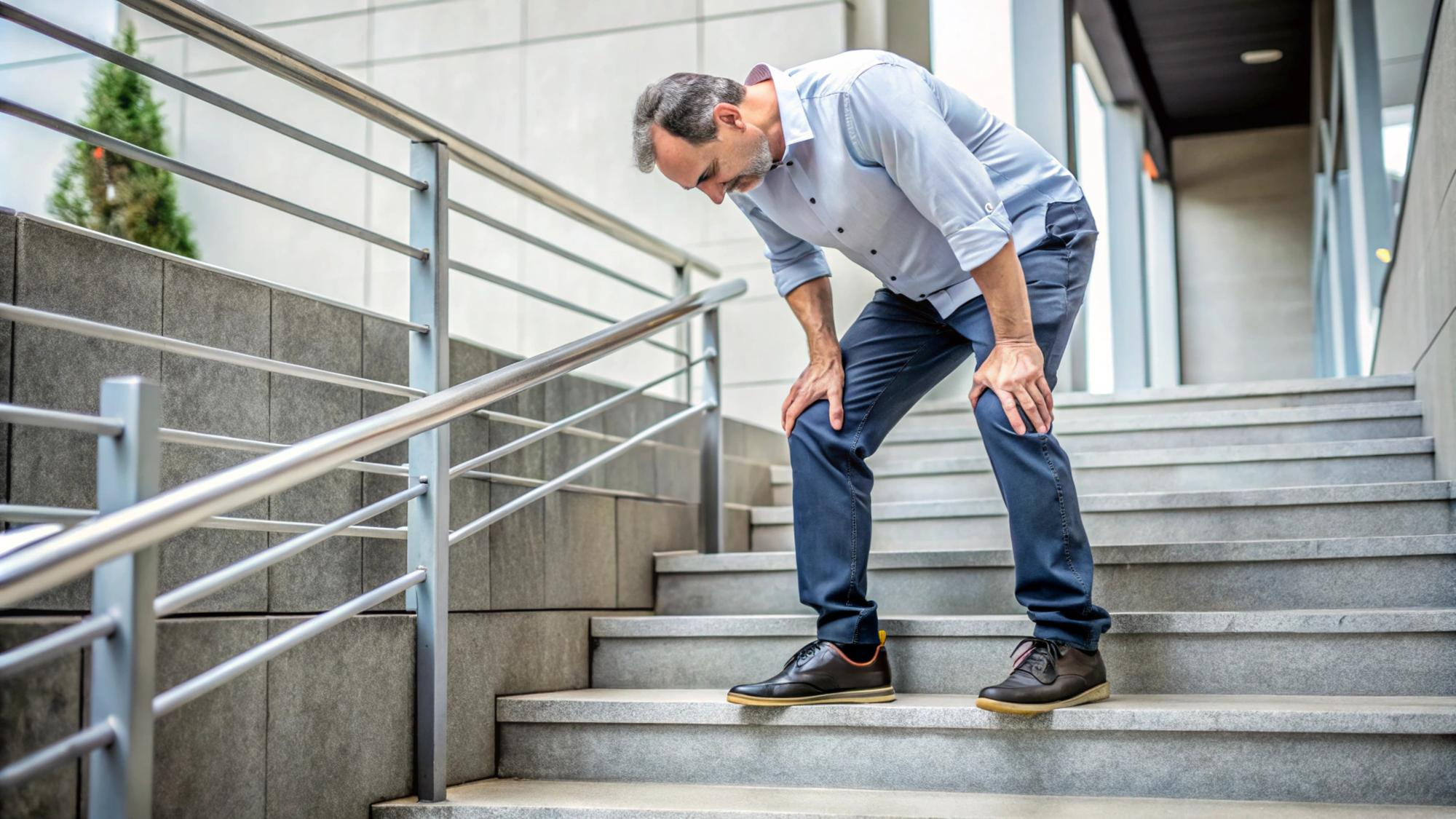
Senior man sitting on a couch holding his knee in pain, showing signs of chronic joint discomfort before knee replacement surgery.
The surgery is done. The implant is in. And now — within hours of waking up — someone is asking you to move the leg.
This surprises almost every patient. The instinct after major surgery is to rest. The clinical reality is the opposite: the patients who begin exercise immediately after knee replacement consistently achieve better outcomes than those who wait. Better range of motion. Faster return to walking without aids. Less stiffness. Lower risk of the scar tissue complications that can permanently limit movement.
Exercise after knee replacement is not optional. It is the surgery's second half.
This guide covers every exercise for every phase of recovery — from the hospital bed on Day 1 to returning to full daily life at six months. Each exercise is named, described, and placed at the correct point in the recovery timeline. This is the programme Dr. Ankur Singh's patients at KDSG Superspeciality Hospital in Greater Noida follow from the first post-operative day.
Why Early Exercise Is the Rule, Not the Exception
Knee replacement surgery replaces the arthritic joint surface. What it cannot replace is the muscle strength, joint mobility, and movement confidence that years of arthritic pain gradually eroded. These have to be rebuilt deliberately, through progressive exercise — starting immediately after surgery, not after the swelling has settled or the pain has eased.
Two specific risks make early exercise non-negotiable
Arthrofibrosis (scar tissue stiffness): In the first two to three weeks after surgery, the scar tissue forming around the new joint is still cellular and pliable. Regular movement prevents it from contracting into a rigid fibrous capsule that permanently limits bending and straightening. After six weeks, mature scar tissue is as stiff as tendon — it cannot be stretched back. The window to prevent stiffness is narrow. Exercise is the only tool.
Quadriceps inhibition: After knee surgery, the nervous system temporarily suppresses the quadriceps — the thigh muscle that powers the knee. This inhibition begins to reverse within hours of surgery when exercises that specifically activate the quad are performed. Patients who skip early quad exercises may spend six to eight weeks regaining muscle function that could have been restored in two.
Phase 1: Hospital (Days 1 to 5)
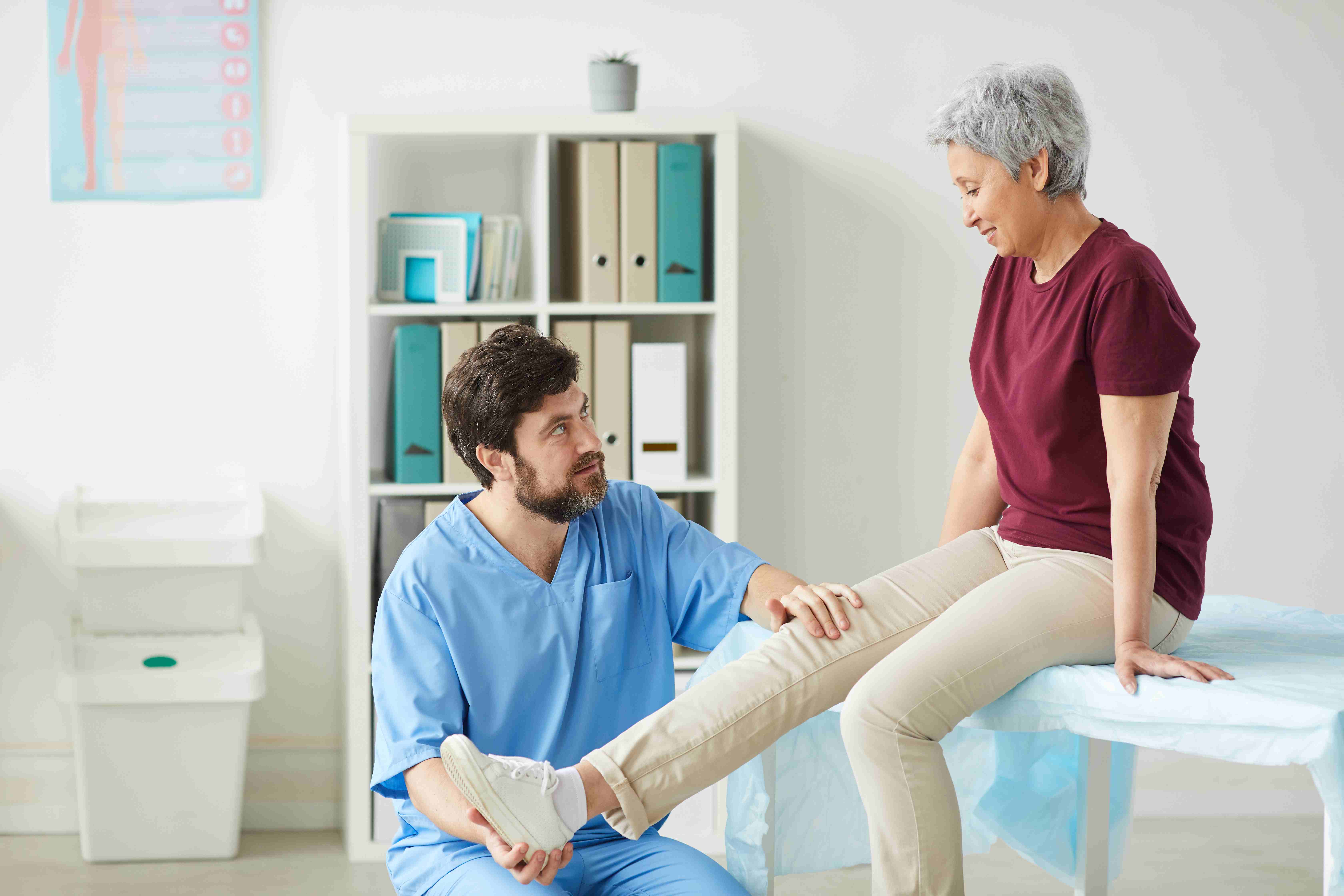
You are in the ward. The leg is swollen. Moving it is uncomfortable. These exercises are non-negotiable regardless of the pain level — modified if necessary, but not skipped.
Ankle Pumps
How: Lying flat, alternately flex the foot (pull toes toward you) and point it downward. Slow, deliberate movement.
Why: Activates the calf muscle pump, preventing blood pooling and dramatically reducing DVT risk. This is as important as the blood-thinning medication.
When: Every hour while awake. 20 repetitions each time.
Quadriceps Sets
How: Lying flat with the leg straight, tighten the thigh muscle by pressing the back of the knee downward into the bed. Hold 5 seconds. Release. The kneecap should move slightly upward when done correctly.
Why: The single most important early exercise. Re-establishes the nervous system's connection to the quadriceps before inhibition deepens.
When: 10 repetitions, 3 times daily. Increase to 20 reps by Day 3.
Heel Slides
How: Lying flat, slowly slide the heel toward the buttock — bending the knee progressively. Slide as far as comfortable. Hold briefly. Slide back to straight.
Why: Begins recovering the knee's range of flexion (bending). Target 90 degrees by the time of discharge.
When: 10 repetitions, 3 times daily.
Straight Leg Raises
How: Tighten the quad (quad set). With the knee locked straight, raise the whole leg to about 45 degrees. Hold 2 seconds. Lower slowly.
Why: Strengthens the quadriceps without putting any bending force on the new joint. A critical exercise for restoring the ability to walk with normal mechanics.
When: 10 repetitions, 3 times daily. Begin Day 2.
Knee Extension Stretches
How: Lie with a rolled towel under the ankle — NOT under the knee. Allow the weight of the leg to press the knee toward the bed. Hold for 10 to 15 minutes.
Why: Full extension (the ability to completely straighten the knee) is the most critical milestone in the first two weeks. Loss of extension is harder to reverse than loss of flexion and produces a permanent limp.
When: At least once daily. Do not skip this exercise even if it is uncomfortable.
Walking
How: With a walking frame, stand fully upright. Step with the operated leg first, then the frame, then the other leg. Heel-to-toe gait pattern even if slow.
Why: Weight-bearing activates bone healing and muscle activation simultaneously. Do not hop or shuffle — walk with as normal a pattern as strength allows.
When: From Day 1, with physiotherapist supervision. Increase distance with each session.
Phase 2: Home Early (Weeks 1 and 2)
Discharged from KDSG Hospital. Pain is reducing but still present. The knee is swollen and warm. Do all Phase 1 exercises twice daily. Add the following:
Short Arc Quads
How: Lie with a rolled towel under the knee, raising it to about 30 degrees. From this position, straighten the knee fully by contracting the quad. Hold 5 seconds. Lower slowly.
Why: Builds quadriceps strength through a limited, safe range where the joint is not maximally loaded. The motion isolated here — final degrees of knee extension — is what produces a normal gait.
When: 15 repetitions, twice daily.
Terminal Knee Extensions (with Resistance Band)
How: If a light resistance band is available, loop it around the back of the knee and stand facing the anchor. From a slight knee bend, straighten the knee against the band resistance.
Why: One of the most effective quad-strengthening exercises for post-knee-replacement patients. Trains the VMO (inner quad) that controls kneecap tracking.
When: 10 repetitions, twice daily. Begin Week 2.
Seated Knee Flexion
How: Sitting in a chair with both feet on the floor, slide the operated foot backward under the chair, bending the knee progressively. Use the other foot to gently assist if needed.
Why: Gravity-assisted knee bending in the seated position is effective and comfortable. Target 100 degrees of flexion by end of Week 2.
When: 10 repetitions, twice daily.
Range of motion milestones to track:
- End of Week 1: 80 to 90 degrees of bending
- End of Week 2: 90 to 100 degrees of bending
- Full extension (0 degrees) must be achieved by end of Week 2
Phase 3: Home Progressive (Weeks 3 to 6)
Pain is significantly better. Swelling is reducing. Confidence is growing. The six-week follow-up appointment is approaching. Continue all Phase 2 exercises and add:
Step-Ups
How: Stand facing a low step (10 to 15 cm). Step up with the operated leg first. Bring the other leg up. Step down with the non-operated leg first. Hold the railing.
Why: The single best functional exercise for this phase. Builds quads and hip extensors through the real movement pattern of stair climbing.
When: 10 repetitions, once daily. Increase step height as strength improves.
Sit-to-Stand Practice
How: From a firm chair at the correct height (knee at or above hip level), stand without using the armrests. Sit back down in a controlled way without collapsing.
Why: Rebuilds the functional lower limb strength used in every daily activity.
When: 10 repetitions, twice daily.
Standing Hip Abduction
How: Hold the back of a chair for balance. Slowly raise the operated leg sideways to about 30 degrees. Hold 2 seconds. Lower slowly.
Why: Strengthens the hip abductors — critical for eliminating the side-to-side "Trendelenburg" gait common after joint replacement.
When: 15 repetitions, twice daily.
Stationary Cycling
How: Set the seat high (minimal knee bending at the lowest pedal position). Light resistance. 5 to 10 minutes initially, building to 20 minutes.
Why: Low-impact cardiovascular exercise that improves range of motion, builds quad endurance, and maintains cardiovascular fitness.
When: From Week 3 or 4, when comfortable. Daily if possible.
Flexion target by Week 6: 110 to 120 degrees
Phase 4: Strength Building (Months 2 to 4)
Walking is nearly normal. Stairs are manageable. The six-week appointment has confirmed good recovery. Physiotherapy becomes more active and sport-focused.
Leg Press
How: At a gym or physiotherapy centre, seated leg press machine. Both legs, light weight initially. Slowly increase load over weeks.
Why: The safest way to progressively overload the quadriceps through a controlled range. Critical for restoring the pre-surgery strength level.
When: 3 sets of 12 repetitions, twice weekly. Increase weight by 5-10% per week.
Partial Squats
How: Feet shoulder-width apart, holding a support. Bend both knees to 45 to 60 degrees (not deeper yet). Hold 3 seconds. Stand.
Why: Begins training the quad through a functional squat range. Keep the movement pain-free.
When: 3 sets of 10, twice weekly.
Balance Training
How: Stand on the operated leg for 10 seconds, then 20, then 30. Progress to a slightly unstable surface (folded mat or balance disc).
Why: Proprioception — the joint's position sense — is disrupted by surgery. Balance training specifically restores this. Poor proprioception means slower protective reflexes and higher fall risk.
When: Daily, building duration progressively.
Swimming
How: Pool walking and gentle laps. Breaststroke before freestyle (freestyle requires more hip and knee extension).
Why: Water eliminates impact load while allowing full range of motion. One of the best cardiovascular + joint-mobility exercises available.
When: Once wound is fully healed and cleared by Dr. Ankur Singh's team. Usually from Week 8 to 12.
Phase 5: Return to Full Activity (Months 4 to 6)
Walking Programme
Build to 30 to 45 minutes of continuous walking on flat ground. Progress to gentle inclines. No running yet.
Cycling (Outdoor)
Flat terrain, moderate resistance. Build from 20 minutes to 45 minutes over this phase.
Golf, Swimming, Light Gardening
All cleared for most patients by month 4 to 5. Specific timing confirmed with Dr. Ankur Singh at the follow-up appointment.
What Good Pain and Stop Pain Look Like
During exercise after knee replacement, some discomfort is expected and acceptable. The guideline
Acceptable: Pain up to 4 out of 10 during the exercise that settles to baseline within 24 hours.
Stop and reduce: Pain above 6 out of 10, or pain that is significantly worse the following morning.
Call the clinic: Sudden new sharp pain, significant increase in swelling after exercise, or warmth returning to a previously settling knee.
Frequently Asked Questions
How often should I do physiotherapy?
Clinic sessions: 3 times per week for the first 6 weeks, tapering to twice weekly through week 12. Home exercises: twice daily throughout. Stopping early because pain has reduced is the most common reason for suboptimal outcomes.
Can I do yoga after knee replacement?
Modified yoga — avoiding deep knee flexion, kneeling, and the vajrasana position for the first 6 months. After 6 months, with Dr. Ankur Singh's clearance, a modified yoga practice is appropriate for most patients.
When can I ride a bicycle after knee replacement?
Stationary cycling: from week 3 to 4. Outdoor cycling on flat terrain: from week 6 to 8.
How do I know if my flexion is progressing normally?
Target milestones: 90 degrees by week 2, 110-120 degrees by week 6, 120-130 degrees by month 3. If significantly behind these, inform Dr. Ankur Singh's team at the next appointment.
Dr. Ankur Singh | Best Knee Replacement Surgeon in Noida | Knee Replacement Recovery Exercises | KDSG Superspeciality Hospital Greater Noida | Renew Orthopedic Clinic Sector 47 Noida
Medical Disclaimer
The information provided on this website is for educational purposes only and should not be considered as medical advice. Please consult Dr. Ankur Singh or a qualified healthcare professional for personalized medical guidance.
Share this blog:
 Copy
Copy