Robotic Knee Replacement vs Traditional Knee Replacement: A Straight-Talk Guide for Patients in Noida

Doctor explaining bone structure to patient during a consultation about partial vs total knee replacement options
If your doctor has mentioned knee replacement surgery and you've started researching, you've likely run into two terms — robotic and traditional. And if you're like most patients, you're not entirely sure what the difference actually means in practice, or whether the newer technology is genuinely better or just more expensive.
This guide is meant to give you a clear, honest picture. No jargon overload. Just the information you need to have an informed conversation with your surgeon.
What Is Traditional Knee Replacement Surgery?
Traditional knee replacement, also called total knee arthroplasty, has been performed successfully for over five decades. The surgeon removes the damaged cartilage and bone from the knee joint, then fits a metal-and-plastic implant in its place. The procedure relies on the surgeon's skill, experience, and a set of mechanical guides to position the implant correctly.
When done well, traditional knee replacement has excellent long-term outcomes. Most patients get 15–20 years of significantly improved mobility. Many orthopedic surgeons have performed hundreds or thousands of these procedures, and the technique is well-established.
The challenge is this: even experienced surgeons using mechanical guides can see small variations in implant alignment — sometimes just a few degrees — that affect how naturally the knee feels after recovery. For most patients, this is not a major issue. But for some, particularly younger or more active patients, it can matter quite a bit.
What Is Robotic Knee Replacement?
Robotic knee replacement doesn't mean a robot is doing your surgery. That's a common misconception worth clearing up right away.
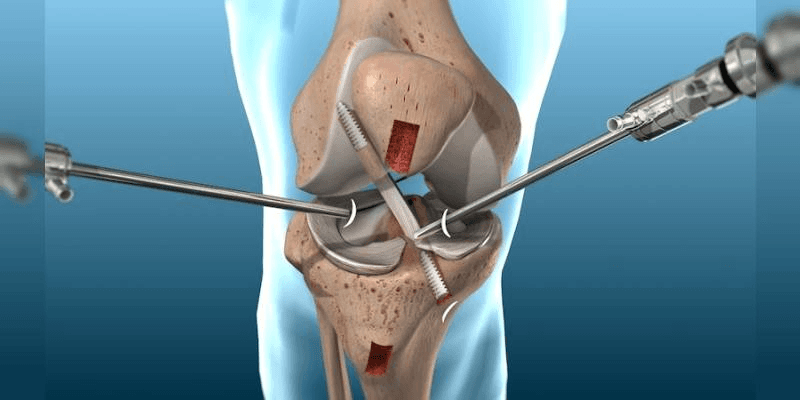
What it actually means is this: before the operation, CT scan data of your knee is used to create a precise 3D model of your joint. The surgeon uses this model to plan the surgery in detail — mapping exactly where the implant will sit, what angles are needed, and how much bone needs to be removed. During the procedure, a robotic arm assists the surgeon by providing real-time feedback and physically guiding the cutting instruments within the pre-planned parameters.
Think of it as the difference between freehand drawing and drawing with a ruler and precise guides. The surgeon is still drawing. The tools just make precision easier.
At Dr. Ankur Singh's practice in Noida and Greater Noida, robotic knee replacement is performed using advanced surgical systems that allow millimeter-level accuracy in implant placement — something that even the most skilled hands find difficult to match consistently with traditional instruments alone.
The Core Differences: What Actually Changes for the Patient?
Surgical Precision and Implant Alignment
This is where robotic surgery has the clearest edge. Studies have consistently shown that robotic-assisted knee replacement results in more accurately positioned implants compared to traditional surgery.
Why does alignment matter so much? Because a knee implant that is even slightly off-axis doesn't move the way a natural knee does. Patients may notice the knee feels "not quite right," experience uneven wear on the implant over time, or have more stiffness during certain movements.
With robotic assistance, implant alignment is more consistent — and that has direct implications for how long the implant lasts and how naturally the knee functions.
Recovery Time
Recovery depends on many things: the patient's age, overall health, muscle strength before surgery, and how well they follow the physiotherapy protocol. That said, robotic knee replacement patients in India typically report somewhat faster early recovery — primarily because the procedure involves more precise bone cuts, which means less surrounding tissue trauma.
Some patients who undergo robotic knee replacement are walking on the same day of surgery. Most are up and moving within 24 hours. This doesn't mean the full recovery is shorter — that still takes several months of physiotherapy — but the initial phase tends to be more comfortable.
Blood Loss and Hospital Stay
Because the cuts are more precise in robotic surgery, there is generally less soft tissue disruption. This tends to translate into reduced intraoperative blood loss and, in many cases, a slightly shorter hospital stay.
Personalisation of the Procedure
Every knee is slightly different. The way your femur angles, the shape of your tibia, the overall alignment of your leg — these vary from person to person. Traditional surgery works from standardised mechanical guides. Robotic surgery works from your specific anatomy, built from preoperative imaging.
This matters particularly for patients with unusual leg geometry, previous fractures, or deformities. For these cases, robotic planning makes it much easier to customise the surgical approach.
Who Is Robotic Knee Replacement Best Suited For?
Robotic knee replacement in Noida and Greater Noida is well-suited for
- Younger patients (typically under 65) who need the implant to last decades and want to return to an active lifestyle
- Patients with complex deformities or unusual anatomy where standard mechanical guides may be less accurate
- Patients with previous knee surgeries or fractures that have altered the bone structure
- Active individuals — including former athletes and people who engage in regular physical activity — who want maximum functional recovery
- Patients undergoing revision surgery, where anatomy may already be altered from a prior procedure
Traditional knee replacement remains a well-validated option for older patients with straightforward anatomy and more limited activity goals. The conversation about which approach is right for you should happen with your surgeon, based on your specific imaging, medical history, and lifestyle.
What About the Long-Term Durability of the Implant?
One of the most important questions patients ask is: how long will the new knee last?
Implant longevity depends on several factors — the quality of the implant itself, the accuracy of its placement, the patient's weight and activity level, and bone quality. Robotic surgery doesn't change the implant material, but it does improve placement accuracy. And better placement means more even load distribution across the implant surface, which reduces wear over time.
In India, early data from hospitals performing robotic knee replacements suggest a success rate above 95%, with patients reporting better knee function scores compared to matched cohorts undergoing traditional surgery. The potential reduction in revision surgery rates — where a patient needs a second knee replacement because the first implant has worn out or shifted — is one of the strongest arguments for robotic-assisted procedures in younger patients.
The Question Everyone Asks: Is Robotic Surgery Worth It?
This is a fair question, and there isn't a single answer.
If you're an older patient, relatively inactive, with straightforward anatomy, traditional knee replacement performed by an experienced surgeon is very likely to give you an excellent outcome. Thousands of patients in Noida and across India live well for many years after traditional knee replacement.
If you're younger, more active, have complex anatomy, or you simply want the most accurate outcome possible for a joint you'll use heavily for decades, robotic knee replacement makes a strong case. The improved precision isn't marketing language — it has measurable consequences for alignment, early recovery, and long-term implant performance.
At Dr. Ankur Singh's clinic in Noida, the decision is always made after a detailed review of your X-rays, clinical examination, and a candid discussion of your goals. Not every patient needs robotic surgery. But for those who do, having access to it in Greater Noida — without travelling to a metro city — makes a real difference.
The Recovery Process: What to Expect After Either Procedure
First Week
Most patients are up and walking with support within 24 hours of surgery. Pain is managed with medication. A physiotherapist will guide you through early range-of-motion exercises even in the hospital. The goal in this phase is to control swelling and get the knee moving.
Weeks 2–6
You'll be discharged and continue physiotherapy either at home or as an outpatient. Swelling gradually reduces. Many patients can walk short distances without support by the end of this period. Stairs become easier. You'll notice steady, week-on-week progress.
3–6 Months
This is when most of the functional recovery happens. Strength training builds the muscles around the knee. Range of motion improves. Most patients return to normal daily activities — including walking, climbing stairs, light exercise — by months three to four.
Beyond 6 Months
Full recovery, including return to moderate physical activity, typically takes six months to a year. Robotic knee replacement patients often report feeling more confident in the knee's natural movement during this phase, though individual results vary.
Why Patients Across Noida and Greater Noida Choose Dr. Ankur Singh for Knee Replacement
Dr. Ankur Singh is one of the few orthopedic surgeons in the Delhi-NCR region with extensive experience in both traditional and robotic knee replacement surgery. As Director of Orthopedics at KDSG Superspeciality Hospital in Greater Noida, he brings over 15 years of surgical expertise and international training to every case.
He has been recognised among the Top 3 Orthopedic Surgeons in Noida by ThreeBestRated® — an independent evaluation platform — and holds a 5-star rating with over 650 patient reviews on Google.
Patients from across Noida, Greater Noida, Delhi, and even internationally seek his consultation for knee replacement, confident that the decision on which technique is made based on their specific anatomy and goals — not on a one-size-fits-all approach.
To book a consultation, call the number listed on this website.
Common Questions Patients Ask
Is robotic knee replacement painful?
The surgery itself is performed under anaesthesia, so you won't feel anything during the procedure. Post-operative pain is managed carefully with medication. Many patients report that robotic knee replacement involves somewhat less early post-operative discomfort compared to traditional surgery, likely because of reduced tissue trauma.
How soon can I walk after robotic knee replacement?
Many patients take their first assisted steps on the day of surgery. Walking with a frame or crutches typically begins within 24 hours. Independent walking — without support — usually happens within three to six weeks, depending on individual progress.
Can I return to sports after knee replacement?
This depends on the type of sport and the patient's overall condition. Low-impact activities like walking, swimming, and cycling are generally encouraged within a few months. High-impact sports are assessed on a case-by-case basis. Robotic knee replacement, with its precise implant positioning, may support a return to moderate physical activity more comfortably.
Is robotic surgery available in Noida and Greater Noida?
Yes. Dr. Ankur Singh performs robotic knee replacement at KDSG Superspeciality Hospital in Greater Noida. You do not need to travel to Delhi or another major city for access to this technology.
Final Thought
Knee replacement surgery — robotic or traditional — is a significant decision. The right choice depends on your age, anatomy, activity level, and long-term goals. What's most important is that you get a thorough evaluation from a surgeon who can recommend the right approach for you, not the one that's easiest or most profitable.
If you've been living with chronic knee pain in Noida or Greater Noida and you're wondering whether the time has come for surgery, getting a proper diagnosis is the first step. Many patients wait far longer than necessary, and by the time they consult a specialist, the joint has deteriorated more than it needed to.
The best knee replacement surgeon in Noida or Greater Noida isn't the one who pushes a particular technique — it's the one who listens carefully, reviews your imaging thoroughly, and gives you an honest recommendation.
To book a consultation with Dr. Ankur Singh, call the number listed on this website.
Dr. Ankur Singh | Best Orthopedic Surgeon in Noida and Greater Noida | Knee Replacement | Hip Replacement | Arthroscopy | Robotic Joint Replacement | KDSG Superspeciality Hospital, Greater Noida
Medical Disclaimer
The information provided on this website is for educational purposes only and should not be considered as medical advice. Please consult Dr. Ankur Singh or a qualified healthcare professional for personalized medical guidance.
Share this blog:
 Copy
Copy