Advantages and Disadvantages of Knee Replacement Surgery: The Honest Guide

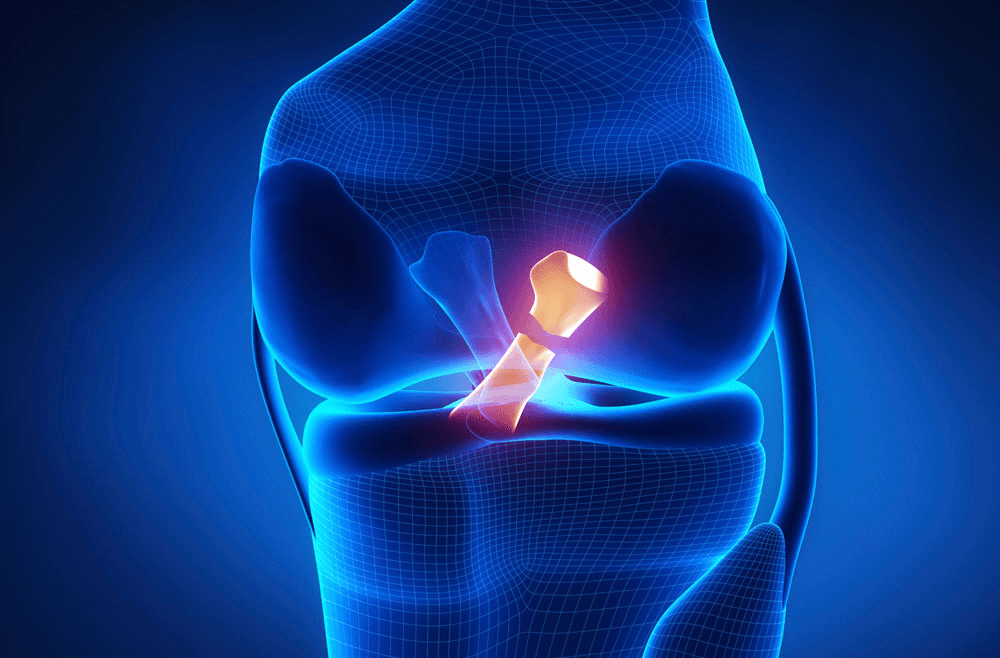
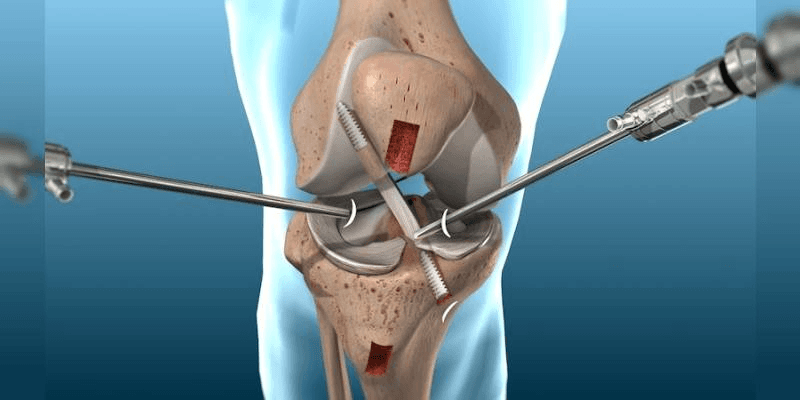
A healthcare professional in scrubs holding a knee joint model with ligaments and artificial parts moving, and great detail of the structure and ligament position.
Every patient searching "disadvantages of knee replacement surgery" is sending a clear signal: they want honest information, not curated reassurance. They are considering surgery and doing their diligence. They deserve a guide that gives them both sides with equal honesty.
This is that guide.
Knee replacement is one of the most reliably successful procedures in modern medicine. It is also major surgery with a demanding recovery, permanent lifestyle modifications, and real — if low-probability — risks. Patients who make the decision fully informed of both sides are the patients who recover best, have realistic expectations, and report the highest satisfaction.
The Advantages
1. Dramatic, Lasting Pain Relief
The most significant and consistent benefit of total knee replacement is the elimination of arthritic pain. In severe knee osteoarthritis, the pain is constant — present with every step, often through the night, and associated with a quality of life that most patients describe as genuinely diminished.
At one year after knee replacement, approximately 95 to 98 percent of patients report clinically significant pain reduction. The grinding, bone-on-bone pain of end-stage arthritis is eliminated by removing the surfaces that were producing it and replacing them with smooth, low-friction metal and plastic components.
This is not temporary relief — it is a structural solution to a structural problem. The arthritic surfaces are gone. The pain source is removed.
2. Restored Mobility and Independence
The functional improvements after knee replacement are measurable and significant: longer walking distances, normal stair climbing, the ability to get up from a chair without using both arms for support, managing the bathroom independently. For many patients, these represent returning to activities that arthritis had progressively stolen over months and years.
In Indian context, restored mobility means returning to the temple, attending family functions, walking in the park with grandchildren, managing household tasks, and for working-age adults, returning to occupational function.
3. Better Sleep
Night pain — the arthritis pain that wakes patients from sleep, often multiple times — is one of the most quality-of-life destroying features of severe knee arthritis. It produces the cumulative sleep deprivation that affects mood, cognition, and systemic health.
After knee replacement, night pain resolves in the vast majority of patients. At one to two months post-surgery, most patients are sleeping through the night for the first time in years.
4. Improved Mental Health and Quality of Life
Chronic pain is a known driver of depression, anxiety, and social withdrawal. As mobility improves and pain resolves, mood, energy, and engagement with life improve concurrently. Studies consistently show significant improvements in mental health scores alongside physical scores at 6 and 12 months post-surgery.
5. Long-Lasting Results
Modern knee replacement implants, with appropriate surgical technique and patient care, survive 15 to 20 years in 80 to 85 percent of patients. For older patients, this represents the rest of their life. For patients aged 55 to 65, the implant may need revision at some point — but the first 15 to 20 years of life without arthritic pain are years of genuinely improved quality of life.
Robotic guidance's contribution to implant accuracy further extends expected longevity for patients where optimal alignment is achieved.
The Disadvantages — Discussed With Equal Honesty
1. Recovery Is Demanding and Takes Time
This is the disadvantage that most surprises patients. Knee replacement is not a procedure where you go home and gradually get better on your own schedule. It is a procedure where the recovery requires active daily effort — exercises, walking, physiotherapy — and where the timeline is measured in months, not weeks.
The realistic timeline:
- Weeks 1 to 2: Significant pain, swollen knee, walking with a frame, two daily exercise sessions
- Weeks 3 to 6: Pain reducing, increasing independence, physiotherapy continues
- Months 2 to 3: Walking normally, most activities returning
- Months 3 to 6: Progressive strengthening, full daily activity
Full recovery — where the knee is not something you think about during daily activity — typically takes 3 to 6 months. Some patients take longer. Patients who expect to be "back to normal" in 4 weeks are likely to be disappointed.
The Indian-specific challenge: The recovery requires someone at home to help, particularly in the first 2 to 4 weeks. Arranging reliable family or home nursing support before surgery is essential.
2. Permanent Activity Restrictions
Knee replacement is not a return to the knee you had before arthritis destroyed it — it is a functional, pain-free joint replacement that has specific limitations. These are permanent:
Restricted activities after total knee replacement:
- High-impact sports: running, jumping, heavy impact activities are not recommended. They accelerate implant wear and reduce longevity.
- Deep squatting: full deep squat is usually not achievable and strains the implant-bone interface
- Kneeling directly on the prosthetic kneecap: uncomfortable and not recommended for prolonged periods
- Some patients find floor-sitting (cross-legged) limited compared to their expectations
These restrictions require lifestyle adjustments that some patients find difficult. For younger active patients considering knee replacement in their 40s or 50s, the loss of high-impact activity is a significant consideration — and one reason that osteotomy or partial knee replacement may be more appropriate for specific presentations.
3. It Does Not Work Perfectly for Everyone
The 95 to 98 percent pain relief statistic means 2 to 5 percent of patients have a less-than-excellent result. Some patients experience:
- Persistent pain — pain that is less than arthritic pain but still present and limiting
- Stiffness — range of motion that does not achieve the patient's functional goals
- A feeling that the knee is "not quite right" — subtle mechanical awareness that diminishes with time but does not fully resolve in some patients
Predicting which patients will have these outcomes is imperfect. Risk factors include: very severe pre-operative deformity, previous knee surgery, obesity, specific patterns of pre-operative pain, and inadequate post-operative physiotherapy.
4. The Recovery Period Carries Medical Risks
As discussed in detail in the safety guide, the post-operative period carries real — if low-probability — risks:
- DVT (blood clot in the leg): 1 to 2 percent despite prevention
- Infection: 0.5 to 2 percent
- Stiffness requiring manipulation: 1 to 5 percent
- Nerve or vessel injury: less than 0.5 percent
These are not reasons to avoid surgery when indicated — they are reasons to approach surgery prepared and informed, and to choose an experienced surgeon at a well-equipped centre.
5. The Implant May Eventually Need Revision
At 15 to 20 years, 15 to 20 percent of total knee replacements require revision surgery — removal of the old implant and placement of a new one. Revision surgery is significantly more complex than primary surgery, requires more specialised implants and surgical expertise, and carries higher complication rates.
For patients in their 70s when they have their primary replacement, this is rarely relevant — the implant will likely outlast them. For patients in their 50s, revision surgery is a realistic future possibility that should factor into the decision.
Robotic guidance specifically addresses this disadvantage: better alignment accuracy reduces uneven wear, extending the implant's functional life.
The Decision Framework: When Advantages Outweigh Disadvantages
Knee replacement is the right choice when:
- The arthritis is Grade III or IV (significant cartilage loss, bone-on-bone contact in at least one compartment)
- Conservative management — physiotherapy, weight management, injections, pain medication — has been genuinely tried for at least 3 to 6 months without adequate relief
- Pain is significantly impacting quality of life: disrupting sleep, limiting walking to short distances, preventing participation in daily activities
- The patient understands and accepts the recovery demands and activity restrictions
- There is adequate support at home for the recovery period
Knee replacement should be deferred when:
- Arthritis is early (Grade I or II) — conservative management still has substantial potential
- The patient is not prepared to commit to the recovery process
- Medical conditions (uncontrolled diabetes, active cardiac disease) need optimisation first
- Alternatives (osteotomy, partial replacement, PRP) have not been appropriately considered for the specific presentation
Frequently Asked Questions
Is the disadvantage of not being able to run permanent?
Yes, for total knee replacement. The implant is not designed for sustained high-impact loading. Running and jumping activities are consistently associated with accelerated implant wear. This restriction is permanent. Partial (unicompartmental) knee replacement allows somewhat higher activity, and osteotomy preserves all activity options — for appropriate candidates, these deserve consideration before total replacement.
What if my expectations are not met after surgery?
The most common reason for unmet expectations is the gap between what the patient expected and what surgery can realistically deliver. Pre-operative expectation management — having an honest conversation with Dr. Ankur Singh about what function you will and will not have after surgery — is the single most effective intervention for post-operative satisfaction.
Should I get a second opinion before deciding?
Absolutely. Dr. Ankur Singh welcomes second opinion consultations. If another surgeon has recommended knee replacement, an independent assessment confirming the indication — or suggesting alternatives — is entirely appropriate and always encouraged.
Dr. Ankur Singh | Best Knee Replacement Surgeon Noida | Knee Replacement Honest Guide | KDSG Superspeciality Hospital Greater Noida | Renew Orthopedic Clinic Sector 47 Noida
Medical Disclaimer
The information provided on this website is for educational purposes only and should not be considered as medical advice. Please consult Dr. Ankur Singh or a qualified healthcare professional for personalized medical guidance.
Share this blog:
 Copy
Copy





/healthcare-concept-clinic-compressed.jpg)