Cervical pain Due to mobile and laptop usage

Man experiencing neck and head pain while working on a laptop
Cervical pain has become one of the most common musculoskeletal complaints I see at my clinic, and the age profile of patients has shifted dramatically. Ten years ago, neck and shoulder pain was predominantly a concern for patients over 50. Now I'm treating college students, software engineers in their late 20s, and work-from-home professionals in their 30s with the same complaints.
The common factor? Hours of daily screen time with poor posture.
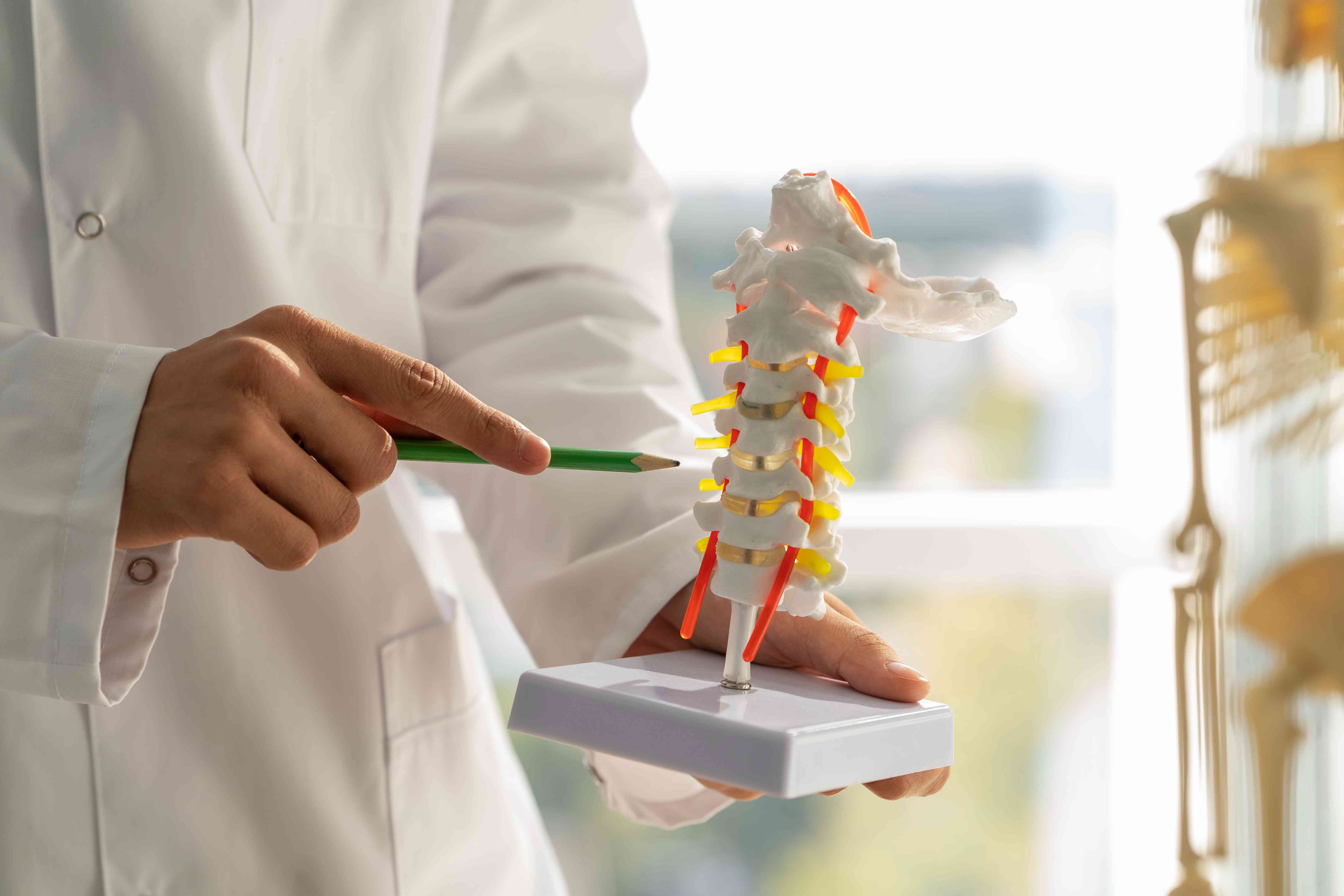
Cervical pain refers to discomfort originating from the cervical spine, the seven vertebrae that form the upper portion of your spine, supporting the head and allowing neck movement. Continuous stress on this area from improper device use leads to muscle imbalances, disc problems, nerve compression, and progressive loss of mobility. The condition develops gradually, which is why most people ignore early signs until the pain becomes constant.
Why mobile and laptop usage causes cervical pain

Poor sitting posture causing neck and back pain during laptop use
Forward head posture and neck strain
This is the primary mechanism behind screen-related cervical pain. When you look at your phone, your neck bends forward and down. In a neutral upright position, the human head weighs approximately 4.5-5 kg. But for every 15 degrees of forward tilt, the effective load on the cervical spine roughly doubles.
At 15 degrees of flexion: ~12 kg of force on the neck. At 30 degrees: ~18 kg. At 45 degrees: ~22 kg. At 60 degrees (the typical "texting angle"): ~27 kg.
That's six times the normal load on your cervical discs, ligaments, and muscles — sustained for hours every day. The posterior neck muscles fatigue first, developing trigger points and chronic tightness. Over months and years, this leads to structural changes: disc dehydration, joint stiffness, and altered spinal curvature.
I've started calling this "text neck" in my practice, and patients immediately understand what I mean.
Prolonged sitting and static posture
Laptop use typically involves long stretches of sitting without movement. When your screen sits below eye level, which it almost always does with a laptop, your neck and upper back muscles maintain a constant low-grade contraction to hold your head in position.
This static loading cuts off adequate blood circulation to the muscles. Without fresh blood flow, waste products like lactic acid accumulate, causing soreness, stiffness, and that familiar "tight" feeling across the upper back and shoulders. Over time, the muscles shorten adaptively, and the flexibility of the cervical spine decreases.
Poor ergonomic setup
Working on a laptop from your bed, sofa, or a low coffee table forces the neck into awkward positions that it wasn't designed to sustain. The cervical spine can handle dynamic movement well — it's prolonged static loading in poor positions that causes damage.
Similarly, holding your phone below chest level while scrolling or texting means your neck stays flexed for extended periods. Most people who work from home or study online don't have a proper ergonomic setup, no external monitor, no adjustable chair, no keyboard at the right height. This absence of basic workplace ergonomics is a major driver of cervical problems in younger patients.
Common symptoms of cervical pain
Neck stiffness and restricted movement
Stiffness is usually the first symptom patients notice. You'll feel discomfort turning your head fully to one side, or pain when looking up or down. Morning stiffness is common, the neck feels "locked" for the first 15-30 minutes after waking, gradually loosening with movement.
Many patients describe a "grinding" or "crunching" sensation when rotating the neck. This is crepitus — caused by roughening of the joint surfaces or air bubbles in the synovial fluid, and while it's not always serious, it indicates that the cervical joints are under stress.
Shoulder and upper back pain
Cervical pain rarely stays confined to the neck. The trapezius and rhomboid muscles, which connect the neck to the shoulders and upper back — become tense and painful as they compensate for weakened deep neck flexors. This referred pain often worsens after a long day at the computer and can feel like a deep, burning ache between the shoulder blades.
Patients frequently describe tightness that starts at the base of the skull and spreads across both shoulders by evening.
Headaches and dizziness
Cervicogenic headaches, headaches originating from the neck, are extremely common with screen-related cervical strain. They typically start at the back of the head (the occipital region) and radiate forward toward the temples or forehead. These headaches are often mistaken for migraines or tension headaches, leading to months of ineffective treatment.
In some cases, severe muscle tension at the base of the skull can affect blood flow to the head, causing lightheadedness or momentary dizziness. If you're experiencing regular headaches combined with neck stiffness, the cervical spine should be evaluated.
Tingling or numbness in arms
This is a red-flag symptom. When cervical pain comes with tingling, numbness, or weakness in one or both arms or hands, it usually indicates nerve compression — either from a bulging disc pressing on a nerve root, or from narrowing of the neural foramen (the opening where nerves exit the spine).
Common patterns include tingling in the thumb and index finger (C6 nerve root), or numbness in the ring and little finger (C8 nerve root). If you're experiencing these symptoms, don't delay evaluation, nerve compression that goes untreated can lead to permanent weakness or sensory loss.
Long-Term effects of ignoring cervical pain
Cervical spondylosis
Chronic stress on the cervical spine accelerates degenerative changes, disc dehydration, bone spur formation, and joint cartilage loss. This condition, cervical spondylosis, typically develops over years and manifests as persistent stiffness, reduced range of motion, and grinding pain with neck movement.
While some degree of cervical spondylosis is normal with aging, poor posture and screen habits can accelerate it by 10-15 years. I've seen patients in their early 30s with cervical spine X-rays that look like they belong to a 50-year-old.
Disc bulge or herniation
Sustained forward head posture increases pressure on the anterior (front) portion of cervical discs. Over time, this uneven loading can cause the disc material to bulge posteriorly — toward the spinal cord and nerve roots. A full herniation occurs when the disc's outer ring (annulus fibrosus) tears, allowing the inner gel (nucleus pulposus) to protrude.
This can cause severe arm pain, numbness, weakness, and in rare cases, coordination problems if the spinal cord itself is compressed. Some patients require surgical intervention if conservative treatment fails.
Reduced quality of life
Chronic cervical pain affects far more than just the neck. It disrupts sleep, finding a comfortable position becomes difficult. It reduces concentration and work productivity. It leads to increased reliance on painkillers, which carry their own side effects. And it gradually reduces physical activity, as patients avoid exercise, sports, and even simple activities that aggravate their symptoms.
The psychological impact is real too. Chronic pain is strongly associated with irritability, anxiety, and reduced social engagement.
How to prevent cervical pain from mobile and laptop Use
Maintain proper posture
When using a laptop, the top of the screen should be at or slightly below eye level. This usually requires an external monitor or a laptop stand combined with a separate keyboard. When using a phone, lift the device to eye level rather than dropping your head. It feels unusual at first, but it eliminates the forward head loading entirely.
Keep your ears aligned over your shoulders, and your shoulders over your hips. If you catch yourself slouching, and you will — simply reset. The goal isn't perfect posture every second; it's reducing the total time spent in forward-flexed positions.
Follow the 20-20-20 rule
Every 20 minutes of screen use, look at something 20 feet (approximately 6 meters) away for 20 seconds. This relaxes both the eye muscles and the neck muscles simultaneously. Set a timer on your phone until the habit becomes automatic, most patients find it takes about 2 weeks.
Use an ergonomic workstation
Invest in a chair with proper lumbar support and adjustable height. Your feet should be flat on the floor, your back supported, and your shoulders relaxed (not shrugged up toward your ears). An external keyboard and mouse allow you to position the screen at the correct height without compromising hand position.
If cost is a concern, even a stack of books under your laptop can raise the screen to eye level. Pair that with a basic external keyboard, and you've solved the biggest ergonomic problem for under a few hundred rupees.
Take regular movement breaks
Static posture is the enemy. Stand up, stretch, and walk around every 30-45 minutes. This restores blood circulation to the neck and shoulder muscles and prevents the buildup of tension that leads to pain. A 2-minute walk to the kitchen and back is enough, the key is frequency, not duration.

Office professional walking with upright posture in a modern workspace
Exercises and lifestyle tips for cervical pain relief
Neck stretching exercises
These four basic stretches, done twice daily, can substantially reduce cervical pain:
- Lateral neck stretch: Tilt your ear toward your shoulder and hold for 15-20 seconds. Repeat on both sides.
- Neck rotation: Slowly turn your head to look over each shoulder, holding at the end range for 10 seconds.
- Chin tucks: Pull your chin straight back (creating a "double chin") and hold for 5 seconds. This strengthens the deep neck flexors and corrects forward head posture. Do 10 repetitions.
- Upper trapezius stretch: Tilt your head to one side and gently pull with the opposite hand. Hold for 20 seconds per side.
Perform all stretches slowly and smoothly — never jerk the neck or force through pain.
Strengthening upper back muscles
Weak upper back muscles (particularly the lower trapezius and rhomboids) contribute directly to forward head posture. Simple exercises make a noticeable difference:
- Scapular squeezes: Pull your shoulder blades together and down, hold for 5 seconds. Do 15 repetitions, 3 times daily.
- Wall angels: Stand with your back against a wall, arms in a "W" position, and slowly slide them up to a "Y" position. 10 repetitions.
- Resistance band pull-aparts: Hold a resistance band at chest height and pull it apart by squeezing the shoulder blades together. 15 repetitions.
These exercises take less than 5 minutes and can be done at your desk or in your living room.
Improve daily habits
Don't text or scroll while lying on your stomach, this forces maximum cervical extension. Use a pillow that supports your neck in a neutral position (not too high, not too flat). Memory foam contour pillows work well for most people.
Avoid cradling your phone between your ear and shoulder during calls, use a headset or speaker mode instead. This single habit causes significant one-sided cervical strain over time.
Dietary support for cervical health
Anti-inflammatory foods can help manage cervical pain from the inside:
- Omega-3 fatty acids (walnuts, flaxseed, fatty fish) reduce joint inflammation
- Turmeric and ginger have natural anti-inflammatory properties — adding them to daily meals helps
- Calcium and Vitamin D maintain bone density in the cervical vertebrae, dairy, sunlight exposure, and supplements if needed
- Magnesium (almonds, spinach, bananas) supports muscle relaxation and reduces spasm frequency
- Adequate hydration keeps the cervical discs hydrated, they're 80% water and rely on fluid intake to maintain their shock-absorbing capacity
When to See a doctor for cervical pain
Seek medical evaluation promptly if:
- Neck pain persists for more than 2 weeks despite posture correction and stretching
- You experience tingling, numbness, or weakness in your arms or hands
- Headaches are becoming more frequent or severe
- Pain radiates down one or both arms
- You have difficulty gripping objects or notice reduced hand strength
- Neck pain is accompanied by difficulty walking or balance problems — this may indicate spinal cord involvement and needs urgent evaluation
- You experience sudden severe neck pain after a fall or impact
Early diagnosis and treatment prevent complications and protect the cervical spine from long-term structural damage. An X-ray, and in some cases an MRI, can identify disc problems, spondylotic changes, or nerve compression that require specific treatment.
A note on when conservative treatment isn't enough
Most screen-related cervical pain responds well to posture correction, exercise, and ergonomic changes, usually within 4-6 weeks. But some patients need more structured treatment:
- Physiotherapy: Guided strengthening and mobilization for persistent stiffness
- Cervical traction: Gentle decompression of the spine, done under supervision
- Medication: Short courses of anti-inflammatory drugs or muscle relaxants for acute episodes
- Injections: Targeted steroid or PRP injections for nerve root inflammation in selected cases
- Surgery: Reserved for significant disc herniation with progressive neurological symptoms, this is needed in a small minority of cases
Wrapping Up
Cervical pain from mobile and laptop use is a lifestyle-driven condition — and that means it responds well to lifestyle changes. Proper posture, an ergonomic setup, regular movement breaks, and targeted neck exercises can prevent or reverse the majority of cervical problems I see in my practice.
The key is acting early. Don't wait until the pain is constant, the headaches are daily, or the numbness starts. Small adjustments now prevent complex problems later.
Dr. Ankur Singh, an orthopedic specialist at KDSG Superspeciality Hospitals, Noida, with over 15 years of experience, emphasizes that early lifestyle modification combined with proper medical guidance are the two most important factors in preventing chronic cervical spine issues and maintaining long-term neck health.
Medical Disclaimer
The information provided on this website is for educational purposes only and should not be considered as medical advice. Please consult Dr. Ankur Singh or a qualified healthcare professional for personalized medical guidance.
Share this blog:
 Copy
Copy



/close-up-man-rubbing-his-painful-back-isolated-white-background-compressed.jpg)