Partial Knee Replacement in India: The Complete Guide

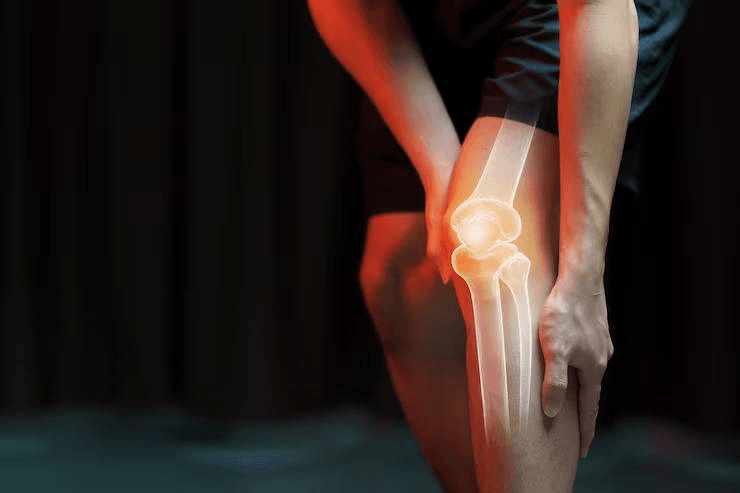
Partial knee replacement caps only the worn compartment and keeps both cruciate ligaments.
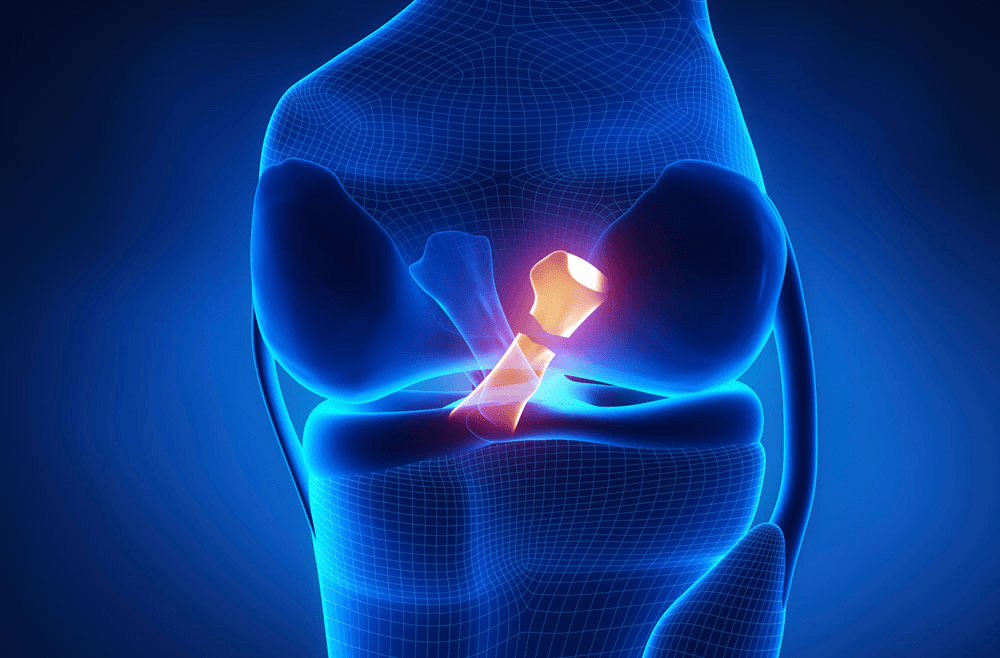
The knee is not one joint — it is three separate compartments working together. The medial compartment (inner side), the lateral compartment (outer side), and the patellofemoral compartment (kneecap and groove) each bear different loads and develop arthritis at different rates.
When arthritis is confined to one compartment — most commonly the medial — destroying the entire joint surface and replacing all three compartments is not always necessary. Partial knee replacement (also called unicompartmental knee replacement or UKR) replaces only the damaged compartment, preserving the rest of the natural joint.
This distinction matters enormously for Indian patients. For cultural and practical reasons — floor-based daily life, cross-legged sitting, religious practice, squatting — the ability to achieve good deep knee flexion after surgery is not a preference, it is a functional necessity. Partial knee replacement typically allows significantly better range of motion than total replacement, and the patients who qualify for it have the opportunity for a more natural-feeling post-operative knee.
What Partial Knee Replacement Actually Involves
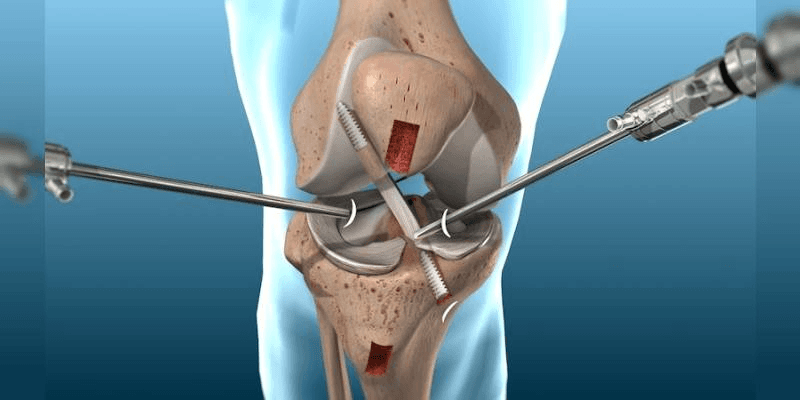
In a medial unicompartmental replacement (the most common type), only the inner compartment's bone surfaces are reshaped and capped with implants. The medial femoral condyle receives a metal cap. The medial tibial plateau receives a flat metal baseplate with a small polyethylene (plastic) insert.
Everything else is preserved: the cruciate ligaments (which are removed in most total knee replacements), the lateral compartment, the patellofemoral compartment, and the joint capsule on the lateral side. The knee retains much of its natural anatomy.
The procedure is technically more demanding than total knee replacement in some ways — the implant must harmonise precisely with the preserved natural structures. This is one of the reasons robotic guidance is particularly valuable for partial knee replacement — the tolerance for positioning error is tighter when the implant must work alongside a still-functioning natural joint on the other side.
Who Qualifies for Partial Knee Replacement
Patient selection is the most critical determinant of partial knee replacement success. The right patient gets an excellent outcome. The wrong patient — chosen because UKR is "less surgery" rather than because it is the right operation — has higher revision rates.
The Classic Criteria
Isolated compartment arthritis: X-ray (weight-bearing) and MRI confirm that significant cartilage loss is present in only one compartment. The other two compartments must have adequate cartilage remaining.
Intact cruciate ligaments: The anterior cruciate ligament (ACL) must be functioning. If the ACL is deficient, the altered knee mechanics produce abnormal loading on the UKR component, increasing the risk of early failure.
Minimal deformity: The knee alignment (varus or valgus angle) must be correctable to neutral with the implant in place. Severe fixed varus or valgus deformity is better managed with total replacement.
Adequate bone quality: The tibial and femoral bone that will receive the implant must have sufficient density for stable fixation.
Who Is the Best Candidate
The ideal candidate for medial unicompartmental replacement in an Indian practice:
- Age 50 to 70 (though successful outcomes occur in younger and older patients)
- Medial compartment pain (inner knee pain, worst with walking and stairs)
- Relatively preserved range of motion before surgery
- Weight within a reasonable range (BMI below 35)
- Active ACL on clinical and MRI assessment
- No significant lateral or patellofemoral symptoms
- Realistic expectations — understanding that floor-sitting with deep flexion is more achievable than with total replacement, but that high-impact activities are still restricted
Who Is NOT a Candidate
- Inflammatory arthritis (rheumatoid arthritis) — because multiple compartment involvement is the pattern
- Significant lateral or patellofemoral arthritis — the preserved compartments will eventually cause symptoms
- ACL-deficient knee — altered mechanics predispose to UKR failure
- Severely deformed knee — requires total replacement for adequate correction
The Indian Lifestyle Advantage of Partial Knee Replacement
This is the section that matters most for the majority of patients reading this in India.
Total knee replacement achieves 110 to 120 degrees of knee flexion in most patients — adequate for normal walking and stair climbing, but not for deep squatting, sitting cross-legged on the floor, or using a squat toilet comfortably.
Partial knee replacement, by preserving the cruciate ligaments and normal joint anatomy, consistently achieves greater post-operative range of motion — typically 130 to 140 degrees in well-performed cases, with some patients achieving 150 degrees. This range is what allows:
- Comfortable sukhasana (cross-legged floor sitting) — achievable in a meaningful proportion of partial knee patients by 6 to 9 months
- Indian squat toilet use — possible earlier than after total replacement
- Floor-level activities at family functions, weddings, and religious ceremonies
- Sitting on low charpoys and traditional seating
The "forgotten joint" score — how natural the knee feels in daily life — is consistently higher for partial replacement than total replacement. Patients describe the partial knee as feeling more like their own joint, with less awareness of a mechanical device.
What the Evidence Shows on Outcomes
Survival rates: The Oxford Unicompartmental Knee Study (the longest-running UKR follow-up in the world) reports 20-year survival rates of approximately 91 percent for medial UKR in appropriately selected patients. Australian and Swedish joint registry data show comparable or better survival for UKR than total replacement in patients under 65.
Pain relief: Equivalent to total knee replacement — approximately 95 percent of appropriately selected patients achieve meaningful pain reduction.
Recovery: Faster than total replacement — the soft tissue disruption is less, the procedure is shorter (45 to 60 minutes vs 75 to 90 for TKR), and hospital stays are typically 2 to 3 days. Return to unassisted walking is faster.
Revision: If partial replacement fails, revision to total knee replacement is relatively straightforward — the preserved bone stock makes conversion easier than revision of one total to another.
Robotic Guidance for Partial Knee Replacement at Sarvodaya Healthcare
Partial knee replacement has tighter positioning tolerances than total replacement — the implant must be positioned precisely to work in harmony with the preserved cruciate ligaments and natural joint on the other side. Even small positioning errors — 2 to 3 degrees in tibial slope or component rotation — can produce abnormal contact patterns that accelerate wear or cause the knee to feel "wrong."
This is exactly where robotic guidance adds most value. The pre-operative CT plan defines the precise implant position for each patient's specific anatomy. The robotic system confirms that each bone cut meets the plan within 1 to 2 degrees. The result — a correctly positioned partial implant — is what produces the natural-feeling outcome that patients describe at 6 and 12 months.
Dr. Ankur Singh performs robotic-assisted partial (unicompartmental) knee replacement at Sarvodaya Healthcare in Noida, where the combination of surgical experience and robotic precision produces outcomes that match the best published data.
Partial vs Total: How the Decision Is Made
At the pre-operative consultation at Renew Orthopedic Clinic, the decision between partial and total is made through:
Clinical assessment: Which compartment is most symptomatic? Is the pain medial (inner knee), lateral (outer knee), or anterior (front, possibly patellofemoral)?
Weight-bearing X-rays: Assess the joint space in each compartment, the degree of varus or valgus alignment, and whether the alignment is passively correctable.
MRI: Confirms the cruciate ligament status and the condition of the preserved compartments.
Discussion of goals: A 55-year-old who wants to return to floor-level yoga and can meet the anatomical criteria for partial replacement is a different patient from a 72-year-old with tricompartmental arthritis who wants pain relief and normal walking — even if both have medial compartment disease.
The answer is individualised. The question "partial or total?" does not have a default answer — it has an answer for each specific patient after thorough assessment.
Frequently Asked Questions
Can partial knee replacement convert to total later if needed? Yes. If the preserved compartments develop significant arthritis over time and the partial replacement needs revision, conversion to total knee replacement is a well-described procedure with good results. The preserved bone stock from the partial replacement makes the conversion technically more straightforward than revising one total to another.
Is partial knee replacement available in Noida? Yes. Dr. Ankur Singh performs robotic-assisted partial knee replacement at Sarvodaya Healthcare in Noida. This is one of a small number of centres in the Delhi-NCR region with robotic UKR capability. Consultations at Renew Orthopedic Clinic, Sector 47 Noida.
Is partial knee replacement suitable for both knees? Bilateral partial knee replacement (both knees, either simultaneously or staged) is appropriate for patients with bilateral medial compartment arthritis who meet the selection criteria for both sides.
Dr. Ankur Singh | Knee Replacement Specialist Noida | Partial Knee Replacement India | Unicompartmental Knee Surgery Greater Noida | Sarvodaya Healthcare | Renew Orthopedic Clinic Sector 47 Noida
Medical Disclaimer
The information provided on this website is for educational purposes only and should not be considered as medical advice. Please consult Dr. Ankur Singh or a qualified healthcare professional for personalized medical guidance.
Share this blog:
 Copy



.jpg)
-compressed.jpg)