7 Proven Benefits of Robotic Knee Replacement Surgery

Physician examining a patient’s knee to assess knee replacement recovery progress.
When patients ask about the benefits of robotic knee replacement, they often receive vague answers: "more precise," "better outcomes," "advanced technology." These phrases carry meaning but no specificity. They do not tell a patient whether robotic surgery is worth choosing for their particular knee, at their particular age, with their particular goals.
This guide provides the specific, quantified benefits — each grounded in published clinical data — that distinguish robotic knee replacement from conventional surgery. Not all seven benefits are equally relevant to every patient. Understanding which ones apply to your situation is what makes this information genuinely useful.
Benefit 1: Sub-Millimetre Implant Positioning Accuracy
What this means: In conventional knee replacement, bone cuts and implant placement rely on mechanical guides and the surgeon's manual technique. Studies show that even experienced surgeons achieve the planned mechanical alignment within 3 degrees in approximately 70 to 80 percent of cases. In the remaining 20 to 30 percent, the implant sits measurably off its intended position.
Robotic guidance — using pre-operative CT-based planning and real-time haptic feedback — achieves target alignment within 3 degrees in over 95 percent of cases. The margin of error drops from 3 to 5 degrees in conventional surgery to less than 1 to 2 degrees consistently.
Why it matters: Implant alignment is the single variable most responsible for long-term implant survival. A 3-degree tibial slope error increases polyethylene wear by approximately 40 percent — directly shortening implant life. A 5-degree coronal plane error increases the revision risk at 10 years by nearly double.
The patient-level translation: For a 57-year-old patient, the difference between a well-aligned and a 4-degree misaligned implant could be the difference between one surgery for life and needing a revision at 72.
Benefit 2: Personalised Pre-Operative Planning from Your Specific Anatomy
What this means: Conventional knee replacement uses standard mechanical guides designed around average bone geometry. Your knee is not average — the precise curvature of your femur, the exact width of your tibial plateau, the specific degree and pattern of your deformity, the density of your bone in specific areas — all vary from the template.
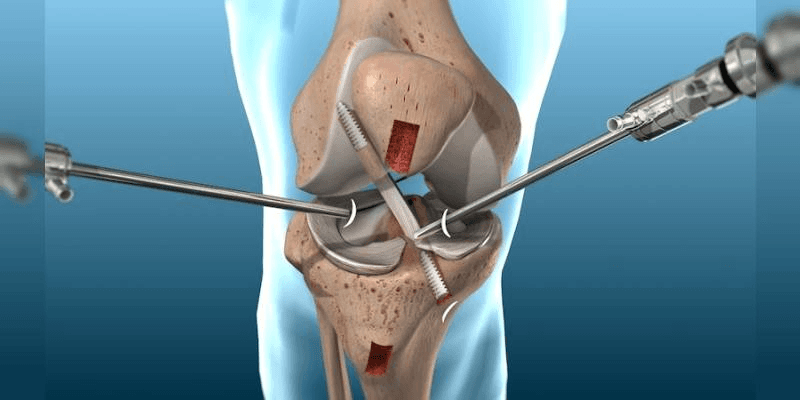
Robotic surgery begins with a CT scan of your specific knee, from which software constructs a precise 3D digital model. Dr. Ankur Singh uses this model to plan your surgery before you enter the operating theatre — selecting implant size, positioning, and orientation based on your actual anatomy, not population averages.
Why it matters: Individual anatomical variation is the primary reason mechanical guides produce positioning errors. A guide designed for average anatomy on a knee that is not average will be systematically off-target. Personalised planning eliminates this source of error before surgery begins.
The patient-level translation: Patients with unusual bone geometry — significant varus (bow-legged) deformity, post-traumatic anatomy from old fractures, unusual femoral anatomy — particularly benefit from this personalised approach. The plan accounts for what makes their knee different, not what makes it typical.
Benefit 3: Real-Time Verification Before Permanent Fixation
What this means: In conventional knee replacement, after the bone cuts are made and the trial implants are placed, the surgeon assesses alignment and balance through visual inspection and manual testing. This assessment is skilled but subjective — it relies on experience rather than measurement.
Robotic surgery adds a formal digital verification step: before the final implant is permanently cemented, the robotic system displays a side-by-side comparison of the planned implant position and the actual achieved position. Gap balance (the space between femoral and tibial components in extension and in flexion) is measured digitally. If any discrepancy exists, it is identified and corrected before anything is permanent.
Why it matters: This is the equivalent of a quality control checkpoint at the most critical moment of the operation. Errors that would go undetected in conventional surgery — and that would then be fixed in the patient permanently — are caught and corrected in real time.
The patient-level translation: The verified implant is what the surgeon planned. There is no ambiguity about whether the alignment target was achieved — the system confirms it before the wound is closed.
Benefit 4: Faster Mobilisation and Earlier Functional Recovery
What this means: Multiple comparative studies show that robotic knee replacement patients achieve early functional milestones faster than conventional surgery patients. A 2019 meta-analysis in the Journal of Orthopaedic Surgery and Research found robotic patients:
- Were walking without a walking aid on average 7 to 14 days earlier
- Achieved 90 degrees of knee flexion 3 to 5 days sooner during hospitalisation
- Had shorter hospital stays by 0.5 to 1.5 days on average
Why it matters: The mechanism is intuitive. A precisely positioned implant functions correctly from the first day. The physiotherapy programme is building strength and range around a mechanically correct joint, not one requiring neuromuscular compensation for subtle malpositioning. The muscles activate more efficiently. Progress is faster because the joint mechanics are right.
The patient-level translation: For the working professional who needs to return to desk work, for the parent who needs to be functional for their family, for the elderly patient whose family caregiver has limited availability — being walking without aids 10 days earlier is a meaningful, practical difference.
Benefit 5: More Natural Knee Feel and Higher Patient Satisfaction
What this means: Approximately 10 to 20 percent of patients after conventional total knee replacement report that the knee does not feel natural — it feels mechanical, subtly wrong, or different from what they expected. This phenomenon — sometimes called "forgotten joint score" — is increasingly studied as a distinct outcome measure.
A 2022 analysis from the Australian Orthopaedic Association National Joint Replacement Registry found that robotic knee replacement patients scored significantly higher on the "forgotten joint" dimension — the degree to which the operated knee feels like their own natural joint rather than a prosthetic device.
Patient satisfaction rates of 90 to 95 percent are consistently reported for robotic knee replacement compared to 85 to 90 percent for conventional surgery in studies using equivalent measurement tools.
Why it matters: The feel of the knee is not a trivial outcome measure — it is what determines whether patients consider their surgery a success beyond the clinical metrics. Accurate implant positioning produces symmetrical soft tissue tension throughout the arc of motion, which translates directly to a more natural movement pattern.
The patient-level translation: Patients who describe their knee as "feeling like my own joint" have achieved the goal — a replaced joint that functions so naturally it stops being noticed. This is what robotic precision most specifically enables.
Benefit 6: Bone Conservation
What this means: Robotic-guided bone cuts are precisely planned to remove the minimum bone necessary to accommodate the implant. Because the cuts are executed accurately the first time — without the need for repeated adjustments to correct guide malalignment — less total bone is removed than in conventional surgery, where corrections often require additional resection.
This is not a dramatic difference in bone volume, but it is consistent and meaningful: studies show robotic surgery preserves an average of 1 to 2 mm more bone stock at the tibial and femoral cut surfaces.
Why it matters: Preserved bone stock matters primarily if the patient ever needs revision surgery. Revision knee replacement — removing the original implant and placing a new one — is significantly easier with more bone available. Revision components require larger fixation zones, and adequate bone stock determines how well they can be secured.
The patient-level translation: For younger patients for whom a revision procedure in 20 to 25 years is a real possibility, bone conservation today makes that future revision technically simpler and reduces the need for complex bone-restoring revision implants.
Benefit 7: Reduced Soft Tissue Trauma from Controlled Bone Cutting
What this means: The precision of robotic bone cutting reduces the collateral soft tissue trauma associated with conventional guide placement and repeated cut adjustment. When mechanical guides are placed, adjusted, and repositioned — which occurs when initial cuts are not quite right — the surrounding soft tissues experience additional manipulation and retraction. Robotic guidance, executing each cut correctly the first time, reduces this cumulative soft tissue disturbance.
Why it matters: Reduced soft tissue trauma correlates with less post-operative swelling, less inflammatory response, and faster resolution of the initial recovery phase. Some studies also show lower post-operative blood loss in robotic cases.
The patient-level translation: Less swelling in the first two weeks means physiotherapy is more comfortable and more productive. Less soft tissue inflammation means the patient reaches the strengthening phase of recovery sooner.
Who Benefits Most From All 7 Advantages
The full stack of robotic benefits is most relevant for:
Patients under 65: The alignment accuracy and bone conservation benefits compound over longer implant horizons. The younger the patient, the larger the absolute benefit from these advantages over a 20+ year timeline.
Patients with significant varus or valgus deformity: Personalised planning and precise correction make the largest relative difference in anatomically complex knees.
Patients choosing partial (unicompartmental) knee replacement: Partial replacement is technically more precision-sensitive than total replacement — robotic guidance's accuracy advantage is amplified in this specific procedure.
Patients who cannot afford revision surgery in the future: Better alignment means lower revision probability. For patients who want a single surgery for life, robotic precision is the strongest available tool for achieving this.
Bilateral patients: Consistent precision across both knees produces symmetric function that conventional surgery cannot reliably match.
Robotic Knee Replacement at KDSG Superspeciality Hospital, Greater Noida
Dr. Ankur Singh performs robotic-assisted total and partial knee replacement at KDSG Superspeciality Hospital in Greater Noida, where he serves as Director of Orthopedics. KDSG is one of a small number of centres in the Delhi-NCR region outside central Delhi offering robotic knee replacement.
Pre-operative consultation — where the decision between robotic and conventional surgery is made based on individual patient factors — is held at Renew Orthopedic Clinic, Sector 47 Noida.
To book a consultation, call the number listed on this website.
Frequently Asked Questions
Do all patients need robotic surgery or only some?
Robotic surgery produces its largest benefits in patients with significant deformity, younger patients with long implant horizons, and partial knee replacement candidates. For older patients with straightforward anatomy, high-quality conventional surgery by an experienced surgeon remains excellent. The decision is made individually at consultation.
How do I know if I am a robotic knee replacement candidate?
Clinical assessment, weight-bearing X-rays, and discussion of functional goals with Dr. Ankur Singh determine candidacy. Most patients with knee arthritis severe enough to warrant replacement are candidates for robotic surgery.
Is the pre-operative CT scan required for robotic surgery?
Yes. The CT scan is the foundation of personalised pre-operative planning — without it, the robotic system cannot construct the patient's specific 3D model and the planning step cannot be completed. It is typically performed 2 to 4 weeks before surgery.
Dr. Ankur Singh | Robotic Knee Replacement Noida | Best Robotic Knee Surgery Greater Noida | KDSG Superspeciality Hospital | Renew Orthopedic Clinic Sector 47 Noida
Medical Disclaimer
The information provided on this website is for educational purposes only and should not be considered as medical advice. Please consult Dr. Ankur Singh or a qualified healthcare professional for personalized medical guidance.
Share this blog:
 Copy
Copy