Partial Vs Total Knee Replacement: How To Know Which One You Actually Need
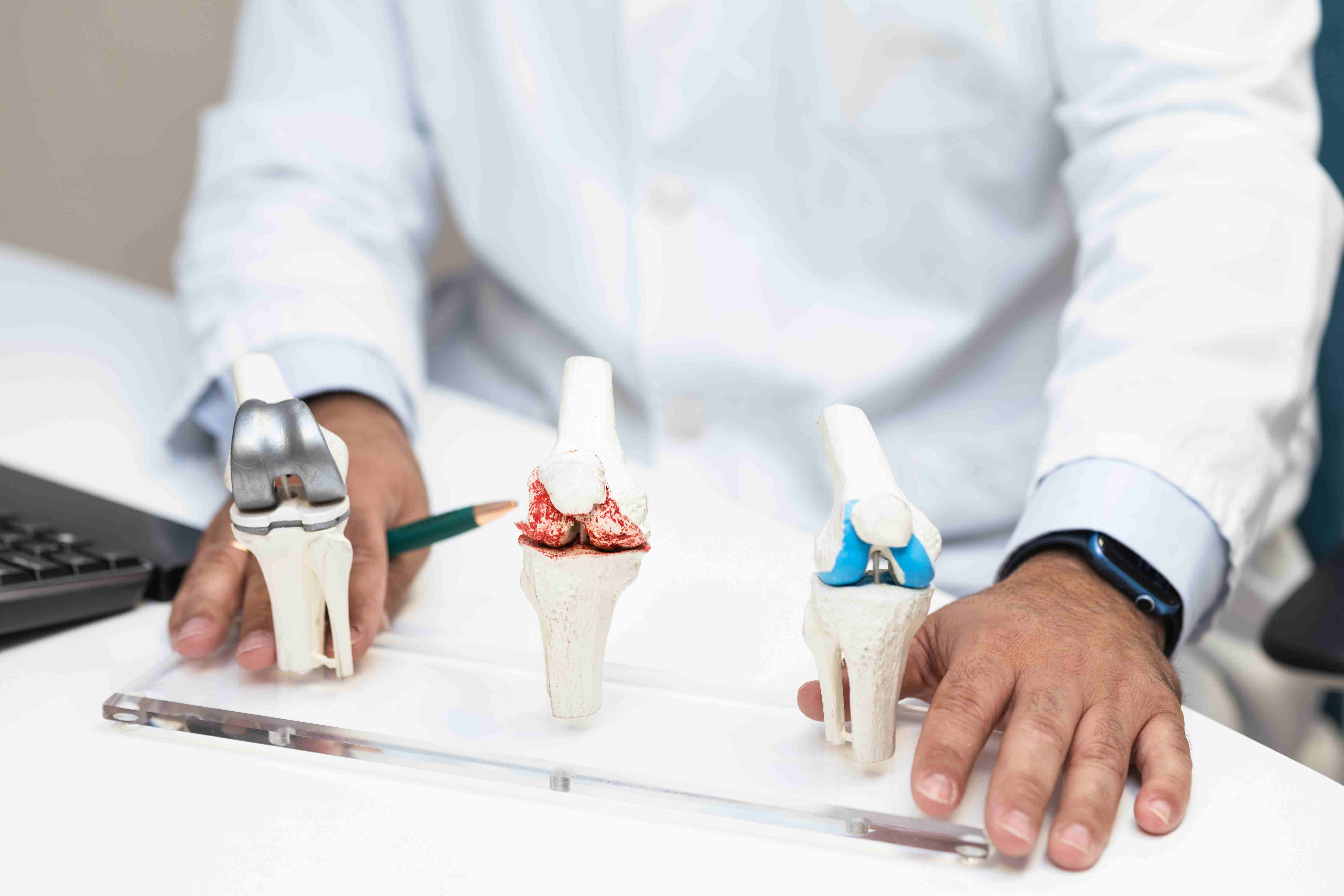
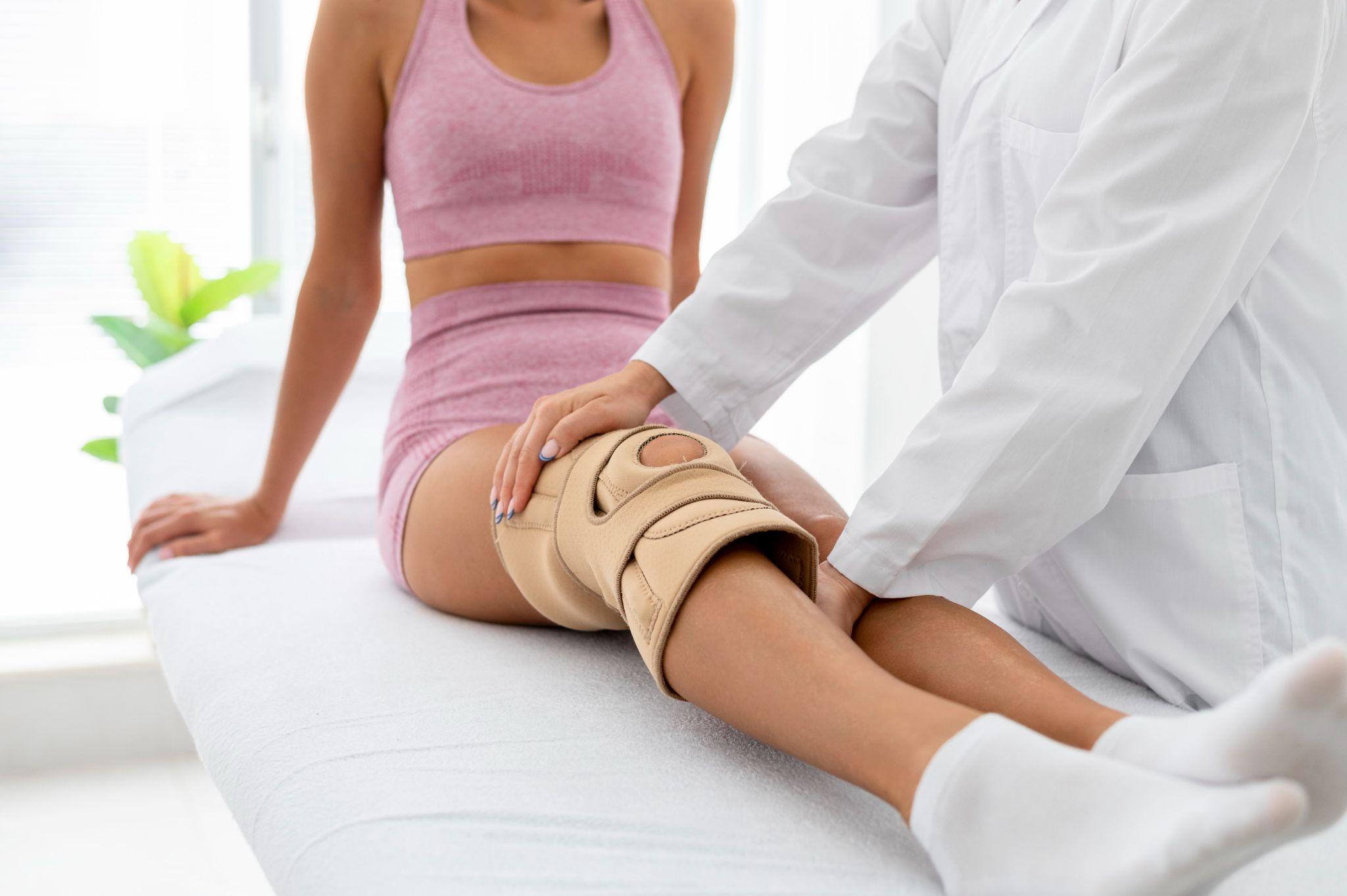
Doctor explaining knee implant components and surgical choices related to partial vs total knee replacement procedures.
The knee is not a single joint; it has three distinct compartments, each of which can develop arthritis independently. The medial compartment (inner knee, the most commonly affected), the lateral compartment (outer knee), and the patellofemoral compartment (under the kneecap). When arthritis destroys all three, the decision for total knee replacement is straightforward. But when only one compartment is involved, and this is more common than most patients realise, there is a highly effective alternative that most patients in India are never offered.
Partial knee replacement, also called unicompartmental knee arthroplasty (UKA), replaces only the damaged section of the knee while leaving the healthy bone, cartilage, and, critically, the cruciate ligaments completely intact. For the right patient, it is a smaller operation, a faster recovery, a more natural-feeling knee, and an equally durable outcome.
Understanding the difference between the two procedures and knowing whether you qualify for partial replacement is genuinely worth your time before surgery.
What Each Procedure Actually Involves
1. Total Knee Replacement (TKR)
The entire surface of the knee joint, the ends of the femur (thigh bone), the top of the tibia (shin bone), and the undersurface of the patella are resurfaced with metal and plastic components. Both the ACL and PCL are removed. The knee is rebuilt entirely with artificial materials. This is the right procedure when arthritis has affected multiple compartments or when the knee ligaments are damaged.
2. Partial Knee Replacement (UKR / PKR)
Only the damaged compartment, typically the medial (inner) side, is resurfaced. The metal and plastic components are smaller and cover a fraction of the joint surface. The cruciate ligaments are preserved. The healthy cartilage in the other compartments remains untouched. The knee retains its natural ligament-guided movement, which is why many patients describe a UKR as feeling more like their own knee than a total replacement does.
Who Is A Candidate For Partial Knee Replacement?
Partial knee replacement is not suitable for everyone with knee arthritis. The eligibility criteria are specific, and getting them right is what determines whether the outcome is excellent or whether the patient ends up needing revision to a total replacement. The classic candidate for medial unicompartmental knee replacement has:
Arthritis confined to one compartment. The most important criterion. If the patient has significant arthritis in two or more compartments, partial replacement is not the right procedure. MRI and weight-bearing X-rays with alignment views establish this clearly.
Intact cruciate ligaments. Both the ACL and PCL must be functional. UKR preserves and depends on these ligaments for mechanical stability. If they are damaged or absent, the biomechanics will be wrong.
Predominantly medial (inner knee) pain. Pain localised to the inner knee, often described as worse on the medial side when climbing stairs or walking on uneven ground, is the classic presentation of medial compartment arthritis.
A correctable deformity. A mild varus (bow-legged) deformity from medial compartment collapse is correctable and acceptable. Severe fixed deformity is not.
A reasonable BMI. Higher body weight increases the mechanical load on the partial replacement and accelerates wear. Most surgeons consider a BMI below 35 preferable, though this is not an absolute cut-off.
Older than 55 to 60. Younger, higher-demand patients may overload the smaller partial implant. However, evidence supports good outcomes in selected younger patients, particularly with robotic assistance for precise positioning.
Anterior knee pain (patellofemoral arthritis) is NOT present. Significant pain under the kneecap, suggesting patellofemoral arthritis, is a contraindication for standard UKR.
The Honest Comparison: UKR Vs TKR
UKR and TKR are two different knee replacement approaches, and understanding their differences can help patients choose the most suitable option for their condition and lifestyle needs.
1. Recovery
Partial knee replacement is a smaller operation; less bone is removed, blood loss is lower, the incision is shorter, and the hospital stay is reduced. Most UKR patients are discharged in two to three days (versus three to five for TKR), walking comfortably without aids in four to six weeks, and back to full daily activity by two to three months. Total knee replacement recovery typically takes three to four months before the patient feels genuinely functional.
2. How It Feels

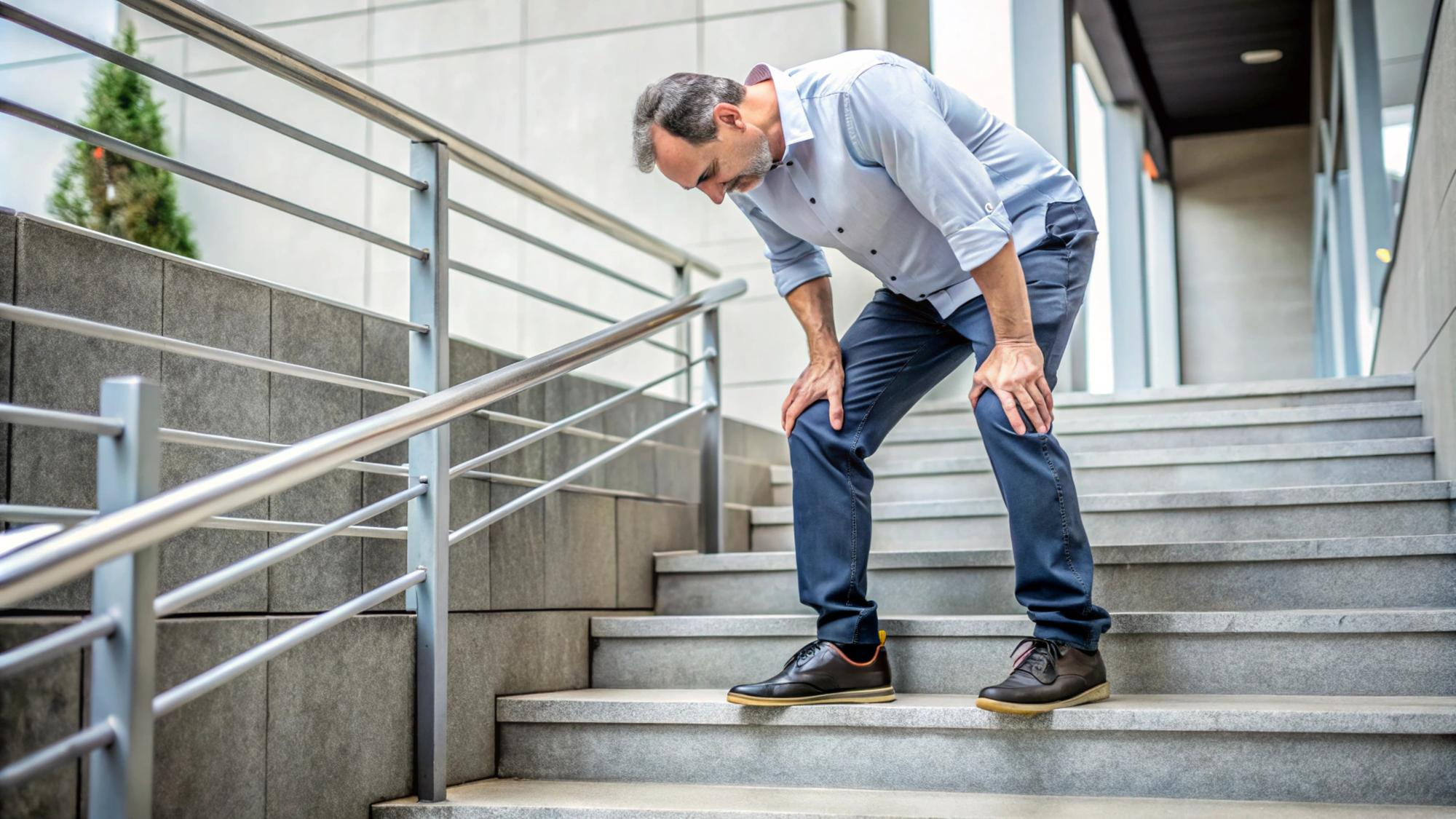
A person walking up the stairs
This is where the difference is most striking for patients. Because the cruciate ligaments are preserved and only a portion of the joint is replaced, many UKR patients describe their replaced knee as feeling close to a natural knee. They can walk, pivot, squat, and sit cross-legged more naturally than typical TKR patients. Research from India shows that in appropriately selected patients, UKR patients achieve a better range of motion and higher "forgotten joint scores," meaning they are less aware of the artificial component during daily activity.
3. Longevity
Modern partial knee replacements, when correctly indicated and accurately implanted, have 10 to 15-year survival rates of 90 to 95 percent, comparable to total knee replacement in appropriately selected patients. When UKR fails, it can reliably be converted to a total knee replacement without significant compromise to the eventual TKR outcome.
4. What Happens If It Fails
The most common reason for UKR failure is progression of arthritis in the other compartments; the knee's own disease continues in the unaffected parts over time. When this happens, conversion to total knee replacement is a well-established and reliable procedure. The revision is more involved than a primary TKR but consistently produces good outcomes.
The Problem: Why Partial Replacement Is Underused In India
Despite being an excellent procedure for the right patient, unicompartmental knee replacement is dramatically underperformed in India relative to Western countries. Several reasons contribute to this:
Surgeon volume and training. Partial knee replacement is technically more demanding than total knee replacement. It requires precise ligament balancing and implant positioning that leaves less margin for error than TKR. Surgeons who perform high volumes of UKR and particularly those using robotic assistance, achieve markedly better outcomes than lower-volume operators.
Patient awareness. Most patients in India are not aware that partial replacement exists as an option. They present expecting to be told they need "the big surgery" and are rarely informed that a smaller, joint-preserving procedure may be appropriate for their specific pattern of arthritis.
Referral patterns. Many patients reach an orthopedic surgeon only when their arthritis is already severe and multi-compartmental, which makes UKR genuinely inappropriate. Earlier referral when arthritis is still localised would increase the proportion of patients eligible.
The Role Of Robotic Assistance In Partial Knee Replacement
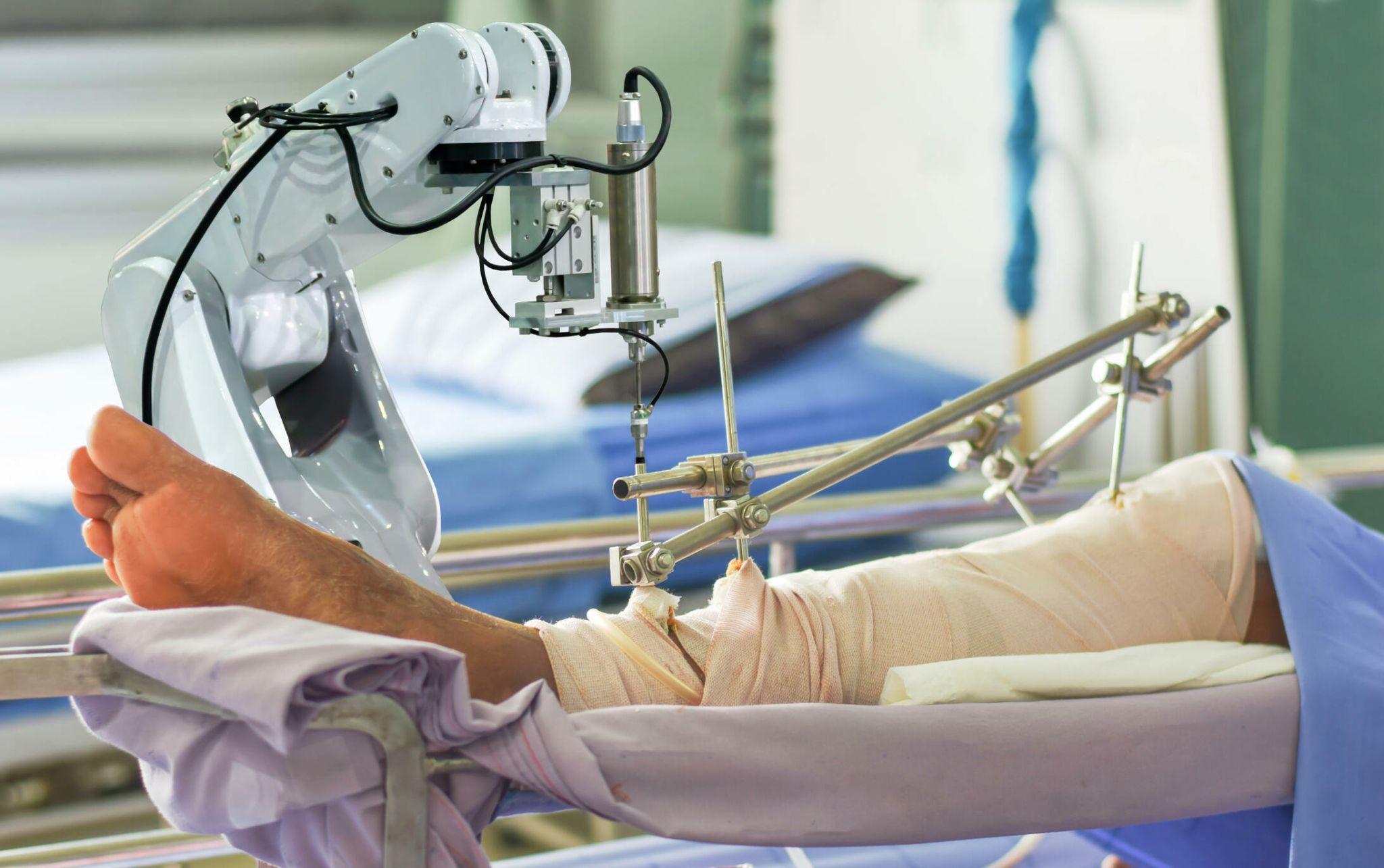
Robotic-assisted partial knee replacement is where precision matters most. Because the partial implant sits within a knee that still has functional ligaments and natural compartments, the positioning tolerance is tighter than for total knee replacement. Even a few degrees of misalignment changes how the knee loads through the replaced compartment and accelerates wear.
Robotic guidance, using 3D pre-operative planning and real-time intraoperative feedback, allows the surgeon to achieve optimal implant position consistently, which is the single most important determinant of long-term UKR success. Dr. Ankur Singh performs robotic-assisted partial and total knee replacement at KDSG Superspeciality Hospital in Greater Noida.
How To Know Which Procedure Is Right For You

A patient using crutches and a knee brace while walking under medical supervision in a rehabilitation setting.
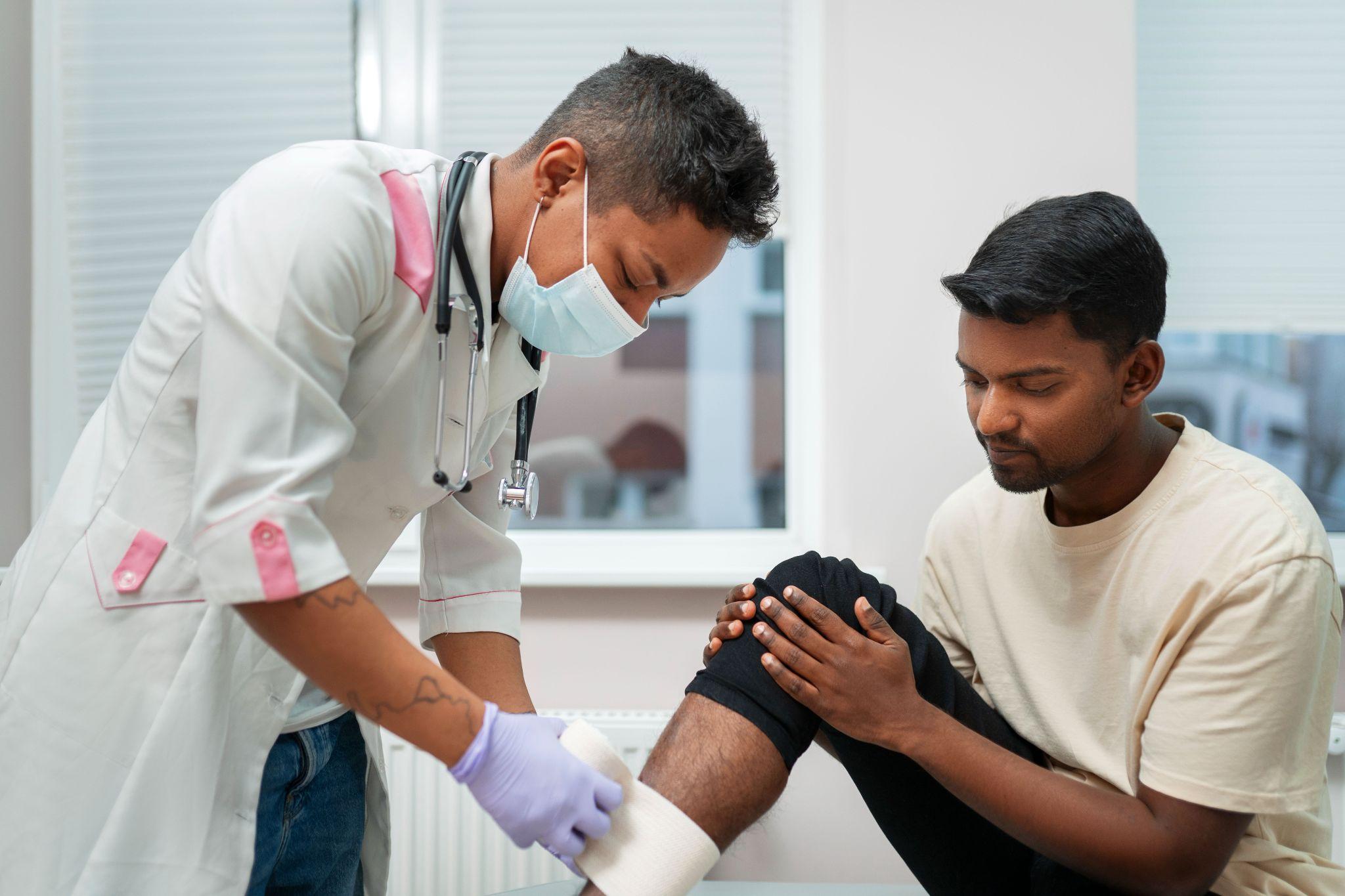
The decision requires a proper evaluation, not a guess based on symptom severity alone. The assessment includes:
- Clinical examination: Where exactly is the pain, what movements reproduce it, is there varus deformity, and are the ligaments stable
- Weight-bearing X-rays with mechanical axis views: To assess compartmental involvement and leg alignment.
- MRI if cruciate ligament integrity is uncertain or cartilage mapping is needed
Many patients who come to Dr. Ankur Singh, having been told elsewhere that they need a total knee replacement, turned out on proper evaluation to be an excellent candidate for partial replacement. The reverse is also true; patients who have heard about UKR and want it are sometimes found to have multi-compartmental disease that makes TKR the only appropriate option. Getting this decision right at the first consultation is the most important step in the entire journey.
To book a knee replacement assessment at Renew Orthopedic Clinic, Sector 47, Noida, or for surgery at KDSG Hospital in Greater Noida, call the number listed on this website.
Frequently Asked Questions
1. Can I sit cross-legged after partial knee replacement?
Many patients achieve cross-legged sitting after UKR — the preserved ligaments and smaller implant footprint often allow better deep flexion than TKR. An Indian study showed that 94 percent of UKR patients could sit cross-legged and squat at four months post-surgery. This is an important functional goal for Indian patients, and it should be discussed before surgery.
2. How do I know if my arthritis is in one compartment or more?
Weight-bearing X-rays and a clinical examination by an experienced orthopedic surgeon will establish this clearly. Medial compartment arthritis typically shows as joint space narrowing on the inner side of the knee with relative preservation of the outer side. MRI adds detail on cruciate ligament integrity and cartilage health.
3. Is partial knee replacement available in Noida or Greater Noida?
Yes. Dr. Ankur Singh performs both partial (unicompartmental) and total knee replacement at KDSG Superspeciality Hospital in Greater Noida, with robotic assistance available for both procedures.
4. What happens if partial replacement fails in the future?
Conversion to total knee replacement is a well-established salvage procedure for failed UKR. The outcomes of conversion TKR are generally good, though the surgery is slightly more complex than a primary TKR.
Dr. Ankur Singh | Best Orthopedic Surgeon in Noida | Partial Knee Replacement Noida | Unicompartmental Knee Replacement | Robotic Knee Surgery Greater Noida
Medical Disclaimer
The information provided on this website is for educational purposes only and should not be considered as medical advice. Please consult Dr. Ankur Singh or a qualified healthcare professional for personalized medical guidance.
Share this blog:
 Copy
Copy