Osteoarthritis Stages Explained: When Does Knee Pain Actually Need Surgery?

An educational illustration showing the comparison of a healthy knee joint and a knee joint impacted by the condition osteoarthritis. The left shows a healthy knee, including labels to signify the articular cartilage, the regular joint space, and the meniscus. In contrast, the right section displays the deterioration that has occurred in the condition, focusing on the absence of cartilage, a narrowed joint space, and bone growths (spurs).
Knee osteoarthritis affects a significant portion of adults in India; studies suggest the prevalence is around 28% in people over 40, making it one of the most common reasons patients visit an orthopedic surgeon in Noida and across the country. Yet "osteoarthritis" is not a single disease state. It is a spectrum, ranging from barely-there cartilage changes that cause no symptoms at all, to bone-on-bone grinding that makes walking painful and sleep difficult. The right treatment, and whether surgery is part of it, depends almost entirely on where on that spectrum a patient sits.
This blog explains the grading system that orthopedic surgeons use, what each stage means in practice, and at what point surgical intervention becomes the appropriate recommendation.
How Is Osteoarthritis Graded?
The most widely used grading system for knee osteoarthritis is the Kellgren-Lawrence (KL) scale, based on X-ray findings. It runs from Grade 0 (normal knee) to Grade 4 (severe damage). Importantly, research, including studies from Indian orthopaedic institutions, shows that X-ray grading does not always correlate perfectly with the severity of pain. Some patients with Grade 2 changes experience significant pain; others with Grade 3 changes feel only mild discomfort. This is why treatment decisions are never made on imaging alone.
Grade 0: Normal Knee
At Grade 0, the knee joint is healthy. There is no cartilage loss, no bone spurring, and no narrowing of the joint space. This is not a disease state; it simply sets the baseline for understanding what changes with progression.
Grade 1: Minor Changes (Doubtful Osteoarthritis)
Very small bone spurs (osteophytes) may be visible on X-ray. The cartilage is intact. Joint space is normal. Most patients at this stage have little to no pain or functional limitation. Many do not even know their knee has any changes.
Treatment at this stage - Lifestyle modification is the main focus. Maintaining a healthy body weight reduces load on the knee joint. Regular low-impact exercise, like walking, swimming, or cycling, keeps the surrounding muscles strong, which is the best way to protect cartilage over time. No medication or surgery is necessary.
Grade 2: Mild Osteoarthritis
Bone spurs are more obvious on imaging. The cartilage has begun to thin slightly, and joint space is mildly narrowed. Patients at this stage commonly report pain after prolonged activity, stiffness in the morning that eases after a few minutes of movement, and occasional swelling after a long day on their feet. The knee still functions reasonably well for daily life. Most activities remain possible, though high-impact sport may become uncomfortable.
Treatment at this stage - Still primarily non-surgical. Options include physiotherapy to strengthen the muscles around the knee (particularly the quadriceps), anti-inflammatory medications when needed, activity modification, weight management, and where appropriate, intra-articular injections (corticosteroid or PRP). Bracing and supportive footwear also play a role. Surgery is not indicated at Grade 2 unless there is a specific structural problem, like a loose body, a meniscal tear causing mechanical locking that requires arthroscopic attention.
Grade 3: Moderate Osteoarthritis

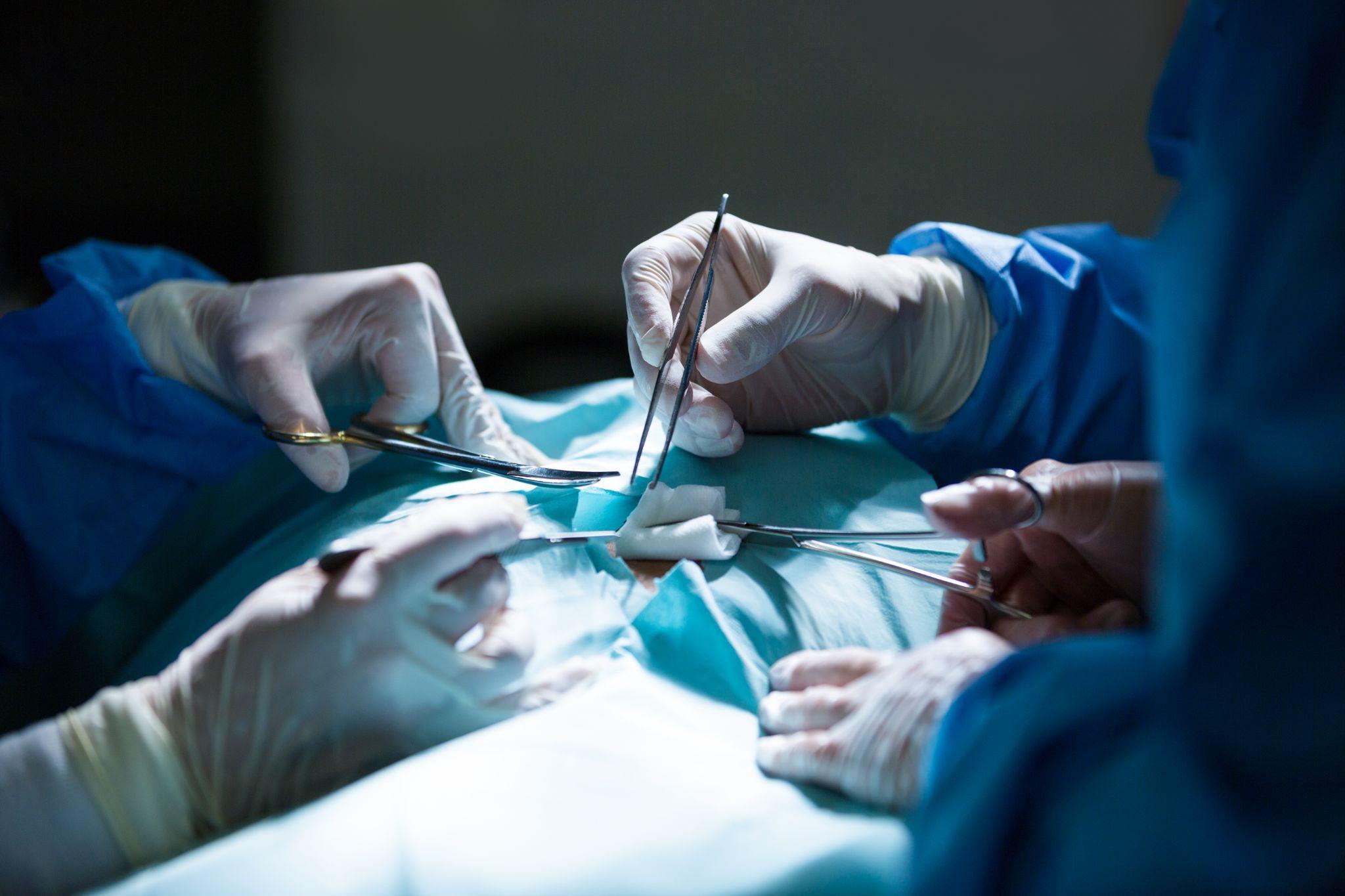
A team of surgeons is operating on the knee of a patient lying on the bed through an arthroscopy procedure in the operating room.
This is where things become more clinically significant. At Grade 3, cartilage loss is substantial. The joint space is noticeably narrowed. Bone spurs are multiple and larger. Patients typically report pain that is no longer just activity-related, as it occurs during everyday movements like walking, climbing stairs, or rising from a chair. Stiffness can persist longer in the mornings. There may be crepitus (a grinding sensation) with knee movement.
Daily activities begin to be limited. People at this stage often find they have reduced how much they walk, stopped certain recreational activities, or are relying on painkillers more regularly than they would like.
Treatment at this stage - Conservative management remains the first line but with more intensive intervention. Physiotherapy, injections, and medication are tried systematically. For some patients, these measures provide sufficient relief for sustained periods. However, when conservative treatment at Grade 3 is no longer providing meaningful relief, and quality of life is significantly affected, surgical evaluation becomes appropriate. Depending on age, anatomy, and the pattern of damage, options may include:
- Arthroscopic debridement - Removing loose fragments and smoothing damaged cartilage. This provides temporary symptom relief in selected patients but does not address the underlying cartilage loss.
- High Tibial Osteotomy (HTO) - Realigning the leg by cutting and reshaping the tibia to shift weight away from the damaged compartment. This is an option for younger patients (typically under 55) with localised damage predominantly in one compartment of the knee.
Full knee replacement is not routinely performed at Grade 3 unless symptoms are severe and all conservative options have been exhausted. The goal is always to use the most conservative effective intervention.
Grade 4: Severe Osteoarthritis
At Grade 4, the cartilage is almost entirely gone. Bone rubs directly against bone. The joint space on X-ray is dramatically reduced or absent. Patients at this stage frequently experience significant pain during even minimal activity, severe stiffness that does not fully ease through the day, visible deformity of the joint (the leg may bow inward or outward), and limited mobility that significantly affects independence and quality of life. Many patients with Grade 4 osteoarthritis have given up activities they once enjoyed, like long walks, temple visits, playing with grandchildren, simply because the pain makes it impossible.
Treatment at this stage - Total knee replacement is typically the definitive and most appropriate treatment for Grade 4 osteoarthritis that is causing significant functional limitation. When performed by an experienced surgeon, total knee replacement relieves pain in the vast majority of patients and restores the ability to walk, climb stairs, and live independently with significantly less discomfort.
At Dr. Ankur Singh's practice in Noida and Greater Noida, both traditional and robotic knee replacement surgery are available for patients with Grade 4 osteoarthritis. Robotic-assisted surgery allows millimetre-precise implant placement tailored to the patient's individual anatomy, which is particularly beneficial in younger or more active patients where long-term implant performance matters most.
The Role Of Symptoms Vs. X-Ray Findings
One of the most important clinical realities in osteoarthritis management is this: treatment is guided by symptoms and functional limitation, not X-ray grade alone. A patient with Grade 2 X-ray changes who is in severe daily pain and cannot manage basic activities may warrant more aggressive management than a patient with Grade 3 findings who is functioning well on physiotherapy and lifestyle modifications. Similarly, a patient with Grade 4 changes who is elderly, has significant comorbidities, and is managing reasonably with conservative treatment may not be the right surgical candidate, at least not at that moment.
This nuance is why the evaluation process with an experienced orthopedic surgeon in Noida, like Dr. Ankur Singh, involves not just imaging but a full clinical picture: the patient's pain level, functional limitations, age, weight, activity goals, and medical history.
When To See An Orthopedic Specialist In Noida For Knee Pain

A picture of a young man standing and holding his right knee with both hands as if he were in pain. The man is wearing black shorts, and the background is plain white.
Many patients delay seeing a specialist far too long, trying to manage with home remedies, over-the-counter painkillers, or generic physiotherapy that is not targeted to their specific condition. This delay often allows the joint to deteriorate further. See an orthopedic surgeon in Noida or Greater Noida if:
- Knee pain has persisted for more than six to eight weeks without clear improvement.
- Pain is affecting your ability to walk, climb stairs, or sleep.
- The knee is swelling regularly.
- You are taking anti-inflammatory medication more than a few times per week.
- You have been told you have osteoarthritis but have not had a proper management plan.
The earlier the appropriate management is started, the better the outcomes at every stage of the disease.
Frequently Asked Questions
1. Is knee replacement the only option for severe osteoarthritis?
For Grade 4 osteoarthritis with significant functional limitation, knee replacement is usually the most effective long-term solution. For some younger patients, high tibial osteotomy may be considered first to delay replacement.
2. At what age can someone have knee replacement in Noida?
There is no strict minimum age. The decision is based on severity of symptoms, X-ray findings, and quality of life impact. Patients in their 50s and even 40s do undergo knee replacement when the clinical picture warrants it, particularly now that robotic-assisted surgery allows more precise implant positioning for longer implant durability.
3. Can osteoarthritis be reversed?
Cartilage that has been lost cannot be regenerated with current treatments. Management focuses on slowing progression, reducing pain, and maintaining function. Research into cartilage restoration techniques is ongoing, but for now, the most reliable treatment for advanced cartilage loss remains joint replacement.
4. Does being overweight worsen osteoarthritis?
Yes, significantly. Every extra kilogram of body weight adds approximately four kilograms of additional load across the knee joint. Weight management is one of the most important non-surgical interventions at every stage of osteoarthritis.
Dr. Ankur Singh | Best Orthopedic Surgeon in Noida | Knee Replacement Surgery | Osteoarthritis Treatment Noida | KDSG Superspeciality Hospital, Greater Noida
Medical Disclaimer
The information provided on this website is for educational purposes only and should not be considered as medical advice. Please consult Dr. Ankur Singh or a qualified healthcare professional for personalized medical guidance.
Share this blog:
 Copy
Copy