Life After Hip Replacement Surgery: A Month-By-Month Recovery Guide
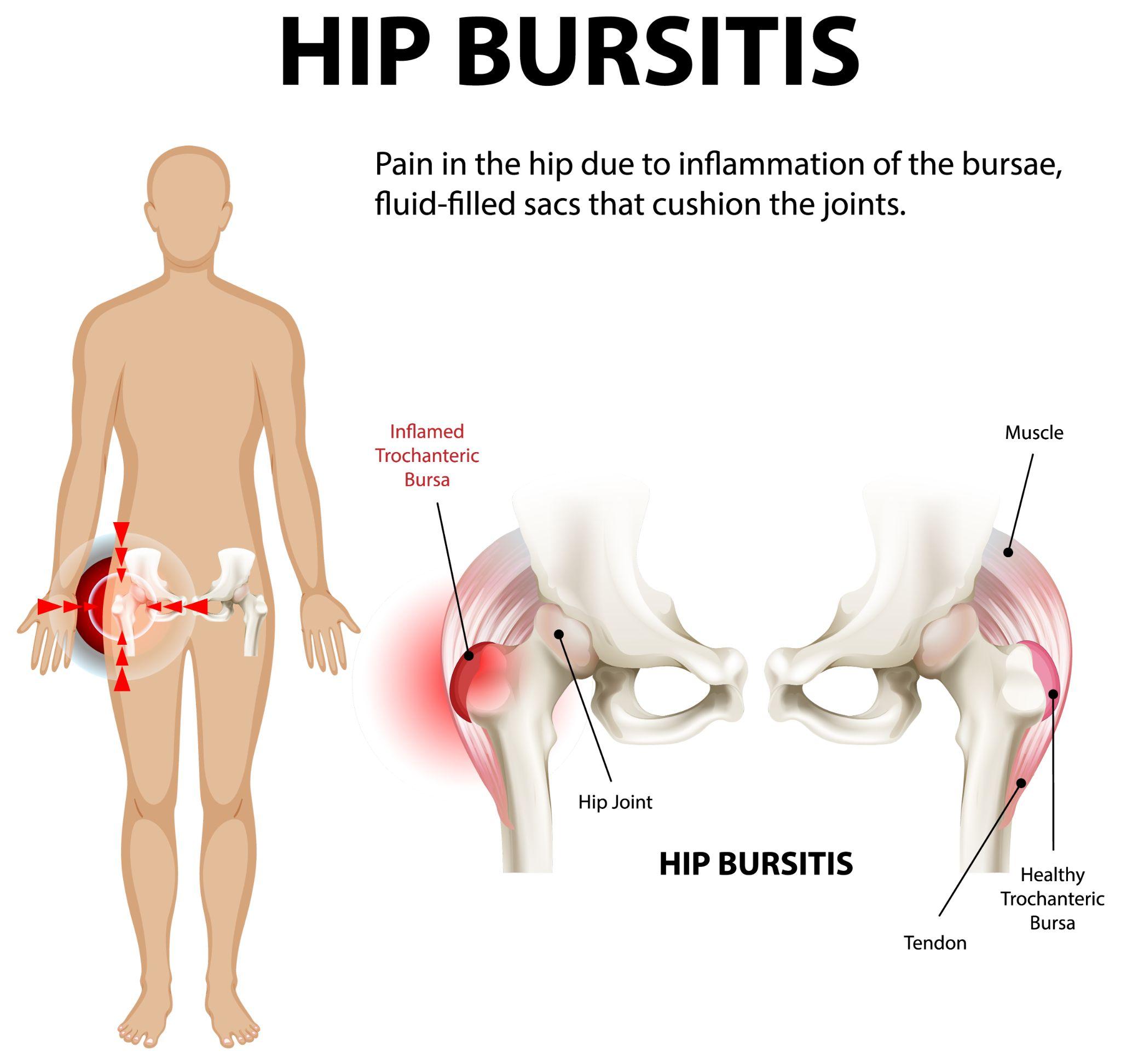
Diagram illustrating hip bursitis and inflammation around the hip joint.
Hip replacement surgery changes lives. That is not an exaggeration. Patients who have spent years limiting their walks, giving up temple visits, and avoiding family gatherings because of the climb involved, many of them describe the period after surgery as something close to starting over. But the time between surgery and that sense of freedom is not automatic. It takes work, patience, and realistic expectations. Recovery from total hip replacement is a process that unfolds over months, not weeks, and each phase has its own milestones, challenges, and goals.
This guide walks through what recovery actually looks like month by month for patients in Noida and Greater Noida who have undergone hip replacement surgery under Dr. Ankur Singh's care.
Understanding What Hip Replacement Involves
In a total hip replacement, the damaged ball-and-socket joint is replaced with an artificial implant. The worn femoral head (the ball) is removed and replaced with a metal or ceramic ball on a stem that fits into the thigh bone. The damaged socket (acetabulum) is lined with a smooth cup, typically metal with a polyethylene or ceramic lining, that allows the new ball to glide smoothly.
Modern implants are highly durable. Many last 20 to 30 years or longer. Robotic-assisted hip replacement available at Dr. Ankur Singh's practice uses 3D imaging and real-time feedback to position the implant with exceptional precision, which improves stability, reduces wear, and can contribute to a more natural movement pattern after recovery.
Hospital Stay: Days 1–3
Recovery begins on the day of surgery. Within hours of the procedure, a physiotherapist visits to help the patient take their first steps. This is not optional, as early movement is one of the most important things a hip replacement patient can do. Walking within hours of surgery helps prevent blood clots, reduces stiffness, and signals to the muscles that the joint is functional.
By day two, patients are walking longer distances with a walker or crutches, practising getting in and out of bed, and being guided through the basic movement precautions that protect the new joint during the early healing phase. Hip precautions typically include avoiding bending the hip beyond 90 degrees, avoiding crossing the legs, and avoiding rotating the foot excessively inward. Most patients are discharged home on day two or three if their pain is well controlled, they can walk safely with assistance, and they have appropriate support at home.
Month 1: Back Home - The Hardest Part
The first month at home is challenging. Pain has reduced compared to the pre-surgery level, but it has not disappeared. Swelling is significant, as the thigh and sometimes the knee may swell visibly, particularly after activity. This is normal. What you can do:
- Walk short distances with a walker or crutches, multiple times a day.
- Perform prescribed exercises (ankle pumps, quad sets, heel slides, hip abductions).
- Manage swelling with ice packs and elevation.
- Follow hip precautions strictly.
What to avoid:
- Deep chairs or low sofas that require bending the hip beyond 90 degrees.
- Crossing the legs.
- Any twisting motion at the hip.
- Driving (most patients cannot drive for the first four to six weeks).
Physiotherapy, either at home or at an outpatient clinic, is essential during this month. The exercises feel simple but matter enormously. They build the muscle strength that the new joint needs to function safely. Pain management at this stage involves prescribed medication. Most patients find they can reduce their reliance on strong pain medication significantly by the end of the first month.
When to call your surgeon: Contact Dr. Ankur Singh's office immediately if you develop increasing pain rather than improving pain, redness or warmth at the wound, fever, significant swelling in the calf (which can indicate a blood clot), or wound discharge.
Month 2: Building Confidence
By the end of week six to eight, most patients reach a milestone that feels significant: they can walk for ten to fifteen minutes without assistance, manage stairs with increasing confidence, and perform many daily activities independently. Walking normally with a smooth, non-limping gait becomes a focus of physiotherapy during this month. A limp at this stage is almost always a reflection of muscle weakness around the hip, not pain from the joint itself. The gluteus medius (the side hip muscle) is typically the weakest link, and specific exercises to strengthen it are central to eliminating the limp.
Many patients with desk jobs or light work can return to work during this period, provided they can travel safely and sit comfortably. Those with physically demanding jobs need more time. Driving (on the left hip) may be possible by weeks six to eight, depending on pain levels and the surgeon's assessment. Driving on the right side typically takes longer because it requires rapid foot movement between the accelerator and brake.
Month 3: Feeling Like Yourself

X-Ray showing Hip joints and parts of the hip bone.
Month three is often when patients have the experience of waking up and realising they no longer think about their hip first thing in the morning. Pain from the replaced joint is substantially reduced for most patients. Swelling has largely settled.
Physiotherapy at this stage becomes more demanding: single-leg exercises, resistance band work, progressive strengthening of the hip abductors and extensors, and balance training. Swimming and cycling, excellent low-impact activities, are typically introduced around this time, depending on wound healing and the individual's progress. Most daily activities, including light cooking, shopping with support, social outings, and moderate walking, are manageable by month three.
Months 4–6: Gradual Return To Full Activity
By months four to six, the focus shifts from rehabilitation back to life. The hip is functioning well. Strength continues to build. Activities that felt impossible before surgery, like temple stairs, extended family outings, and morning walks in the neighbourhood, become routine again. Low-impact exercise, including brisk walking, swimming, and stationary cycling, is well tolerated at this stage. Gardening, light housework, and moderate physical activity are all possible.
High-impact activities, like running, jumping, and heavy lifting, are typically discouraged permanently after hip replacement, as they accelerate implant wear. Moderate activities are the sweet spot, and most patients find these more than sufficient for a fulfilling active life.
Beyond 6 Months: The Long Game
Full recovery from total hip replacement, including maximum strength return and full gait normalisation, continues for up to a year. Studies show that patients continue improving their hip strength and function for 12 months post-surgery. Ninety per cent of patients report excellent pain relief following hip replacement. The transformation for patients who had Grade 4 hip arthritis is often dramatic, from limited mobility and daily pain to walking comfortably, sleeping through the night, and participating in life with family.
Implant durability with modern prosthetics is high. Most patients do not require revision surgery, though a small proportion may need it after 15 to 20 years as the implant wears.
Practical Tips For Hip Replacement Recovery In Noida And Greater Noida
Prepare your home before surgery. Remove loose rugs, install a grab bar in the bathroom, arrange a raised toilet seat, and ensure your recovery space allows easy movement without stairs if possible. Having these in place before you come home makes the first week far more manageable.
Arrange family support. You will need help with cooking, bathing, and daily tasks during the first two to three weeks. This is temporary; most patients are managing independently by the end of month one.
Attend every physiotherapy session. The surgery creates the foundation. Physiotherapy builds on it. Patients who miss sessions or stop early consistently have slower and less complete recoveries.
Do not rush hip precautions. Hip dislocations (where the new joint slips out of position) are uncommon but do occur, most frequently from ignoring movement precautions during the early months. Follow your surgeon's instructions about what positions to avoid.
Follow up as scheduled. Dr. Ankur Singh's post-operative follow-up schedule at two weeks, six weeks, three months, and one year exists to monitor your progress and catch any issues early.
Hip Replacement At Dr. Ankur Singh's Clinic In Noida

A doctor is presenting a mini model of the spine and hip bones of the body in the clinic.
Dr. Ankur Singh performs both traditional and robotic hip replacement surgery at KDSG Superspeciality Hospital in Greater Noida. With over 15 years of surgical experience, fellowship training in joint replacement, and a 5-star Google rating from over 650 patient reviews, he is among the most trusted hip replacement surgeons in the Noida-Greater Noida-Delhi NCR region. If you are living with hip pain that limits your daily life, a consultation will clarify whether hip replacement is the right option and what your recovery journey would look like. To book a consultation, call the number listed on this website.
Frequently Asked Questions
1. How long is the hospital stay after hip replacement surgery?
Most patients at KDSG Superspeciality Hospital stay two to three days after total hip replacement. Patients with excellent early progress sometimes go home sooner.
2. When can I sleep on my side after hip replacement?
This depends on the surgical approach. Many patients can sleep on their non-operated side by six weeks, and some surgeons permit earlier. Your surgeon will give you specific guidance based on your procedure.
3. Can I squat or sit on the floor after hip replacement?
In most cases, yes, but not immediately. Deep flexion and squatting are progressively introduced as the hip strengthens. Some long-term precautions about extreme hip positions may apply permanently. This is discussed in detail during follow-up consultations.
4. Is robotic hip replacement available in Noida and Greater Noida?
Yes. Dr. Ankur Singh performs robotic hip replacement at KDSG Superspeciality Hospital, giving patients in Greater Noida access to this advanced technology without needing to travel to Delhi.
Dr. Ankur Singh | Best Orthopedic Surgeon in Noida | Total Hip Replacement | Robotic Hip Replacement | Hip Surgery Recovery Noida | KDSG Superspeciality Hospital, Greater Noida
Medical Disclaimer
The information provided on this website is for educational purposes only and should not be considered as medical advice. Please consult Dr. Ankur Singh or a qualified healthcare professional for personalized medical guidance.
Share this blog:
 Copy
Copy