Is Rest Actually Bad for Joint Pain? What Science Now Says

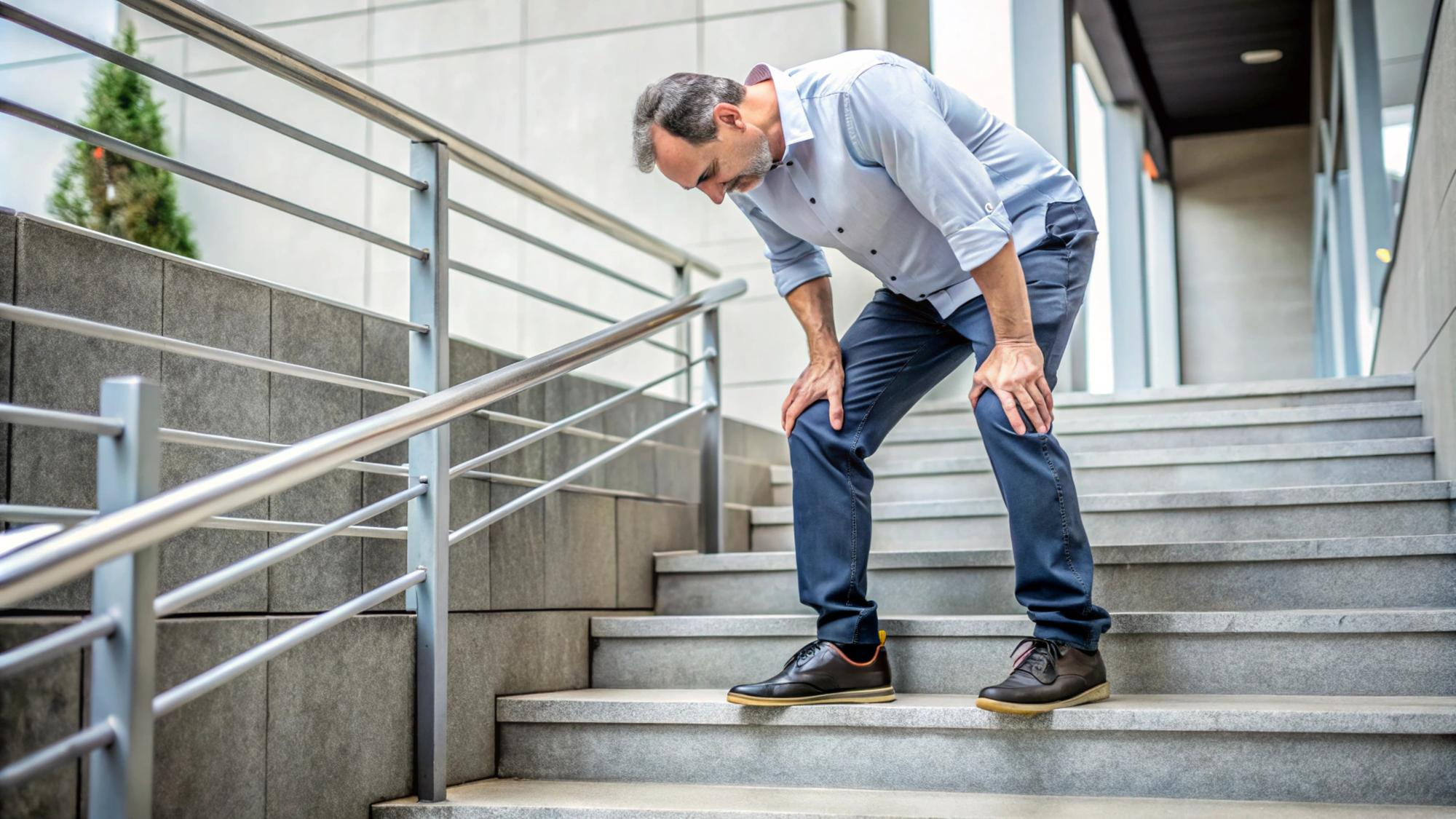
A close-up of a person sitting on the floor holding their knee with one hand. The knee area is highlighted in red to indicate pain or discomfort.
The instinct is almost universal. Joint hurts — rest it. It makes intuitive sense. You would not walk on a broken foot. Resting a painful knee seems like the same principle.
But for most joint conditions — particularly chronic joint pain, arthritis, and the vast majority of sports and overuse injuries — prolonged rest is not neutral. It actively makes things worse.
This is one of the more important shifts in orthopedic and sports medicine thinking over the last two decades, and it is one that has not reached most Indian patients — or, frankly, many Indian physicians. The old advice of "rest and see" is still common. The evidence increasingly says the opposite.
The Old Framework: RICE
For decades, the standard advice for acute injuries and joint pain was RICE: Rest, Ice, Compression, Elevation. It was taught in every first aid course, given at every sports medicine clinic, and repeated by every parent to every child with a twisted ankle.
RICE is not wrong for the acute injury phase — the first 24 to 72 hours after a trauma. But the R in RICE — Rest — came to be interpreted far more broadly than the evidence supports. Rest a joint for a week. Rest it for a month. Rest until it stops hurting. This extended application of the rest principle is where the problems start.
The New Framework: PEACE & LOVE
In 2019, a research group led by Dr. Blaise Dubois and Jean-Francois Esculier proposed a replacement framework published in the British Journal of Sports Medicine: PEACE & LOVE.
- P — Protection: Unload the injured structure for 1 to 3 days initially. Not weeks. Days.
- E — Elevation: Elevate the injured limb to reduce swelling.
- A — Avoid anti-inflammatory modalities: More on this below.
- C — Compression: Apply compression bandage to reduce swelling.
- E — Education: Understand the injury and what promotes recovery.
- L — Load: Progressive reloading — the critical principle. Introducing load early drives tissue repair.
- O — Optimism: Psychological outlook affects recovery speed. This is documented.
- V — Vascularisation: Cardiovascular activity that doesn't aggravate the injury maintains circulation and speeds recovery.
- E — Exercise: Active rehabilitation, not passive rest.
The shift from RICE to PEACE & LOVE reflects a fundamental change in understanding: tissues heal faster and more completely when they are progressively loaded, not when they are rested indefinitely.
Why Prolonged Rest Makes Joint Pain Worse
1. Muscle Atrophy Happens Fast
Skeletal muscle begins losing mass and strength within 72 hours of disuse. After one week of immobilisation, measurable muscle strength loss occurs. After two weeks, the muscle atrophy is clinically significant.
For joint pain specifically, this matters enormously because the muscles around a joint are its primary protection. The quadriceps muscles around the knee, the gluteal muscles around the hip — these take a significant share of the mechanical load off the cartilage and ligaments. Weaker muscles mean more load on the articular surfaces. More load on compromised cartilage means more pain. Resting the joint to reduce pain, therefore, ultimately produces weaker muscles that allow more pain.
2. Joint Cartilage Needs Load to Survive
This is counterintuitive but well-established in musculoskeletal biology. Articular cartilage has no blood supply. It gets its nutrition through compression and decompression — literally by being loaded and unloaded cyclically. Walking, movement, and gentle exercise pump nutrients in and waste products out of cartilage.
Prolonged immobilisation results in cartilage that is nutritionally deprived, softer, and more susceptible to damage when loading eventually resumes. This is why patients who rest an arthritic joint for months often find that when they resume activity, the joint initially feels worse rather than better — the cartilage has lost conditioning during the rest period.
3. The Pain Sensitisation Effect
Prolonged rest does not reduce pain sensitivity — it often increases it. When a joint is rested for extended periods, the nervous system can develop central sensitisation: the pain processing centres in the brain amplify pain signals from the joint, effectively turning the sensitivity dial up. The result is that the same level of activity that produced mild pain before extended rest produces significantly more pain after it.
This is clinically observable: patients who have been resting a painful knee for 6 months and then resume walking often experience a sudden, alarming worsening of pain in the first 1 to 2 weeks of activity. Most interpret this as evidence that activity is harmful. In the majority of cases, it is the sensitisation response — the nervous system recalibrating to loading after a long absence.
4. Cardiovascular Deconditioning
Beyond the joint itself, prolonged rest deconditions the cardiovascular system — reducing aerobic capacity, impairing blood circulation to musculoskeletal tissues, and reducing the metabolic environment that tissue repair depends on.
The "Avoid Anti-Inflammatory Modalities" Principle — Why It Matters
One of the more surprising elements of the PEACE & LOVE framework is the recommendation to avoid anti-inflammatory medications and ice in the initial stages — a direct contradiction of the RICE approach.
The reasoning: inflammation is not only a symptom of injury. It is a necessary phase of tissue repair. The inflammatory cascade attracts repair cells (macrophages, fibroblasts) to the damaged tissue. Anti-inflammatory medications and ice suppress this cascade. Studies show they can delay tendon and muscle healing when used excessively in the acute phase.
This does not mean suffering in pain unnecessarily. Moderate anti-inflammatory use for pain management is reasonable. The evidence argues against aggressive, prolonged anti-inflammatory treatment used specifically to suppress the inflammatory process in the early repair phase.
For joint conditions (particularly arthritis) where the inflammation is chronic and pathological rather than part of an acute repair process, anti-inflammatories remain appropriate for pain management. The nuance matters.
What "Load" Means in Practice
The critical principle — progressive loading — is not an instruction to push through pain. It is a graduated reintroduction of mechanical load that stays within the tissue's healing capacity.
The guideline used in modern rehabilitation:
- Pain during exercise should not exceed 4 to 5 out of 10
- Pain should not be significantly worse the following day (a mild increase in soreness that resolves within 24 hours is acceptable)
- The amount of activity increases by approximately 10 percent per week — not more
For a patient with knee arthritis, this might look like:
- Week 1: 5-minute walks, twice daily
- Week 2: 8-minute walks, twice daily
- Week 3: 10-minute walks, twice daily, adding gentle resistance exercise
- And so on progressively
For a patient with acute tendinopathy (Achilles, patellar, rotator cuff):
- Begin with isometric loading (muscle contraction without movement — holding a position) which is pain-relieving and tissue-stimulating
- Progress to isotonic loading (slow, controlled movements through range)
- Progress to functional loading (movements that resemble the sport or activity being worked toward)
When Rest Is Still Appropriate
This is not an argument against rest under any circumstances. There are genuine situations where rest and protection are the right initial response:
Acute traumatic injury (fractures, complete ligament tears, muscle ruptures): Structural injuries with significant tissue disruption need protection in the early phase — days to weeks depending on severity — before progressive loading is appropriate.
Acute severe flares of inflammatory arthritis: A rheumatoid joint in acute flare — swollen, hot, extremely painful — needs relative rest and pharmacological management before exercise is reintroduced.
Post-surgical recovery: In the early phase after surgery (particularly after procedures like meniscal repair, ligament reconstruction, or joint replacement), the specific post-operative protocol from Dr. Ankur Singh takes precedence. Surgical healing has different requirements from conservative management.
Stress fractures: Bone stress fractures require relative rest to allow healing — progressive loading is applied much more carefully and gradually than for soft tissue injuries.
For everything else — chronic joint pain, osteoarthritis, most tendinopathies, most sports overuse injuries — the evidence strongly favours gradual movement over rest.
The Practical Message for Patients in Noida
If you have been resting a painful knee, hip, or shoulder for weeks or months — waiting for it to get better before starting to move — this is the moment to reconsider that approach.
The pathway that evidence supports: get an accurate diagnosis (so you know what you are dealing with), design a graduated loading programme appropriate for that condition (with physiotherapy guidance), and progressively reintroduce movement within manageable pain limits. The pain will increase initially for some patients — the sensitisation effect — and then, for most, reduce consistently as the muscles strengthen and the tissues adapt.
Dr. Ankur Singh's practice in Noida integrates this approach into the management of joint pain — whether surgical management is on the horizon or whether conservative management is the right course. An accurate diagnosis is the starting point.
To book a consultation at Renew Orthopedic Clinic, Sector 47 Noida, call the number listed on this website.
Frequently Asked Questions
1. If movement helps, should I exercise through joint pain?
The guideline is not "exercise through pain" — it is "exercise within a manageable pain range." Pain up to 4 to 5 out of 10 during exercise that settles within 24 hours is generally acceptable. Pain that is 7 to 8 out of 10 or that is significantly worse the next day indicates too much load — reduce the level and progress more gradually.
2. My doctor told me to rest. Who is right?
The recommendation to rest is appropriate for some specific acute situations. If you have been resting for more than 2 to 4 weeks without improvement, however, it is worth reassessing the approach. A specialist review with Dr. Ankur Singh will clarify whether your specific condition warrants continued rest or whether progressive loading is appropriate.
3. What exercises are safe for arthritis?
Low-impact, progressive exercises are generally well-tolerated in arthritis: walking on flat ground, stationary cycling, swimming, targeted strengthening exercises for the muscles around the affected joint. High-impact activities (running, jumping) and deep joint-loading positions are avoided in advanced arthritis. Specific guidance from Dr. Ankur Singh or a physiotherapist based on your individual case is more valuable than generic advice.
Dr. Ankur Singh | Best Orthopedic Surgeon in Noida | Joint Pain Treatment India | Movement vs Rest Joint Pain | KDSG Superspeciality Hospital Greater Noida
Medical Disclaimer
The information provided on this website is for educational purposes only and should not be considered as medical advice. Please consult Dr. Ankur Singh or a qualified healthcare professional for personalized medical guidance.
Share this blog:
 Copy
Copy