By Dr. Ankur Singh•

How Long Does Hip Replacement Last? The Honest Data-Backed Answer

Orthopedic surgeons performing a hip replacement procedure.

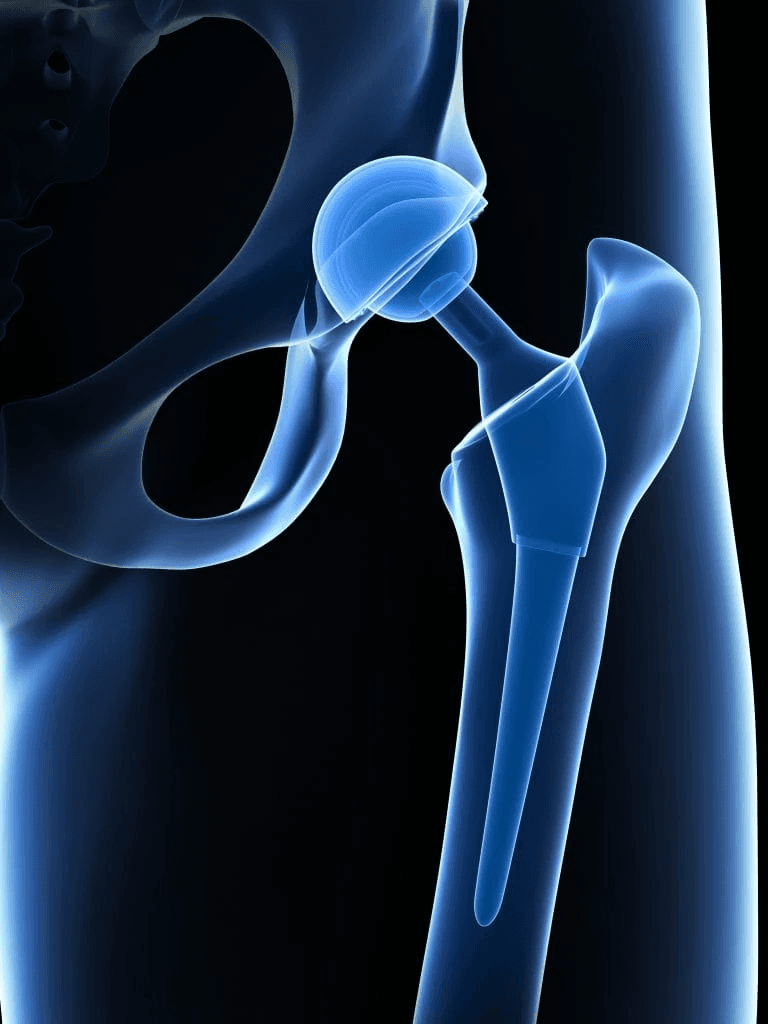
Registry data shows 80 to 85 percent of hip replacements still working at 20 years.

Every patient considering hip replacement asks this question — and deserves an answer more specific than "it lasts a long time" or "most people don't need revision." Those answers are technically true and practically useless.

The honest answer is built on real data from national joint registries, combined with an understanding of the specific factors that make any individual patient's implant last longer or shorter than the population average.


The Registry Numbers: What the Data Shows

National joint replacement registries — Australia, Sweden, United Kingdom, New Zealand — have followed hundreds of thousands of hip replacement patients over 20-plus years and track which implants are still functioning versus which have required revision. This is the most reliable source of long-term hip replacement outcome data.

The survival data for total hip replacement:

TimepointImplant Survival Rate
5 years97 to 98%
10 years94 to 96%
15 years88 to 92%
20 years80 to 85%
25 years72 to 78%

These figures mean: at 15 years after hip replacement, approximately 88 to 92 percent of patients still have their original implant without needing revision surgery. At 20 years, 80 to 85 percent do.

For a 70-year-old Indian patient, this data is extremely reassuring — the implant will almost certainly outlast them. For a 50-year-old Indian patient, the 20 to 25-year figures are the relevant ones — and they indicate a meaningful chance of needing revision at some point during their lifetime.


Why Some Hip Replacements Fail Before 20 Years

Understanding the failure mechanisms is more useful than knowing the average, because most failure factors are either preventable or directly influenced by surgical decisions.

Acetabular Cup Malpositioning — The Most Preventable Cause

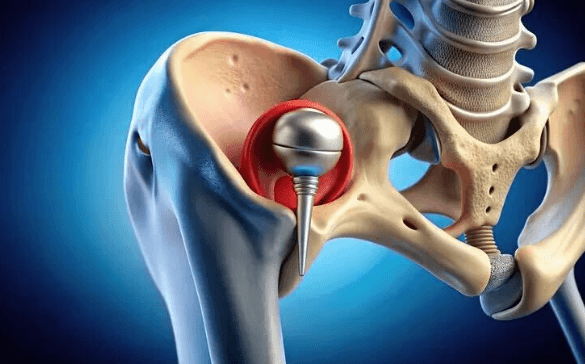
The acetabular cup (the socket component) must be placed at precise angles in two planes: abduction (the lateral tilt, ideally 40 to 45 degrees) and anteversion (the forward tilt, ideally 15 to 25 degrees). These angles determine two critical outcomes:

Dislocation risk: A cup that is too vertical or too retroverted puts the hip at higher dislocation risk in certain positions — the ball can pop out of the socket.

Bearing surface wear: A cup that is outside the optimal orientation produces edge loading — the head contacts the rim of the cup rather than the central bearing surface. Edge loading dramatically accelerates polyethylene wear, producing debris that triggers the inflammatory response that loosens the cup from the bone.

Conventional hip replacement achieves optimal cup orientation in approximately 50 to 70 percent of cases. Robotic-assisted hip replacement achieves it in over 95 percent. This accuracy gap is the primary reason robotic guidance is particularly valuable for hip replacement, especially in younger patients where implant longevity is the primary concern.

Bearing Surface Type — Determines Wear Rate

The bearing couple — the combination of materials that form the moving surfaces of the hip — is the second most important determinant of longevity.

Metal on conventional polyethylene (original standard): Significant polyethylene wear over 10 to 15 years. The wear debris triggers osteolysis — bone resorption around the cup — that loosens the fixation. Largely replaced by modern alternatives.

Metal on highly cross-linked polyethylene (HXLPE): The current standard. HXLPE produces 50 to 90 percent less wear than conventional polyethylene under laboratory testing, and this translates to significantly lower revision rates in long-term registry data. The workhorse bearing for most patients.

Ceramic on HXLPE: Ceramic femoral heads produce even lower wear rates against HXLPE than metal heads. Additionally, ceramic does not corrode at the head-neck junction (a recognised failure mode of metal heads called trunnion corrosion). Recommended for younger, more active patients where 25-plus-year implant horizon is needed.

Ceramic on ceramic: Minimal wear, no metal ion release. However, ceramic-on-ceramic couples can produce an audible squeaking in some patients, which — while harmless — is distressing enough that patients sometimes request revision. The frequency of significant squeaking is low (1 to 2 percent) but the possibility should be discussed.

Body Weight — Directly Modifiable

Bearing surface wear rate is proportional to load. Each kilogram of body weight generates load on the hip joint with every step. Higher BMI = more load = faster wear = shorter implant life.

Registry data consistently shows higher revision rates in patients with BMI above 35 compared to normal-weight patients — shorter time to revision and more complex revision surgery when it is needed. For Indian patients where obesity rates are rising, this is a clinically significant modifiable factor.

High-Impact Activity

Running, jumping sports, heavy physical labour — all generate peak loads that exceed the implant's design parameters and accelerate bearing surface wear. Activity modification after hip replacement is not conservative overcaution — it is directly linked to implant longevity data.

Activities well-tolerated by hip replacements: walking, swimming, cycling, golf, doubles tennis, social badminton (not competitive), hiking on moderate terrain. Activities that shorten implant life: running regularly, jumping sports, repeated heavy squatting under load, prolonged kneeling.


What Robotic Guidance Adds to Longevity

Robotic-assisted hip replacement addresses the single most preventable cause of premature failure — cup malpositioning — by planning and executing cup placement to within 1 to 2 degrees of the optimal target, in both abduction and anteversion.

At Sarvodaya Healthcare in Noida, Dr. Ankur Singh performs robotic-assisted total hip replacement. The pre-operative CT scan creates a 3D model of the patient's specific pelvis. The planned cup orientation is determined before surgery. Intraoperatively, the robotic tracking system confirms the actual cup position against the plan before the cup is finally secured.

For Indian patients — who often undergo hip replacement at younger ages than Western patients due to the high prevalence of AVN (avascular necrosis from steroid use and post-COVID) and post-traumatic arthritis — the 30-year implant horizon makes robotic cup precision particularly relevant.


The Revision Hip Replacement Question

If the original hip replacement does eventually fail — from wear, loosening, infection, or dislocation — revision hip replacement is the treatment. Revision is significantly more demanding than primary surgery:

  • Bone stock is often reduced around the loose components
  • Revision implants are larger and require reconstruction of what has been lost
  • Operating time is longer and blood loss greater
  • Recovery is less predictable than after primary surgery
  • Complication rates are higher

Every additional year of primary implant survival avoids revision surgery. Every step taken to protect the original implant — weight management, activity modification, infection prevention, regular follow-up — directly defers or prevents the significantly greater challenge of revision.


India-Specific Considerations

The age challenge: India's hip replacement patient population is younger on average than Western countries' — partly because AVN from steroid use and alcohol disproportionately affects people in their 30s and 40s, and partly because post-traumatic arthritis from road accidents affects younger adults. A 45-year-old needing hip replacement in India needs an implant that will last 35 to 40 years. No current implant has demonstrated 35-year data. But the choices that maximise longevity — ceramic-on-HXLPE bearing, robotic cup positioning, weight management, activity modification — give the best available platform for the longest possible implant life.

Bilateral AVN: Post-COVID steroid AVN frequently affects both hips. When both hips require replacement, the choice of bearing and the precision of cup positioning are doubly important — the patient will be living with both implants for decades.

Follow-up: Hip replacements should be reviewed at 6 weeks, 3 months, 1 year, and every 2 to 5 years thereafter with X-rays. Early detection of loosening, osteolysis, or wear allows intervention before catastrophic failure — and simple liner exchange (replacing the worn polyethylene without removing the well-fixed cup) is a much simpler procedure than full cup revision when caught early.


Frequently Asked Questions

What is the most common reason hip replacements are revised? Aseptic loosening — the implant losing its bond to the bone over time, typically from wear debris-triggered osteolysis — is the most common reason for revision at 10 to 20 years. Infection (periprosthetic joint infection) is the most common reason for early revision (within the first 2 years).

Does hip replacement on the left vs right side affect how long it lasts? No difference in longevity based on side. The dominant-side hip (right in most people) bears slightly higher loads in some activities, but this is not a meaningful factor in registry data.

Will I know when my hip replacement is wearing out? Not always in early stages — which is why follow-up with periodic X-rays is important. Increasing groin pain, a new onset of pain after a pain-free period, or a change in the character of the hip's movement may indicate developing problems, and should prompt specialist assessment.


Dr. Ankur Singh | Hip Replacement Specialist Noida Greater Noida | Hip Implant Longevity India | Robotic Hip Replacement Sarvodaya Healthcare | Renew Orthopedic Clinic Sector 47 Noida

Medical Disclaimer

The information provided on this website is for educational purposes only and should not be considered as medical advice. Please consult Dr. Ankur Singh or a qualified healthcare professional for personalized medical guidance.

Share this blog:

copy iconCopy

Continue Reading

Hand-picked reads closely related to this article.

What Happens During Hip Replacement Surgery: A Step-by-Step Guide
Hip Replacement

What Happens During Hip Replacement Surgery: A Step-by-Step Guide

Anxious about hip replacement? Dr. Ankur Singh, hip surgeon at Sarvodaya Healthcare Noida, explains every step of the surgery, from anaesthesia to recovery.

29 Oct 2026

Dr. Ankur Team

Hip Replacement Alternatives in India: What to Try — and When It's Too Late to Try
Hip Replacement

Hip Replacement Alternatives in India: What to Try — and When It's Too Late to Try

Not every arthritic hip needs replacement. Dr. Ankur Singh, hip specialist at Sarvodaya Healthcare Noida, explains which alternatives work and when the window closes.

20 Oct 2026

Dr. Ankur Team

Can You Sit Indian Style After Hip Replacement? The Complete Honest Answer
Hip Replacement

Can You Sit Indian Style After Hip Replacement? The Complete Honest Answer

Can you sit cross-legged after hip replacement? Dr. Ankur Singh, hip replacement specialist at Sarvodaya Healthcare Noida, gives an honest, surgery-specific answer.

08 Oct 2026

Dr. Ankur Team

Hip Replacement for Elderly Parents: The Complete Family Caregiver Guide for Indian Families
Hip Replacement

Hip Replacement for Elderly Parents: The Complete Family Caregiver Guide for Indian Families

Your elderly parent needs hip replacement surgery. Dr. Ankur Singh, hip specialist in Noida and Greater Noida, gives Indian families a complete week-by-week caregiver guide — what to do, what to watch for, and how to keep everyone safe.

20 Aug 2026

Dr. Ankur Team

Rheumatoid Arthritis: The Hidden Cause Of Joint Pain And Stiffness
ArthritisHip

Rheumatoid Arthritis: The Hidden Cause Of Joint Pain And Stiffness

Rheumatoid arthritis causes joint pain, swelling, and stiffness. Learn its symptoms, causes, and treatment options. Get expert care from Dr. Ankur Singh in Noida.

22 Apr 2026

Dr. Ankur Team

Advanced Treatments for Arthritis: From Medication to Surgery
ArthritisHip

Advanced Treatments for Arthritis: From Medication to Surgery

Discover advanced arthritis treatments with Dr. Ankur Singh from medications and injections to modern surgery for lasting pain relief and improved joint mobility.

07 Apr 2026

Dr. Ankur Team

More on Hip Replacement

Explore other articles tagged Hip Replacement.

Arthroscopy For Sports Injuries: When Is It Required?
ArthroscopyHip

Arthroscopy For Sports Injuries: When Is It Required?

Learn when arthroscopy is required, how it helps athletes recover faster, its signs, benefits, and when to see an orthopedic specialist.

23 Mar 2026

Dr. Ankur Team

Difference Between Rheumatoid Arthritis and Osteoarthritis
ArthritisHip

Difference Between Rheumatoid Arthritis and Osteoarthritis

Understand the difference between rheumatoid arthritis and osteoarthritis, their causes, symptoms, and treatment options. Expert guidance by Dr. Ankur Singh.

19 Feb 2026

Dr. Ankur Team

नोएडा में बेस्ट हिप रिप्लेसमेंट सर्जरी – पूरी जानकारी आसान भाषा में
ArthritisFracture

नोएडा में बेस्ट हिप रिप्लेसमेंट सर्जरी – पूरी जानकारी आसान भाषा में

हिप दर्द, गठिया या फ्रैक्चर से परेशान हैं? जानिए नोएडा में बेस्ट हिप रिप्लेसमेंट सर्जरी क्या है, कब जरूरी होती है और रिकवरी कैसी रहती है।

06 Feb 2026

Dr. Ankur Team

Knee Replacement vs Knee Arthroscopy: क्या अंतर है?
ArthroscopyHip

Knee Replacement vs Knee Arthroscopy: क्या अंतर है?

Knee replacement और knee arthroscopy में क्या अंतर है? जानिए दोनों सर्जरी के फायदे, प्रक्रिया, रिकवरी और किस दर्द में कौन-सा इलाज सही है।

05 Feb 2026

Dr. Ankur Team

घुटनों के गठिया (Arthritis) के शुरुआती लक्षण: समय रहते पहचान क्यों जरूरी है?
ArthritisHip

घुटनों के गठिया (Arthritis) के शुरुआती लक्षण: समय रहते पहचान क्यों जरूरी है?

घुटनों के गठिया के शुरुआती लक्षण, कारण, जोखिम और इलाज के विकल्प जानें। समय पर पहचान से सर्जरी से बचाव संभव।

06 Jan 2026

Dr. Ankur Team

Arthritis Nodules Explained: Causes, Symptoms, and Treatment Options for Lasting Relief
ArthritisHip

Arthritis Nodules Explained: Causes, Symptoms, and Treatment Options for Lasting Relief

Arthritis nodules are firm lumps caused by chronic arthritis pain. Learn their causes and treatment options.

02 Jan 2026

Dr. Ankur Team

Latest from the Blog

Recently published articles by Dr. Ankur Singh.

Frozen Shoulder (Adhesive Capsulitis): The Complete Treatment Guide
Shoulder

Frozen Shoulder (Adhesive Capsulitis): The Complete Treatment Guide

Frozen shoulder can last 2-3 years untreated. Dr. Ankur Singh, shoulder specialist in Noida, explains its three stages and when injection or surgery helps.

02 Nov 2026

Dr. Ankur Team

Baker's Cyst: That Lump Behind Your Knee — What It Is and Why It Keeps Coming Back
Knee

Baker's Cyst: That Lump Behind Your Knee — What It Is and Why It Keeps Coming Back

A lump behind the knee is usually a Baker's cyst, and draining it without treating the cause is why it returns. Dr. Ankur Singh explains what resolves it.

30 Oct 2026

Dr. Ankur Team

Partial Knee Replacement in India: The Complete Guide
knee replacement

Partial Knee Replacement in India: The Complete Guide

Partial knee replacement resurfaces only the damaged part of the knee, preserving the healthy side for better motion. Dr. Ankur Singh explains who qualifies.

28 Oct 2026

Dr. Ankur Team

How to Choose the Right Knee Replacement Surgeon in India
knee replacement

How to Choose the Right Knee Replacement Surgeon in India

Choosing the wrong knee replacement surgeon can affect outcomes for decades. Dr. Ankur Singh explains what to look for and which claims are just marketing.

27 Oct 2026

Dr. Ankur Team

Carpal Tunnel Syndrome: What India's IT Professionals Need to Know
Hand Care

Carpal Tunnel Syndrome: What India's IT Professionals Need to Know

Numb fingers, wrist pain at night, dropping things? It could be carpal tunnel syndrome. Dr. Ankur Singh in Noida explains the causes and what actually works.

26 Oct 2026

Dr. Ankur Team

Sciatica Pain: The Complete Guide for Indian Patients
Sciatica

Sciatica Pain: The Complete Guide for Indian Patients

Sciatica affects millions of Indians. Dr. Ankur Singh, orthopedic specialist in Noida, explains its causes, what genuinely helps and when surgery is needed.

23 Oct 2026

Dr. Ankur Team

You Might Also Like

A random selection from across the blog.

‘यह तो सामान्य है’ — हड्डियों के दर्द से जुड़ी 7 सबसे बड़ी गलतफहमियाँ
Bone HealthJoint Care

‘यह तो सामान्य है’ — हड्डियों के दर्द से जुड़ी 7 सबसे बड़ी गलतफहमियाँ

क्या हड्डियों का दर्द सामान्य होता है? जानिए हड्डियों और जोड़ों के दर्द से जुड़ी 7 आम गलतफहमियाँ और उनका सच।

13 Jan 2026

Dr. Ankur Team

How Desk Ergonomics Can Affect Your Hips and Spine?
HipLifestyle

How Desk Ergonomics Can Affect Your Hips and Spine?

Long desk hours harm posture and spine health; learn how sitting affects your hips, back, and overall musculoskeletal system.

04 Sept 2025

Dr. Ankur Team

Why Muscle Imbalance Is a Silent Cause of Chronic Pain?

Why Muscle Imbalance Is a Silent Cause of Chronic Pain?

Learn how muscle imbalance causes chronic pain, its signs, causes, and treatment options. Expert insights by Dr. Ankur Singh, orthopedic surgeon in Noida.

07 Apr 2026

Dr. Ankur Team

Growing Pains vs Serious Orthopedic Conditions in Children: Signs, Differences & When to Worry
Pediatric Orthopedic

Growing Pains vs Serious Orthopedic Conditions in Children: Signs, Differences & When to Worry

Learn how to tell the difference between growing pains and serious orthopedic conditions in kids, by best orthopedic in Noida.

23 Oct 2025

Dr. Ankur Team

Does Chai Tea Cause Joint Inflammation? The Honest Answer

Does Chai Tea Cause Joint Inflammation? The Honest Answer

Millions of Indians drink 3-4 cups of chai daily — but does it worsen joint pain or arthritis? Dr. Ankur Singh, orthopedic specialist in Noida, gives the evidence-based, nuanced answer to this very Indian question.

30 Jul 2026

Dr. Ankur Team

Steroid Injections for Joint Pain: The Complete Honest Guide for Indian Patients
Joint Pain

Steroid Injections for Joint Pain: The Complete Honest Guide for Indian Patients

Cortisone injections are massively overused in India — often given without proper guidance on limits and risks. Dr. Ankur Singh, orthopedic specialist in Noida, explains what steroid injections can and cannot do, and how many is too many.

05 Aug 2026

Dr. Ankur Team

Explore More on Orthopedic Care

Quick links to in-depth resources Dr. Ankur Singh has prepared on common conditions, treatments, and care tips.

Transforming Shoulder Pain Treatment with SurgeryNon-Surgical Knee Pain Management in Noida – PRP, Injections & Rehab Options That WorkArthroscopic Surgery for Sports Shoulder Injuries in Noida – Dr. Ankur Singh, Best Orthopedic in NoidaTrauma Surgery Specialist in NoidaKnee Replacement Surgery: Choosing Between Partial and Total Arthritis Management & Joint Preservation Techniques Foot & Ankle Sports Injury Surgery in Noida | Best Orthopedic in Noida – Dr. Ankur SinghInjections for Knee & Shoulder Pain Relief | Best Orthopedic in Noida – Dr. Ankur SinghBest Doctor for Hip Pain in Noida Sector 61– Treating Fractures, Arthritis & MorePost-Accident Ortho Care and Rehabilitation in Noida | Best Orthopedic in Noida – Dr. Ankur SinghCustomized Recovery Plans for Sports Professionals by Dr. Ankur Singh – Best Orthopedic in NoidaArthritis Treatment Near Noida City Center – Regain Mobility Best Orthopedic Surgeon in Greater Noida Minimally Invasive Shoulder Replacement Surgery in NoidaAdvanced Knee & Shoulder SurgeryOrthopedic Clinic Near Me | Best Orthopedic in Noida – Dr. Ankur SinghSports Injury Clinic in Noida | Dr. Ankur Singh – Best Orthopedic in NoidaCartilage Repair & Restoration Procedures in NoidaDr. Ankur Singh's Arthroscopic Surgery and Treatment for Shoulder Dislocation in NoidaFracture Healing: How to Recover Faster from Broken Bones Sports Physiotherapy & Injury Prevention Programs in Noida Post-Surgery Rehabilitation & Physiotherapy Services Pain Management Clinic for Chronic Joint Pain | Dr. Ankur Singh – Best Orthopedic in NoidaRobotic-Assisted Knee Replacement Surgery: A Revolution in Orthopedic Care

Related Treatments

Orthopedic services at Dr. Ankur Singh's clinic related to this article.

About Dr. Ankur Singh's Orthopedic Clinic

Internationally trained orthopedic care in Noida for joint replacement, arthroscopy, sports injuries and fractures. Learn how the clinic works, or book a consultation with Dr. Ankur Singh.