Ice or Heat for Joint Pain? The Answer Most Indians Get Backwards

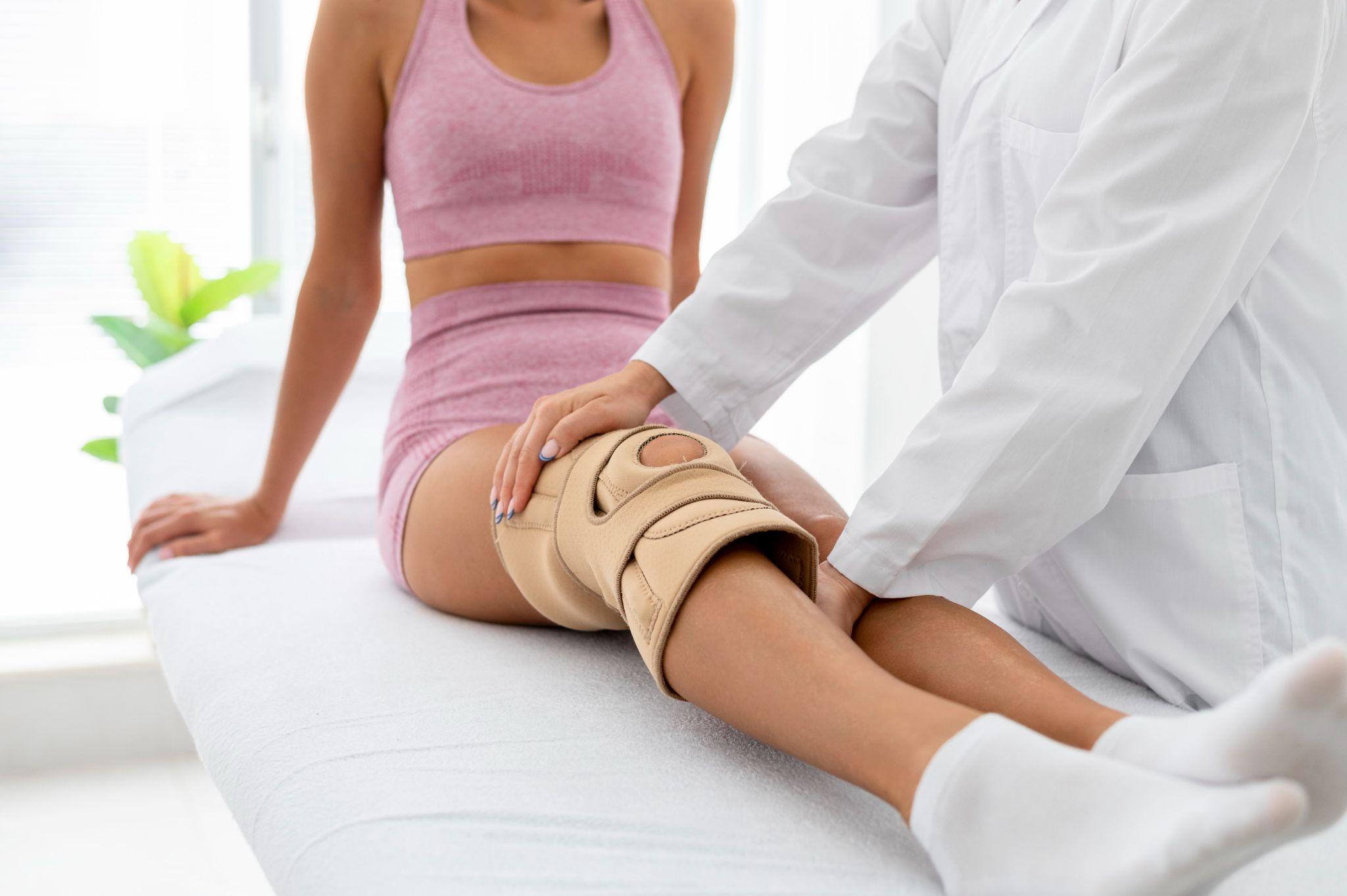
A woman applies a cold pack to her knee to reduce pain and swelling after a leg injury.
Walk into any Indian home where someone has joint pain and you will almost certainly find a hot water bag (the signature Indian remedy) applied to the aching knee or shoulder. "Sek karo" — apply heat — is the universal advice of Indian grandmothers, family members, and often the family GP.
In some situations, this is exactly right. In others — and this surprises most people — applying heat is the worst thing to do, and ice would have been far more helpful.
The distinction is not arbitrary. Ice and heat have opposite physiological effects, and using the wrong one at the wrong time does not just fail to help — it actively worsens the situation it is supposed to treat.
Here is the framework that clinical evidence supports.
What Ice Does to Tissue (and When That Helps)
Cold application (cryotherapy) produces these physiological effects
Vasoconstriction: Cold causes the blood vessels in the applied area to constrict (narrow), reducing blood flow to the tissue. This reduces the volume of fluid accumulating in injured tissue — which is why ice on an acute sprain reduces swelling.
Reduced nerve conduction velocity: Cold slows the speed at which pain signals travel along nerve fibres — producing a numbing, analgesic effect. This is why ice feels initially painful (the receptors responding to cold) but after 10 to 15 minutes, produces numbness and relief.
Reduced metabolic activity: Cold lowers the metabolic rate of local tissue, reducing the oxygen demand of damaged cells and potentially limiting the zone of secondary injury around the initial trauma.
Reduced inflammatory mediator release: Cold slows the release of prostaglandins and histamine from damaged cells — reducing the acute inflammatory response.
When these effects are wanted: The acute injury situation. An ankle sprained 30 minutes ago. A knee that took a direct blow in a sports match today. A shoulder impingement that flared acutely during a gym session. Swelling that is actively accumulating — warm, growing, and fresh.
In all of these, reducing the inflammatory response, constricting blood flow, and numbing pain is the right intervention. Ice is correct.
What Heat Does to Tissue (and When That Helps)
Heat application (thermotherapy) produces the opposite effects:
Vasodilation: Heat causes blood vessels to expand, increasing blood flow to the area. This brings nutrients and oxygen to the tissue and removes metabolic waste products — promoting healing in chronic, poorly perfused tissue.
Muscle relaxation: Heat reduces the resting tension of muscle fibres and improves the extensibility of tendons and ligaments. This is why applying heat before stretching or exercise makes the tissue more pliable and reduces injury risk.
Pain relief through central modulation: Heat activates thermoreceptors in skin and deeper tissue that modulate the gate control mechanism of pain — essentially "crowding out" pain signals with thermal signals. This provides meaningful analgesia without the numbing of ice.
Increased synovial fluid viscosity reduction: Warm synovial fluid is less viscous (more fluid) than cold synovial fluid, providing better joint lubrication. This is the direct mechanism by which heat reduces joint stiffness.
When these effects are wanted: Chronic joint stiffness and aching that is not acutely inflamed. Osteoarthritic joint stiffness in the morning. A muscle that is chronically tight and limiting movement. Before exercise or physiotherapy on a stiff joint. The low-grade aching of old injuries that have settled into chronic patterns.
The Most Common Mistake: Heat on an Acute Injury
The hot water bag applied to a freshly swollen, warm, acutely inflamed knee is one of the most consistent mistakes in Indian self-management of joint injury.
When a joint is acutely inflamed — swollen, warm to touch, recently injured or acutely flared — the blood vessels are already maximally dilated and flooding the tissue with inflammatory fluid. The tissue is hot because of this process. Applying more heat:
- Further dilates the already dilated vessels
- Drives more fluid into the already swollen space
- Speeds up the metabolic processes that are producing the inflammatory cascade
- Increases pain in the acute setting
The result: more swelling, more pain, and a longer acute inflammation phase.
The patient who twists their ankle in the evening and applies the family's hot water bag to it overnight wakes to a significantly more swollen ankle than they would have had with ice.
The Equally Common Mistake: Ice on Chronic Arthritis
The opposite error is also prevalent — particularly in patients who have done some research and know that "ice is for injuries," applying ice to an arthritic knee that aches constantly but is not acutely inflamed.
Chronic osteoarthritis produces a joint that is:
- Stiff, particularly in the morning after rest
- Aching — with a deep, diffuse quality
- Not acutely swollen or warm (in the non-flaring state)
Applying ice to this situation:
- Further stiffens the joint through vasoconstriction
- Increases synovial fluid viscosity, worsening lubrication
- Makes the surrounding muscles tighter, increasing pain with movement
- Provides the numbing effect of cryotherapy, which wears off without having addressed the underlying stiffness
Heat — a warm wheat bag, a hot water bottle, a warm shower over the affected joint — is almost always more appropriate for chronic arthritis stiffness. Warmth loosens the joint, reduces viscosity of the synovial fluid, relaxes surrounding muscles, and prepares the joint for physiotherapy and movement.
The Decision Framework
Use ice when:
- The injury happened in the last 48 to 72 hours
- The joint is swollen and the swelling is actively growing
- The joint is warm to touch compared to the surrounding area
- The pain is acute and sharp — the quality of a fresh injury
- After exercise when a chronically arthritic joint has been loaded and feels reactive
Use heat when:
- The problem is chronic, persistent stiffness rather than acute injury
- The joint aches but is not actively swollen or warm
- Morning stiffness is the predominant complaint — apply heat before getting out of bed
- Before physiotherapy or exercise to prepare the joint
- The muscle around the joint is in spasm (characteristically improved by heat)
Neither or both in alternation:
For subacute conditions (beyond the first 72 hours but before full chronic settling) — typically 3 to 10 days after a moderate injury — contrast therapy (alternating cold and warm) can be useful. The temperature alternation produces a pumping effect on blood flow that speeds resolution of residual swelling while also providing the benefits of heat for stiffness.
The Special Case: Acute Flare of Chronic Arthritis
This situation confuses many patients. The knee is arthritic and chronically painful — and then it suddenly becomes significantly more swollen, hotter than usual, and acutely more painful after a long walk or a period of greater-than-usual activity.
This is an acute flare superimposed on chronic arthritis. In this state — the joint is actively and acutely inflamed — ice is appropriate. The acute flare has the same physiology as an acute injury: active inflammation, growing swelling, and vasodilated tissue. Ice for 20 minutes several times through the day, combined with rest and elevation, helps resolve the flare faster.
Once the acute flare has settled (typically 2 to 5 days), returning to heat for the background chronic stiffness is appropriate.
Practical Application Guidelines
Ice application:
- Never apply ice directly to skin — always through a cloth, towel, or thin fabric
- Maximum application: 20 minutes at a time, minimum 40 minutes off
- 3 to 4 applications through the day in the acute phase
- Stop if the skin becomes red, blistered, or very painful
Heat application:
- A wheat bag or hot water bottle at a comfortable (not scalding) temperature
- 15 to 20 minutes per session
- Can be applied through clothing
- Not appropriate where circulation is impaired (diabetics with peripheral neuropathy should avoid extended heat application to feet and legs)
- Not on skin that is already red or inflamed
Frequently Asked Questions
Is a warm shower a good substitute for a heat pack?
Yes — a warm shower over a chronically stiff joint provides thermal benefit comparable to a heat pack, while also providing hydrostatic pressure that can mildly reduce swelling. A warm shower before morning activity is an effective and practical heat application strategy for arthritic patients.
Can I use both ice and heat in the same day for a chronic arthritis flare?
Yes — ice during the acute phase of the flare (when the joint is actively warm and swollen), and heat once the acute component has settled. The key is identifying which phase the joint is currently in and applying accordingly.
Should I use ice after physiotherapy?
After physiotherapy that has loaded an arthritic joint — producing the mild reactive inflammation of exercise-induced loading — brief ice application (10 to 15 minutes) reduces the post-exercise inflammatory response and helps the joint settle faster. This is appropriate and commonly advised by physiotherapists.
Dr. Ankur Singh | Best Orthopedic Surgeon in Noida | Joint Pain Management India | Ice Heat Joint Pain | Orthopedic Care Noida | KDSG Superspeciality Hospital Greater Noida
Medical Disclaimer
The information provided on this website is for educational purposes only and should not be considered as medical advice. Please consult Dr. Ankur Singh or a qualified healthcare professional for personalized medical guidance.
Share this blog:
 Copy
Copy