How to prevent spine damage if You Sit more than 6 hours a Day

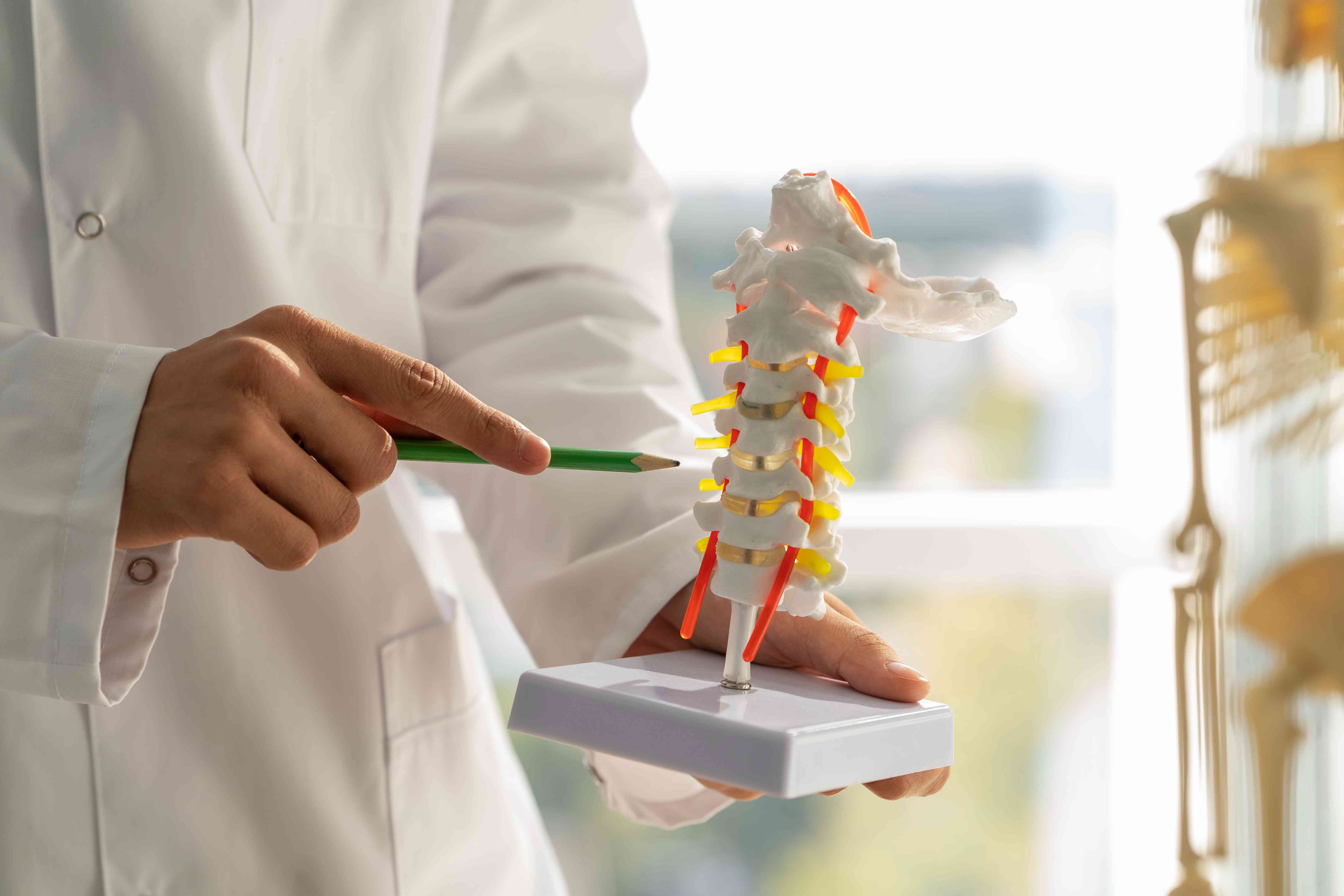
Doctor assessing spine damage in patient during clinical examination.
Six hours. That's the threshold where sitting stops being harmless and starts becoming a clinical risk factor.
Most working adults in India cross that mark before lunch. Add in the commute, dinner at the table, and an hour on the couch, and you're easily looking at 10–12 hours of sitting per day. Your spine wasn't designed for this. It was built for walking, bending, twisting, and carrying, a range of dynamic movements that keep the vertebrae, discs, and muscles healthy. When those movements disappear, the spine starts to pay the price.
I see the fallout of prolonged sitting in my clinic every week. Patients in their late 20s and 30s with disc bulges. IT professionals with chronic neck stiffness. Accountants with lower back pain so severe they can't sit through a movie. The damage builds quietly, over months and years, and by the time symptoms become hard to ignore, structural changes are already underway.
The encouraging part? Most of this is preventable. If you sit for more than 6 hours a day, the strategies below can genuinely protect your spine from long-term harm.
What prolonged sitting actually does to your spine
When you sit, especially with poor posture — the load distribution on your spine changes dramatically.
Disc pressure increases. In a standing position, the load on your lumbar (lower back) discs is approximately 100% of your body weight. When you sit upright, that pressure rises to about 140%. Sit with a forward slump, and it shoots up to 185–200%. Over hours and days and years, this sustained compression dehydrates the intervertebral discs, reducing their ability to absorb shock.
Supporting muscles weaken. The muscles that stabilize the spine, the deep core muscles (transversus abdominis, multifidus), the glutes, and the paraspinal muscles, progressively weaken from disuse. When these muscles can't do their job, the spine loses its natural scaffolding. The vertebrae, discs, and ligaments take on loads they weren't meant to handle alone.
Flexibility decreases. Tight hip flexors from sitting pull the pelvis forward, flattening the natural lumbar curve. Shortened hamstrings tilt the pelvis backward when you stand. Both patterns alter spinal alignment and increase the risk of disc herniation and facet joint irritation.
Other consequences of prolonged sitting include:
- Cervical spine strain from forward head posture (leaning toward screens)
- Upper back rounding and shoulder tension
- Reduced blood circulation to spinal tissues
- Increased stiffness and decreased spinal mobility over time
Research consistently shows that individuals who sit for more than 6 hours daily are 40–50% more likely to develop chronic lower back pain compared to those who sit less.
Spine problems I commonly See in desk workers
Lower back pain (lumbar strain)
The most frequent complaint. Sustained lumbar compression leads to muscle fatigue, ligament strain, and disc irritation. Pain is typically worse at the end of the workday and may ease on weekends — until it doesn't anymore.
Cervical spondylosis and neck stiffness
Forward head posture adds roughly 4–5 kg of extra load on the cervical spine for every inch the head moves forward. Over time, this causes disc degeneration, osteophyte (bone spur) formation, and chronic neck pain. Tension headaches originating from the base of the skull are a common companion.
Herniated or bulging discs
When the outer layer of an intervertebral disc (the annulus fibrosus) weakens from sustained pressure, the inner gel-like material (nucleus pulposus) can bulge outward or herniate through. If it presses on a spinal nerve, the result is radiculopathy, sharp pain, numbness, or weakness radiating into the arm or leg, depending on the level of the disc.
Postural kyphosis
Prolonged slumping creates an exaggerated forward curve in the thoracic spine. The upper back rounds, the shoulders roll forward, and the chest tightens. What starts as a habit becomes a structural change if uncorrected over years.
Core and paraspinal muscle atrophy
Muscles that don't get used, atrophy. Weak core muscles can't stabilize the lumbar spine during movement. Weak paraspinal muscles can't maintain spinal alignment. This creates a vicious cycle: weakness leads to poor posture, which leads to pain, which leads to less movement, which leads to more weakness.
How to protect your spine, practical strategies that work
1. Fix your sitting posture
Posture isn't about sitting "perfectly" — it's about reducing abnormal load on your spine.
- Sit with your back against the chair. Use the backrest. If it doesn't support your lower back, add a small lumbar roll or cushion.
- Keep your feet flat on the floor, knees at roughly hip level. Avoid crossing your legs for extended periods, it tilts the pelvis and puts uneven stress on the lumbar spine.
- Position your screen at eye level. If you're using a laptop, raise it on a stand and use an external keyboard. Looking down at a screen for 8 hours is one of the fastest routes to cervical problems.
- Keep your forearms parallel to the floor while typing. This prevents shoulder elevation and upper trapezius tension.
2. break up sitting every 30–45 minutes
This is the single most impactful change you can make. Stand up, walk for 2–3 minutes, and do a quick stretch. Your spine needs periodic decompression.
- Set a timer on your phone or use a break-reminder app
- Walk to the water cooler, take the stairs, or simply stand while taking a phone call
- During breaks, do a standing back extension: place your hands on your lower back and gently lean backward for 5–10 seconds. This reverses the flexion load that builds up during sitting.

Taking frequent breaks to protect the spine during long sitting.
3. strengthen your core and back muscles
A strong muscular corset around the spine is the best long-term protection against disc and joint problems. You don't need a gym, these can be done at home in 15–20 minutes:
- Planks (front and side): Target the transversus abdominis, obliques, and shoulders. Start with 20–30 seconds and build up to 60 seconds. Proper form matters more than duration — don't let your hips sag or pike up.
- Glute bridges: Lie on your back, knees bent, and lift your hips toward the ceiling. Hold for 5 seconds. Do 15 reps. This activates the glutes, which are critical lumbar stabilizers and often "switched off" in people who sit all day.
- Bird-dog: On all fours, extend the opposite arm and leg simultaneously. Hold for 5 seconds. Alternate sides. This trains the multifidus and deep core muscles for spinal stability.
- **Back extensions (prone): Lie face down and gently lift your chest off the floor, keeping your neck neutral. This strengthens the erector spinae muscles that support upright posture.
Aim for 3–4 sessions per week. Consistency beats intensity.
4. stretch daily, especially these muscle groups
Tight muscles pull the spine out of alignment. Focus on these:
- Cat-cow stretch: On all fours, alternate between arching your back (cow) and rounding it (cat). 10–15 repetitions. Mobilizes the entire spine.
- Hip flexor stretch: Kneel on one knee, push your hips forward gently. Hold 30 seconds each side. Sitting keeps hip flexors in a shortened position all day, this counteracts it.
- Hamstring stretch: Seated forward fold or standing with one foot on a low step. Tight hamstrings tilt the pelvis and flatten the lumbar curve.
- Chest opener / doorway stretch: Stand in a doorway, forearms on the frame, and lean forward. Opens the chest and counteracts the rounded shoulder posture from desk work.
- Cervical stretches: Gentle ear-to-shoulder tilts, chin tucks, and slow neck rotations relieve tension from forward head posture.
5. invest in ergonomic furniture
Your chair and desk setup directly influence spinal load:
- Chair: Adjustable height, lumbar support, and armrests. The seat depth should let you sit with your back against the rest while keeping 2–3 fingers' width between the seat edge and the back of your knees.
- Desk: Adjustable-height (sit-stand) desks allow you to alternate between sitting and standing throughout the day. Even 15–20 minutes of standing per hour reduces cumulative spinal load significantly.
- Monitor placement: Center of the screen at eye level, an arm's length away. Dual monitors should be angled inward so you aren't rotating your neck to one side all day.
6. stay physically active outside of work
Sitting for 8 hours and then sitting for 4 more at home doesn't give the spine any recovery window. Daily physical activity is non-negotiable for spinal health.
- Aim for 30–60 minutes of movement daily: walking, swimming, cycling, or yoga
- Swimming is particularly effective — it decompresses the spine while strengthening muscles in a zero-gravity environment
- Walking at a brisk pace for 30 minutes improves disc hydration, spinal muscle endurance, and overall circulation
- Avoid high-impact activities (running on hard surfaces, heavy deadlifts with poor form) if you already have disc or joint symptoms

A man cycling outdoors for fitness and spinal health.
7. watch your weight and nutrition
- Excess abdominal weight shifts the body's center of gravity forward, increasing lumbar lordosis and disc pressure. Losing even 5 kg can meaningfully reduce lower back strain.
- Calcium and Vitamin D are essential for vertebral bone density. Adults need 1000–1200 mg of calcium and 600–2000 IU of Vitamin D daily. Sunlight exposure (15–20 minutes) and dietary sources (dairy, eggs, fatty fish) should be supplemented if levels are low.
- Hydration matters for discs. Intervertebral discs are roughly 80% water. Dehydrated discs lose height and shock-absorbing capacity. Aim for 2–3 liters of water daily.
- Protein supports muscle repair and maintenance. Include adequate protein in every meal, dal, eggs, paneer, chicken, legumes.
When to See a doctor, don't ignore these warning signs
Most desk-related back pain responds to the strategies above. But some symptoms indicate a more serious problem that needs professional evaluation:
- Pain radiating into the arm or leg — could indicate nerve compression from a herniated disc
- Numbness, tingling, or weakness in the hands or feet
- Pain that wakes you at night or doesn't respond to rest
- Difficulty with bladder or bowel control, a red flag for cauda equina syndrome, which requires emergency care
- Pain after a fall or injury with sudden onset
- Progressive worsening despite 4–6 weeks of self-care
Early assessment prevents minor disc problems from becoming surgical cases. At my clinic, I evaluate spine patients with a detailed clinical examination, and if needed, we proceed with X-rays or MRI to identify the exact problem.
Spine care at dr. ankur Singh's clinic, KDSG hospital, noida
At our clinic, we see a high volume of patients with posture-related spinal complaints, from early-stage muscle stiffness to advanced disc disease. Our approach is conservative first:
- Detailed postural and biomechanical assessment
- Customized rehabilitation programs designed specifically for desk workers and professionals
- Ergonomic guidance for your specific workstation setup
- Minimally invasive treatment options for disc herniation and nerve compression when conservative methods fall short
- Long-term prevention strategies to keep you pain-free
I'm a firm believer that most spine problems in desk workers are preventable. The spine is resilient — it responds well to consistent care. But it does not tolerate neglect.
Daily habits for long-Term spinal health
Beyond exercises and posture, these small adjustments add up:
- Alternate your sitting position throughout the day. Use a footrest for 20 minutes, sit on a cushion, stand for a while. Variety reduces sustained load on any one structure.
- Avoid heavy bags on one shoulder. Use a backpack with both straps, and keep the weight under 10% of your body weight.
- Sleep posture counts. A medium-firm mattress supports the natural spinal curves. If you sleep on your side, place a pillow between your knees. On your back, a thin pillow under your knees reduces lumbar strain.
- Lift with your legs, not your back. Bend your knees, keep the object close to your body, and avoid twisting while lifting. This single habit prevents a significant percentage of acute disc injuries.
Final thoughts
Sitting for 6+ hours a day doesn't guarantee spine damage. But sitting for 6+ hours a day without any counteractive measures makes it highly likely. The spine is forgiving, up to a point. Give it regular movement, strong supporting muscles, proper posture, and adequate nutrition, and it'll serve you well for decades.
If you're already experiencing back pain, neck stiffness, or radiating symptoms that haven't resolved with basic self-care, get an evaluation. Catching a spinal problem early, before disc degeneration, nerve compression, or muscle atrophy sets in — gives you far more treatment options and a much faster recovery.
At our clinic at KDSG Hospital, Noida, we're here to help you stay ahead of the problem, not chase it after the damage is done.
Medical Disclaimer
The information provided on this website is for educational purposes only and should not be considered as medical advice. Please consult Dr. Ankur Singh or a qualified healthcare professional for personalized medical guidance.
Share this blog:
 Copy
Copy



/10.jpg)
Spine Surgery & Back Pain/front-view-doctor-explaining-anatomy-compressed.jpg)