Is Knee Replacement Surgery Painful? An Honest Answer

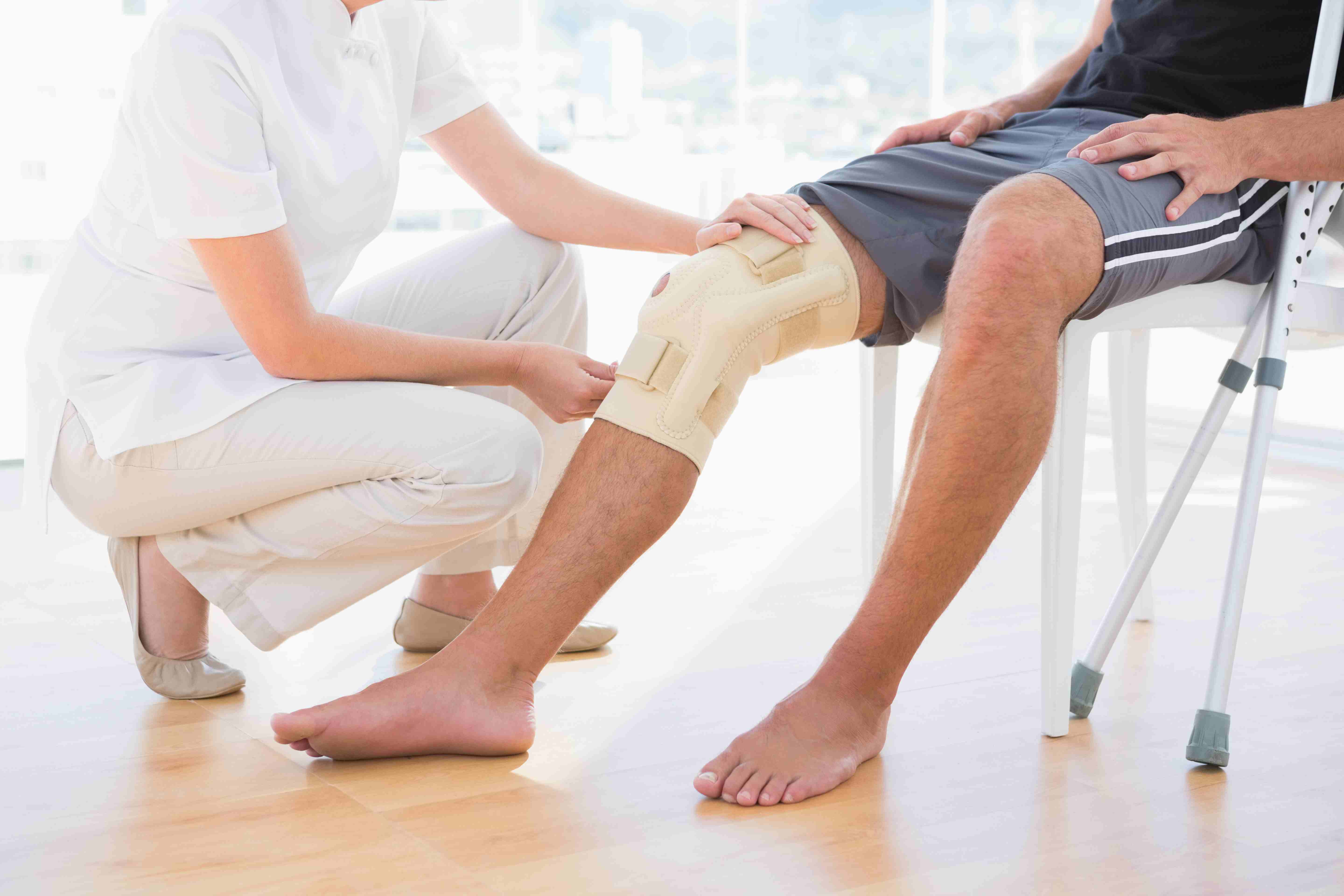
Doctor applying a bandage to a patient’s leg after knee replacement surgery.
This is the question most patients are almost embarrassed to ask directly — and the one that deserves the most direct answer. Fear of pain is the single most common reason patients delay knee replacement surgery for years after it has become the clinically correct choice. During those delayed years, they live with the constant grinding pain of bone-on-bone arthritis.
The honest answer has two separate parts: the experience during surgery, and the experience after surgery. They are very different, and both deserve to be addressed specifically.
During Surgery: No. You Will Not Feel Pain.
Knee replacement surgery is performed under spinal anaesthesia — a technique where local anaesthetic is injected into the spinal fluid in the lower back, producing complete numbness from the waist downward within minutes.
You will feel nothing from the waist down for the entire duration of the procedure. Not pressure. Not movement. Not cutting. Nothing. The spinal block is complete.
Additionally, a sedative medication is given through the IV line during surgery. This produces a drowsy, relaxed, dreamlike state. Most patients describe the experience as: "I knew I was in the theatre but I felt nothing and remember very little." Some patients drift into a light sleep entirely.
This is frequently the most important piece of information to give patients who are delaying surgery out of fear: you will not experience the procedure. The idea of being cut open while awake is what frightens people — but awake in this context means conscious, not aware of what is happening to the leg.
What you will feel before and during:
- The spinal injection in the back: a brief stinging sensation, then a feeling of pressure, lasting 15 to 30 seconds
- Warmth spreading down the legs as the block takes effect
- The sedation: a pleasant heaviness and drowsiness
- During surgery itself: nothing below the waist
The spinal anaesthetic is planned to wear off after surgery is complete — not during. Anaesthetic planning specifically ensures the block outlasts the operation.
After Surgery: Yes, There Is Pain — But It Is Managed and It Is Different
This is where honesty matters most. There will be pain after knee replacement surgery. Denying this would be a disservice.
The post-operative pain results from the surgical trauma to the soft tissues — the muscles, fat, and joint capsule that were opened and closed during the procedure. This is different in character from arthritic pain. Arthritic pain is deep, grinding, and constant — present with every step, often through the night, and associated with a specific, familiar despair. Post-operative pain is sharper, more localised, and — critically — responsive to medication.
The Pain Management Protocol at KDSG Hospital
Modern post-operative pain management after knee replacement uses several layers simultaneously:
The nerve block: A separate, targeted nerve block (typically a femoral or adductor canal block) numbs the nerves specifically supplying the front of the knee. This is given in addition to the spinal and provides excellent pain relief for the first 12 to 24 hours after surgery — the window when pain would otherwise be most severe.
Local infiltration analgesia (LIA): During surgery, Dr. Ankur Singh injects a mixture of local anaesthetic and anti-inflammatory medication directly into the tissues around the knee before closing. This provides additional localised pain relief for the first 12 to 24 hours.
Regular paracetamol and anti-inflammatories: Given on a fixed schedule — not just when pain breaks through — to maintain a baseline level of pain control.
Opioid medication: Available for breakthrough pain but used sparingly. The goal is good pain control with minimal opioid exposure.
With this multimodal approach, most patients at KDSG describe their first 24 hours as "manageable" — uncomfortable but not the agony they feared.
The Pain Timeline After Surgery
Days 1 to 3 (hospital): This is the most painful period. The nerve block wears off over 12 to 24 hours, and the full post-surgical inflammatory response is at its peak. Pain is typically 4 to 7 out of 10 with movement, 2 to 4 out of 10 at rest. Medication manages this effectively for most patients. Many patients are surprised — not because it doesn't hurt, but because it is less severe than their pre-operative arthritic pain.
Days 4 to 14 (early home): Significant improvement from the peak. Pain is now primarily with activity — walking, exercises — rather than constant. Oral pain medication (tablets) manages it well. Most patients are able to sleep through the night by week 2.
Weeks 3 to 6: Continuing improvement. Pain is intermittent rather than constant. Some patients overdo activity and notice increased pain the next day — this is a signal to reduce the previous day's activity level, not a sign something is wrong.
Months 2 to 3: Most patients report being genuinely surprised by how little pain they have at this stage. The knee is working. The daily background of arthritic pain that was present for years is simply gone.
The Pain That Most Surprised Patients: Physiotherapy
The most common source of unexpected pain after knee replacement is not the wound — it is the physiotherapy.
Range-of-motion exercises, particularly bending the knee progressively further each session, produce significant discomfort. The scar tissue forming around the joint is being stretched. The muscles contracting around a healing joint produce sharp sensations. This is expected and is clinically necessary — the exercises must happen even when they are uncomfortable.
The guideline: pain up to 4 or 5 out of 10 during physiotherapy is acceptable if it settles to baseline within 24 hours. Pain above 6 out of 10, or pain that is significantly worse the next morning, suggests too much was done too quickly — reduce the range and progress more gradually.
Taking pain medication 30 to 45 minutes before a physiotherapy session makes the session significantly more productive and less distressing.
The Comparison Most Patients Make
This is perhaps the most useful data point of all. When asked at 6 weeks, 3 months, and 6 months after surgery how the post-operative pain compared to the arthritic pain they lived with before surgery, the overwhelming majority of patients at Dr. Ankur Singh's practice say the same thing:
"The surgery pain was worse for the first few weeks. But it improved every week. The arthritis pain was constant, never improving, and it was destroying my life."
The arthritic pain was the permanent baseline. The post-operative pain is a temporary arc that begins high and declines consistently to zero or near-zero. This trajectory — painful for a finite period, then no pain — is what the years of arthritic suffering never offered.
The Patients Who Have the Most Difficulty with Pain
Not all patients have the same post-operative pain experience. Factors that consistently correlate with more difficult post-operative pain management:
Pre-operative opioid use: Patients who have been on regular opioid pain medication (tramadol, codeine) for their arthritic pain before surgery have reduced sensitivity to opioids and require higher doses to achieve the same pain control after surgery. Reducing or stopping opioid use before surgery, where clinically feasible, improves post-operative pain management.
Anxiety and catastrophising: Research consistently shows that patients with high pre-operative anxiety report worse pain experiences than patients with equivalent surgical procedures who are psychologically prepared. Understanding what to expect — the purpose of this guide — directly improves the pain experience.
Very severe pre-operative pain: Patients with the most severe pre-operative pain (bone-on-bone arthritis with fixed deformity, constant severe pain) sometimes experience a central sensitisation phenomenon where the nervous system's pain processing is amplified. This takes slightly longer to settle after surgery.
Frequently Asked Questions
Will I need strong pain medication after knee replacement?
Most patients are managed with a combination of paracetamol, NSAIDs (anti-inflammatories), and occasional mild opioids in the first week. By week 2 to 3, most patients are on paracetamol only or no regular medication. Long-term strong opioid requirement after knee replacement is uncommon and suggests an unresolved issue that needs assessment.
How long does the post-operative pain last?
Significant pain: 2 to 4 weeks. Moderate activity-related pain: 4 to 8 weeks. Mild residual awareness: up to 3 months. After 3 months, most patients are effectively pain-free with daily activities. Full pain resolution continues to occur up to 12 months.
Is the pain worse with robotic knee replacement?
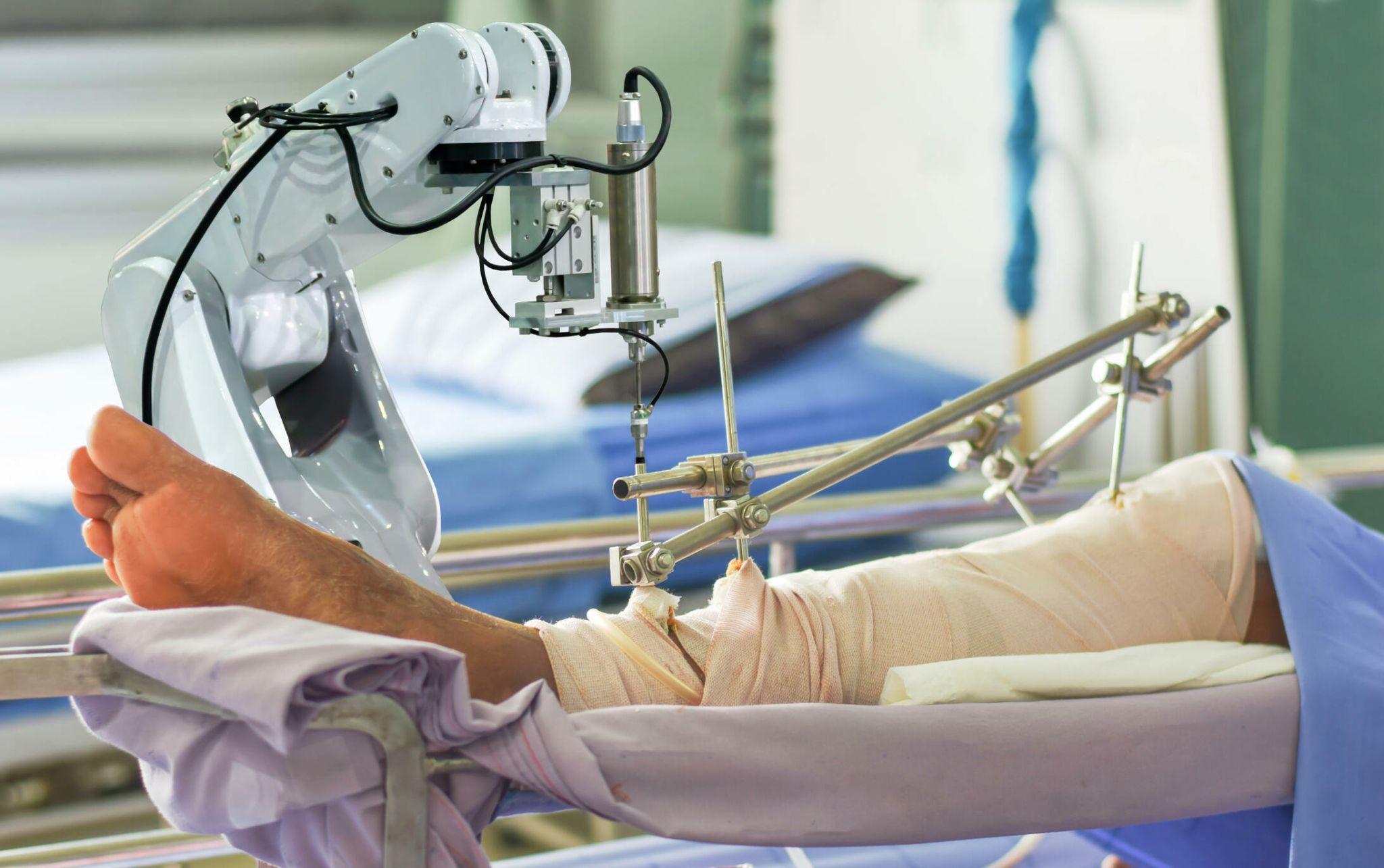
No. The surgical approach is the same — the difference is in the precision of bone cuts and implant placement, not the trauma to surrounding tissue. Some studies show slightly less post-operative pain with robotic surgery, attributed to the more controlled and precise bone cutting.
How do I prepare to manage pain at home before discharge?
Ensure the medication Dr. Ankur Singh prescribes at discharge is collected before going home. Set a medicine alarm to take it on schedule — waiting for pain to become severe before taking medication makes it harder to control. Ice the knee for 20 minutes several times daily. Elevation reduces swelling that drives pain. Move regularly — prolonged sitting worsens stiffness and pain.
Dr. Ankur Singh | Best Knee Replacement Surgeon in Noida | Knee Replacement Pain Management | KDSG Superspeciality Hospital Greater Noida | Renew Orthopedic Clinic Sector 47 Noida
Medical Disclaimer
The information provided on this website is for educational purposes only and should not be considered as medical advice. Please consult Dr. Ankur Singh or a qualified healthcare professional for personalized medical guidance.
Share this blog:
 Copy
Copy