8 Signs You Need Knee Replacement Surgery - And When To Stop Waiting

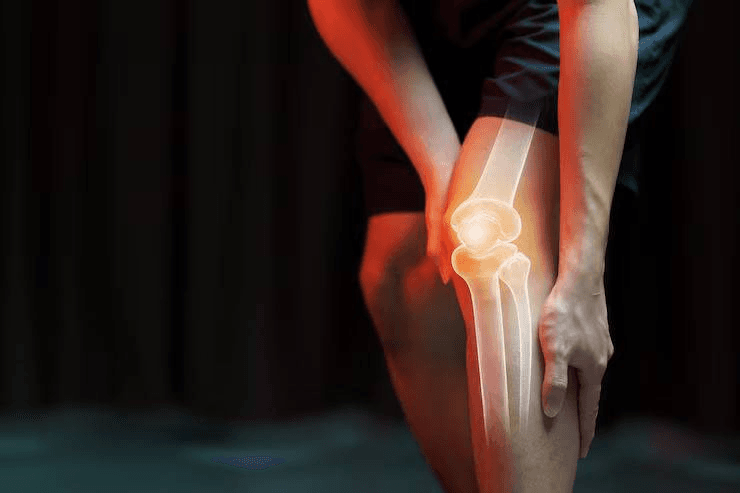
A runner sits on a pathway holding his knee, showing acute knee pain caused by sports injury.
One of the most common things patients say when they finally sit down for a knee replacement consultation is: "I wish I had come sooner." Not because they rushed into surgery, but because they spent months — sometimes years — managing pain that had long crossed the threshold where surgery was the clinically appropriate answer.
Waiting is not inherently wrong. Not every knee with arthritis needs surgery. Conservative management — physiotherapy, weight loss, injections, activity modification — is genuinely effective for many patients at many stages. But there comes a point where continuing to wait does not protect you; it just delays relief while the joint deteriorates further and your muscles weaken around it.
Here are eight signals that tell you knee replacement surgery deserves serious consideration.
Signal 1: Pain That Does Not Respond to Three or More Months of Proper Conservative Treatment
This is the single clearest clinical indicator. Before recommending knee replacement, a specialist needs to know that conservative options have genuinely been tried and failed — not attempted casually, but followed consistently for an adequate period.
Three months of structured physiotherapy (not just generic exercises, but a programme targeting quadriceps strength, hamstring flexibility, and proprioception) combined with anti-inflammatory medication represents the standard first-line approach. If that has been followed and the pain remains significant enough to affect daily function, the joint has likely reached a state where structural damage is too severe for conservative management to compensate.
Steroid injections can help some patients — but they are temporary. If two or three courses of injection therapy have provided only short-lived relief, that tells you the underlying cartilage loss is the problem, not the inflammation alone.
Signal 2: Pain During Rest and Night Pain That Wakes You Up
Knee arthritis pain that only occurs with activity (walking, climbing stairs) suggests the joint still has some functional reserve. When pain begins at rest — sitting in a chair, lying in bed — it signals that the inflammatory process within the joint is generating pain independent of mechanical loading.
Night pain that disrupts sleep is particularly significant. Consistently broken sleep because of knee pain takes a measurable toll on overall health, mood, and cognitive function. When your knee is waking you up most nights, the disease has moved well beyond mild.
Signal 3: Swelling That Keeps Coming Back
Intermittent swelling that comes and goes suggests residual inflammation responding to triggers. But swelling that returns reliably after any activity — swelling that you have learned to expect and manage as a daily reality — indicates ongoing joint damage and synovial inflammation that conservative measures are no longer controlling.
If your knee swells after a short walk, after minimal activity, or simply because you have been on your feet for an hour, that is not a knee that is responding to treatment. That is a joint under continuous stress from irreversible structural damage.
Signal 4: Your Walking Distance Has Significantly Reduced
Knee arthritis progressively limits how far patients can walk comfortably. An early indicator is avoiding the lift and taking the stairs instead. A later indicator is driving when you used to walk. A significant indicator is planning your entire day around minimising walking because the pain becomes unbearable beyond a certain distance.
When you cannot walk more than a few hundred metres without stopping because of knee pain, and this has been your reality for months, your knee is limiting your life in a way that is hard to recover from without intervention.
Signal 5: Stiffness That Takes a Long Time to Ease Every Morning
Morning stiffness — that locked, swollen sensation when you first get out of bed — is normal in early osteoarthritis and typically eases within 15 to 30 minutes as the joint warms up with movement.
When morning stiffness lasts more than 30 to 45 minutes before you can walk normally, it reflects substantial synovial inflammation and cartilage loss that is not going to improve with time alone.
Signal 6: A Visible Deformity Has Developed in the Leg
Varus deformity (bow legs, where the knee angles outward) and valgus deformity (knock-knees, where the knee angles inward) are common consequences of asymmetric cartilage loss in one knee compartment. As the cartilage wears away on one side, the joint collapses, and the leg alignment changes visibly.
Deformity matters because it is not cosmetic — it is mechanical. A leg that is bowed because of medial compartment collapse is concentrating an enormous load on the remaining cartilage and bone on that side, accelerating further destruction. A deformity that is allowed to progress significantly can also make surgery more complex.
If you or a family member notices that your leg no longer looks straight, a specialist evaluation is overdue.
Signal 7: Your Knee Is Affecting Your Mood and Mental Well-being
Chronic pain is rarely just physical. Months of disrupted sleep, reduced mobility, inability to participate in activities you used to enjoy — these take a genuine psychological toll. Patients with significant untreated knee pain commonly experience depression, anxiety, and social withdrawal.
This is not a weakness. It is a well-documented consequence of chronic pain conditions. And it is one of the reasons that knee replacement — when indicated — often produces improvements in mood, social engagement, and overall well-being that extend far beyond the knee itself.
If your knee pain is making you reluctant to leave the house, avoiding family gatherings, or giving up activities that used to define your identity, that is not a minor inconvenience. It is a significant quality-of-life issue that merits a surgical conversation.
Signal 8: You Have Grade 3 or Grade 4 Osteoarthritis on X-Ray With Matching Symptoms
X-ray findings alone do not determine whether surgery is indicated — as discussed earlier, the decision is always driven by symptoms. But when Grade 3 (moderate, with significant joint space narrowing) or Grade 4 (severe, bone-on-bone) changes on a weight-bearing X-ray are accompanied by the symptoms described above, the combination is clinically compelling.
Grade 4 changes with significant functional limitation and failed conservative treatment represent the clearest indication for total knee replacement in the guidelines used by orthopedic surgeons in India and internationally.
What Happens If You Wait Too Long?
This is a question patients rarely ask but should. Waiting beyond the appropriate clinical window for knee replacement has real consequences:
- Muscle weakness from disuse — the quadriceps and hip stabilisers weaken significantly with extended inactivity, making post-operative rehabilitation harder
- Worsening deformity — increasing angular deformity makes surgery more complex and outcomes potentially less predictable
- Psychological impact — prolonged disability from unrelieved pain accumulates over time
- Bone loss — progressive bone wear can complicate implant fixation in very advanced cases
The right timing for knee replacement is not the latest possible moment. It is when conservative options have genuinely been exhausted, and quality of life is significantly and consistently impaired.
How Is the Decision Made at Dr. Ankur Singh's Practice in Noida?
Every patient who sees Dr. Ankur Singh for knee pain undergoes a thorough evaluation: a detailed history of the pain and its functional impact, a clinical examination of the knee, review of weight-bearing X-rays, and — where needed — an MRI. The recommendation for or against surgery comes from this complete picture, not from a single scan or a fixed age threshold.
Some patients expecting to be told they need surgery leave with a tailored conservative programme that resolves their symptoms adequately. Others who came hoping to avoid surgery leave with a clear understanding of why waiting further is not in their best interest.
If you have been managing knee pain in Noida or Greater Noida and are not sure whether you have reached the point where surgery is the right answer, a specialist consultation is the most direct path to clarity.
To book a consultation with Dr. Ankur Singh — one of the best knee replacement surgeons in Noida and Greater Noida — call the number listed on this website.
Frequently Asked Questions
Can knee replacement be delayed indefinitely if I manage the pain with medication?
Pain medication manages symptoms but does not stop the progression of cartilage loss. Delaying surgery indefinitely while using increasing doses of anti-inflammatory drugs carries its own risks, including gastrointestinal and kidney complications from long-term NSAID use. There is a window where intervention produces the best outcomes.
Is 50 too young for knee replacement?
No. Age is not the primary factor. If a 50-year-old has Grade 4 osteoarthritis with disabling symptoms and failed conservative management, surgery is appropriate. Robotic-assisted knee replacement with precise implant positioning is particularly relevant for younger patients, where long-term implant durability matters most.
Is knee replacement surgery available in Greater Noida?
Yes. Dr. Ankur Singh performs total knee replacement, including robotic-assisted surgery, at KDSG Superspeciality Hospital in Greater Noida.
Dr. Ankur Singh | Best Orthopedic Surgeon in Noida | Signs You Need Knee Replacement | Knee Surgery Greater Noida | KDSG Superspeciality Hospital
Medical Disclaimer
The information provided on this website is for educational purposes only and should not be considered as medical advice. Please consult Dr. Ankur Singh or a qualified healthcare professional for personalized medical guidance.
Share this blog:
 Copy
Copy



/surgeons-passing-scissors-each-other-compressed.jpg)
.jpg)
