Robotic Knee Replacement: Success Rate and Recovery Time

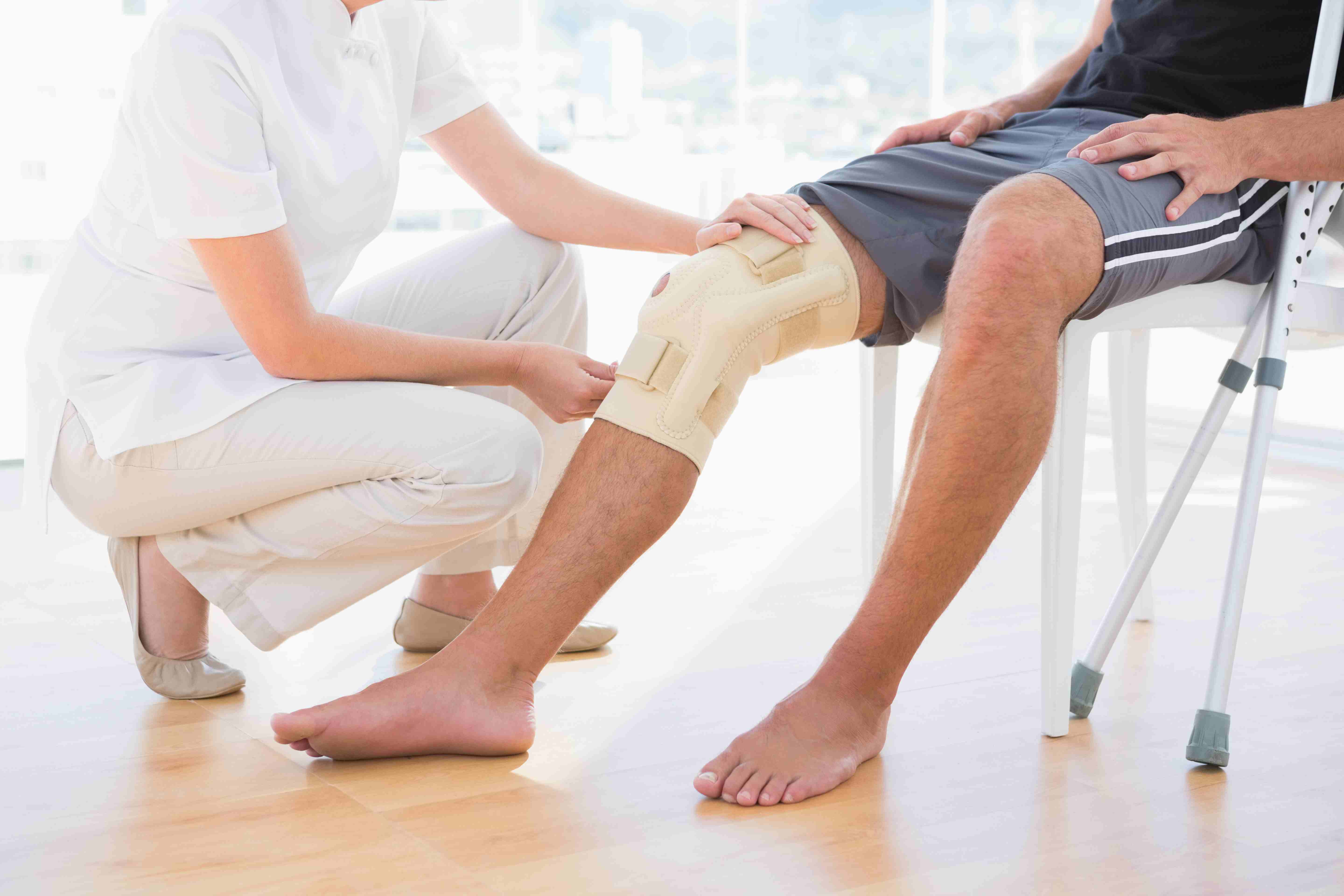
Active life after successful knee replacement surgery. Pain-free movement and mobility after robotic knee replacement
These are the two questions every patient asks before robotic knee replacement surgery — and they deserve specific answers, not round numbers and reassurances.
How successful is it? How long will recovery take? Both questions have genuinely useful answers that go beyond the population statistics — because what a patient actually wants to know is not the average, it is what their specific recovery will look like and what success means for their specific goals.
This guide answers both questions in the detail they deserve.
The Success Rate: What the Data Shows
Defining Success for Robotic Knee Replacement
"Success" in knee replacement is not a single number — it is a composite of four distinct outcomes, each of which matters differently to different patients. Robotic surgery improves each of these, to varying degrees.
1. Pain Relief Success Rate: 97 to 98 Percent
The elimination of arthritic knee pain is the primary reason most patients choose knee replacement — and it is the dimension where the procedure is most successful.
At two-year follow-up, 97 to 98 percent of robotic knee replacement patients report clinically significant pain reduction. The deep, grinding, constant pain of bone-on-bone arthritis — present with every step, waking patients from sleep, restricting every activity — is gone.
This figure is marginally higher than the 95 to 98 percent reported for conventional knee replacement, reflecting the better mechanical function of a more accurately positioned implant. Implants that are well-aligned distribute load more evenly across the joint, reducing residual pain from asymmetric mechanical stress.
2. Functional Success Rate: 92 to 95 Percent
Functional success — achieving clinically meaningful improvement in walking distance, stair climbing, and daily activity performance — occurs in 92 to 95 percent of robotic knee replacement patients at one year.
The 5 to 8 percent who do not achieve full functional success are typically patients with very severe pre-operative deformity, inadequate post-operative physiotherapy, significant comorbidities, or unrealistic expectations about what specific activities would be possible post-replacement.
3. Patient Satisfaction: 90 to 95 Percent
Patient satisfaction — would you recommend this surgery to someone in the same situation? Are you glad you had it? — runs at 90 to 95 percent at one year for robotic knee replacement patients in published studies.
This is consistently higher than the 85 to 90 percent reported for conventional knee replacement. The difference reflects both the better mechanical outcomes of robotic surgery and the improved "natural feel" of accurately positioned implants that robotic patients consistently report.
A 2021 systematic review published in the Knee Surgery, Sports Traumatology, Arthroscopy journal found robotic knee replacement patients scored significantly higher on patient-reported outcome measures at 12 months compared to conventional surgery — specifically in the dimensions of pain, physical function, and forgotten joint score (how natural the knee feels).
4. Long-Term Implant Survival: Where Robotic Shows Its Biggest Advantage
Robotic knee replacement's most significant long-term benefit is in implant survival — the proportion of patients who still have their original implant without revision at 10, 15, and 20 years.
Published data for conventional total knee replacement:
- 10-year survival: 95 to 96 percent
- 15-year survival: 90 to 92 percent
- 20-year survival: 82 to 85 percent
Emerging data for robotic total knee replacement:
The 10 to 20-year robotic data is still accumulating — robotic guidance at scale is a 2010s development. However, early 5-year data shows revision rates for robotic knee replacement that are 30 to 40 percent lower than for conventional surgery, and the biomechanical rationale for this advantage (better alignment → less uneven wear → longer implant life) is well-established.
The American Joint Replacement Registry 2022 annual report found that robotic knee replacement cases showed significantly lower aseptic revision rates (revision for mechanical failure rather than infection) at five years — the largest available dataset on this question.
For younger patients specifically: The 20-year implant survival figure is what matters most. For a 55-year-old having knee replacement today, the difference between 82 percent (conventional) and a projected 87 to 90 percent (robotic) at 20 years is the difference between approximately 1 in 6 needing revision and approximately 1 in 10. Over a population of patients, this represents a very large number of revision surgeries that do not happen.
Recovery Time: What the Timeline Actually Looks Like
Recovery from robotic knee replacement follows the same broad phases as conventional surgery — but with consistently earlier milestones at each stage.
Hospital Phase (Days 1 to 4)
Day 1: Physiotherapy begins. Ankle pumps, quadriceps sets, and the first walking attempt with a frame happen within hours of surgery. Walking Day 1 is the standard — not optional.
Days 2 and 3: Increasing walking distances. Stair practice under supervision. Pain managed with the multimodal protocol (nerve block, local infiltration, paracetamol, anti-inflammatories).
Day 3 to 4: Most robotic knee replacement patients at KDSG Hospital are discharged on Day 3 to 4. Studies comparing robotic to conventional surgery show robotic patients are discharged on average 0.5 to 1.5 days earlier, reflecting faster early mobilisation and better pain control from the more accurately positioned joint.
Home Phase: Weeks 1 and 2
The most intensive home recovery period. Pain is significant but declining daily. The walking frame is in use. Daily exercises (twice daily) are non-negotiable.
Robotic vs conventional comparison at 2 weeks: Studies consistently show robotic patients are walking more comfortably, require fewer doses of breakthrough pain medication, and have achieved greater knee flexion range by the end of Week 2 than conventional patients — typically by 5 to 10 degrees of additional range.
The Six-Week Milestone
By six weeks, most robotic knee replacement patients are:
- Walking independently — either with a stick or without any walking aid
- Cleared to drive (right knee, 6-8 weeks; left knee, slightly earlier for some patients)
- Returning to desk work
- Achieving 110 to 120 degrees of knee bending
Three Months
By three months, the large majority of patients describe their knee as functional for all daily activities. Walking distances are essentially unlimited. Stairs are climbed normally. Most patients return to their pre-illness social and recreational activities.
India-specific milestone: The ability to ride a scooter — one of the most functionally important milestones for Noida and Greater Noida patients — is typically achieved between months 3 and 4 for robotic patients.
Six Months: Full Recovery
The conventional milestone for "full recovery" after knee replacement is six months. By this point:
- Pain is absent or minimal in the large majority of patients
- Walking is normal in speed, gait, and endurance
- Stairs, inclines, and uneven ground are managed without conscious effort
- The knee is no longer something the patient thinks about constantly during daily activity
Some patients continue to improve beyond six months — particularly in subtler dimensions of function like proprioception (joint position sense) and the "natural feel" of the knee. Full neurological adaptation of the new joint can take up to 12 months.
The Complete Recovery Timeline at a Glance
| Milestone | Typical Timeframe (Robotic) | |-----------|---------------------------| | First walking attempt | Day 1 after surgery | | Hospital discharge | Day 3 to 4 | | Walking without limp (with frame) | Week 2 | | Transition to stick | Weeks 3 to 4 | | Walking unaided | Weeks 4 to 6 | | Driving | Weeks 6 to 8 | | Return to desk work | Weeks 6 to 8 | | Riding scooter | Months 3 to 4 | | Normal daily activities | Month 3 | | Full recovery | Month 6 |
What Makes Recovery Faster in Robotic Surgery
The consistently earlier milestones in robotic recovery have a clear mechanical explanation: a correctly positioned implant works correctly from Day 1. The muscles activating around it, the proprioceptive signals the nervous system receives from it, and the load distribution through it are all closer to normal from the first post-operative step.
In conventional surgery, when an implant is 2 to 4 degrees off its target position, the surrounding muscles must compensate — activating in slightly altered patterns to accommodate the mechanical mismatch. This compensation takes neurological learning time. It delays the fluency of gait. It means physiotherapy is working against a slight mechanical disadvantage.
Robotic precision removes that disadvantage at its source.
What Affects Recovery Speed in Individual Patients
Success rate and recovery timeline are population statistics. Individual trajectories depend on:
Factors that speed recovery:
- Pre-operative quadriceps strength (prehabilitation helps significantly)
- Normal or near-normal BMI
- Well-controlled diabetes, hypertension, and other comorbidities
- Consistent, twice-daily home exercises between physiotherapy sessions
- Adequate protein and calcium nutrition during recovery
- Support at home for the first 2 to 4 weeks
Factors that slow recovery:
- High BMI (greater soft tissue mass, reduced muscle activation, higher joint load)
- Severe pre-operative deformity (more soft tissue correction needed)
- Inadequate physiotherapy frequency
- Pre-operative opioid use (raises the pain threshold for post-operative management)
- Poor sleep and nutrition
Frequently Asked Questions
Is recovery from robotic knee replacement more painful than conventional?
No — and some evidence suggests the opposite. The more controlled bone cutting in robotic surgery produces slightly less soft tissue trauma, and the better-aligned implant produces less mechanical stress from Day 1. Post-operative pain levels are comparable or slightly better in robotic patients in most comparative studies.
When can I use an Indian squat toilet after robotic knee replacement?
A squat toilet requires deep knee bending (beyond 100 degrees) and is not recommended for the first 3 to 4 months after any total knee replacement — robotic or conventional. A raised commode seat or standalone commode chair must be arranged before discharge from hospital. After 3 to 4 months, modified toilet use may be possible with specific clearance from Dr. Ankur Singh.
Will the success rate be the same for me as for the published data?
Published success rates come from well-selected, well-managed patient populations at experienced centres. The rates at KDSG Superspeciality Hospital closely match published data because the surgical volume, robotic experience, and post-operative care meet the same standards. Individual success rates are discussed at the pre-operative consultation based on specific patient factors.
How do I book for robotic knee replacement in Greater Noida?
Call the number listed on this website. Consultations at Renew Orthopedic Clinic, Sector 47 Noida. Surgery at KDSG Superspeciality Hospital, Greater Noida.
Dr. Ankur Singh | Robotic Knee Replacement Surgeon Noida Greater Noida | Robotic Knee Surgery Outcomes India | KDSG Superspeciality Hospital | Renew Orthopedic Clinic Sector 47 Noida
Medical Disclaimer
The information provided on this website is for educational purposes only and should not be considered as medical advice. Please consult Dr. Ankur Singh or a qualified healthcare professional for personalized medical guidance.
Share this blog:
 Copy
Copy