Shoulder Arthroscopy in Noida: Who Needs It, What to Expect, and How Recovery Works
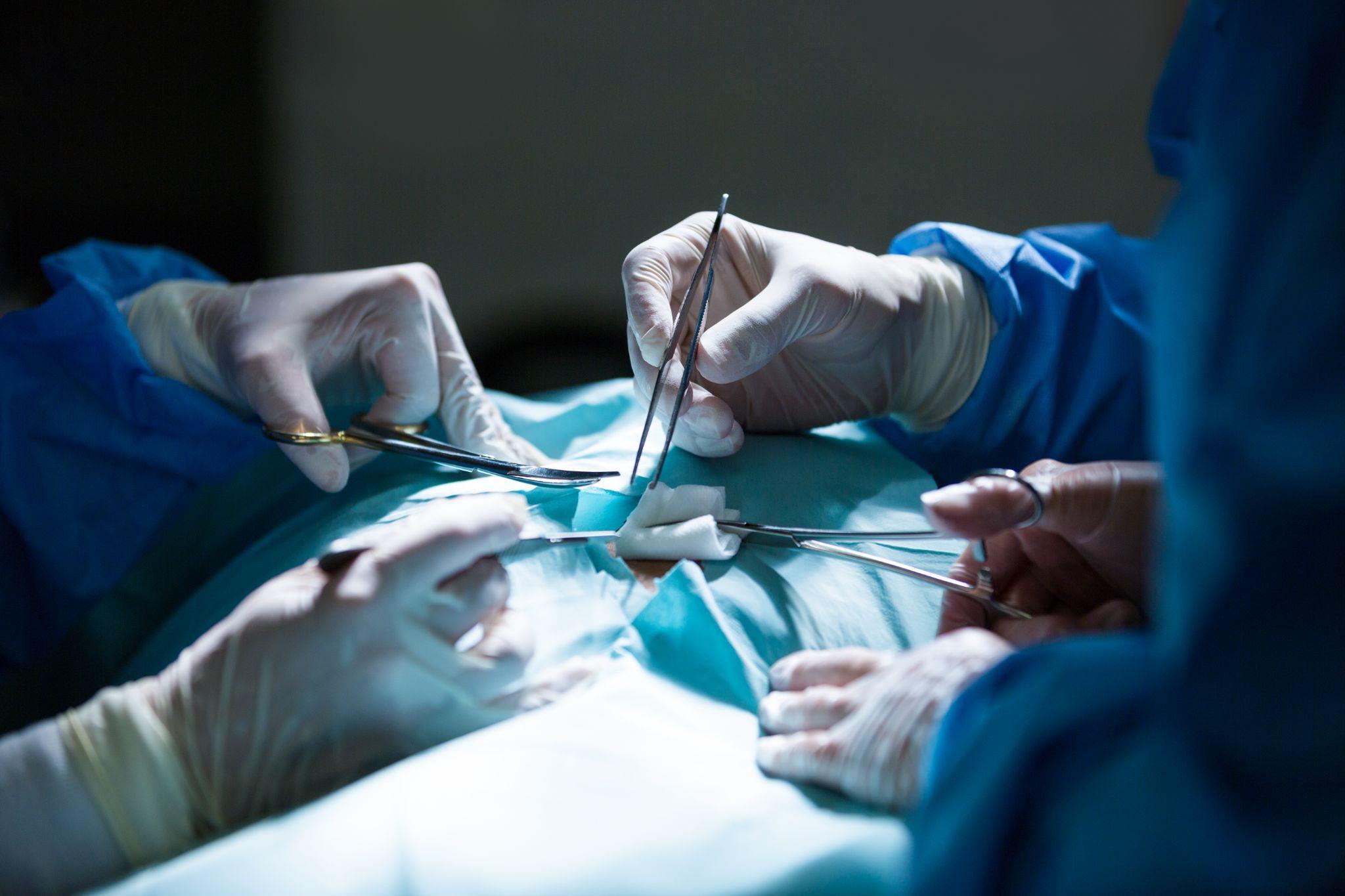
Orthopedic surgeons performing advanced shoulder arthroscopy surgery in a sterile operation theatre.
Shoulder pain is one of those things people tend to live with far longer than they should. It starts as a dull ache when reaching overhead. Then it interrupts sleep. Then it limits your cricket swing, your ability to lift your child, or simply the act of reaching for a glass. By the time many patients sit across from an orthopedic surgeon, they have been managing the pain for months — sometimes years.
For many shoulder conditions, physiotherapy and medication are enough. But when they are not — when the underlying problem is structural damage that conservative treatment cannot fix — shoulder arthroscopy is often the answer.
This guide covers what shoulder arthroscopy is, which conditions it treats, what the procedure involves, and what recovery actually looks like.
What Is Shoulder Arthroscopy?
Shoulder arthroscopy is a minimally invasive surgical procedure that allows a surgeon to examine the inside of the shoulder joint and perform repairs without the large incisions required by traditional open surgery.
The procedure uses a small camera called an arthroscope — about the width of a pencil — inserted through a tiny incision. The camera transmits a magnified, real-time image of the joint to a monitor, allowing the surgeon to see every structure in detail. Specialised instruments are inserted through one or two additional small incisions to perform the necessary repair work.
The difference between this and open surgery is substantial. Open shoulder surgery involves a large incision, extensive muscle disruption, and a significantly longer recovery. Arthroscopy causes far less damage to surrounding tissue, results in less post-operative pain, and allows patients to begin physiotherapy much sooner.
At Dr. Ankur Singh's practice in Noida and Greater Noida, shoulder arthroscopy is performed as a day-care procedure in most cases — patients go home the same day.
Conditions Treated with Shoulder Arthroscopy
1. Rotator Cuff Tears
The rotator cuff is a group of four muscles and their tendons that surround and stabilise the shoulder joint. Tears can result from a sudden injury — a fall, a lifting accident, a collision in sport — or from gradual degeneration over time. Partial tears may be managed conservatively; complete tears, particularly in active individuals, often require arthroscopic repair to reattach the torn tendon to the bone.
Rotator cuff tears are among the most common reasons for shoulder arthroscopy in patients across Noida and Greater Noida, particularly in patients over 40 who have experienced a sharp decline in shoulder strength or a painful arc of movement.
2. Shoulder Impingement
Impingement occurs when the tendons of the rotator cuff get pinched beneath the acromion (a bony arch at the top of the shoulder) during arm elevation. Over time, this repetitive compression inflames the tendons and the underlying bursa (a small fluid-filled sac). When physiotherapy and steroid injections fail to provide lasting relief, arthroscopic surgery to remove the inflamed tissue or reshape the bone — a procedure called subacromial decompression — can resolve the problem.
3. Labral Tears (Including SLAP Tears)
The labrum is a ring of cartilage that lines the shoulder socket (glenoid), deepening the socket and providing stability. It can tear as a result of a dislocation, a fall onto an outstretched hand, or repetitive overhead movements — common in swimmers, bowlers, and throwing athletes.
A SLAP tear (Superior Labrum Anterior to Posterior) is a specific type of labral tear at the top of the socket. Arthroscopic repair stitches the torn labrum back to the bone using small anchors, restoring stability.
4. Shoulder Instability and Recurrent Dislocations
When the shoulder dislocates once, the ligaments and labrum are often damaged enough that it dislocates again and again — sometimes with minimal provocation. This is particularly common in younger, active patients. Arthroscopic stabilisation (Bankart repair) tightens the stretched ligaments and reattaches the torn labrum, significantly reducing the risk of future dislocation.
5. Frozen Shoulder (Adhesive Capsulitis)
Frozen shoulder causes progressive stiffness and pain as the joint capsule thickens and contracts. Most cases resolve with time and physiotherapy, but in patients who fail conservative treatment after several months, arthroscopic capsular release can restore motion quickly and effectively.
6. Calcific Tendinitis
Calcium deposits within the rotator cuff tendons can cause severe, sudden shoulder pain. When injection therapy fails, arthroscopic removal of the calcium deposits provides reliable relief.
The Procedure: What Happens During Shoulder Arthroscopy?
The surgery is performed under general anaesthesia or regional nerve block (which numbs the shoulder and arm). Most procedures take between one and two hours, depending on the nature and complexity of the repair.
Once anaesthesia is administered, the patient is positioned for optimal access to the shoulder. The surgeon makes two or three small incisions — each less than a centimetre — around the joint. Saline solution is pumped in to expand the space inside the joint, making it easier to work. The arthroscope is inserted and the surgeon systematically examines all the structures inside, including the rotator cuff, labrum, biceps tendon, joint cartilage, and bursa.
Repairs are then made using specialised instruments — suture anchors, shavers, electrocautery devices — depending on what is being treated. A rotator cuff repair, for instance, involves pulling the torn tendon back to the bone and securing it with small metal or bioabsorbable anchors threaded with strong sutures.
After the procedure, the incisions are closed with one or two small stitches (or sometimes just steri-strips). The shoulder is placed in a sling. The patient recovers briefly in the post-anaesthesia area and, in most cases, goes home the same day.
Recovery Timeline After Shoulder Arthroscopy
Recovery from shoulder arthroscopy depends significantly on what was repaired. A minor procedure like subacromial decompression or calcific tendinitis removal heals much faster than a complex rotator cuff repair. Below is a general framework.
1. First Week
Expect pain and swelling immediately after surgery — this is normal and managed with prescribed medication and ice. If a nerve block was used, the shoulder may be numb for 12 to 24 hours after the procedure, providing excellent initial pain relief.
The sling is worn consistently in the first week. Most patients need assistance with daily tasks like dressing and bathing. Sleep can be difficult; many find sleeping semi-upright (in a recliner-style position, propped with pillows) more comfortable than lying flat.
Rest and wound care are the priorities. The small incisions should be kept clean and dry.
2. Weeks 2–4
Pain decreases noticeably. The sling continues, though its duration depends on the procedure. After a simple decompression, the sling may be discontinued earlier. After rotator cuff repair, it is typically worn for four to six weeks to protect the repaired tendon during its initial healing phase.
Passive range-of-motion physiotherapy begins — the physiotherapist moves the shoulder gently while the patient's muscles remain relaxed. The goal is to prevent stiffness while allowing the repair to heal without being stressed.
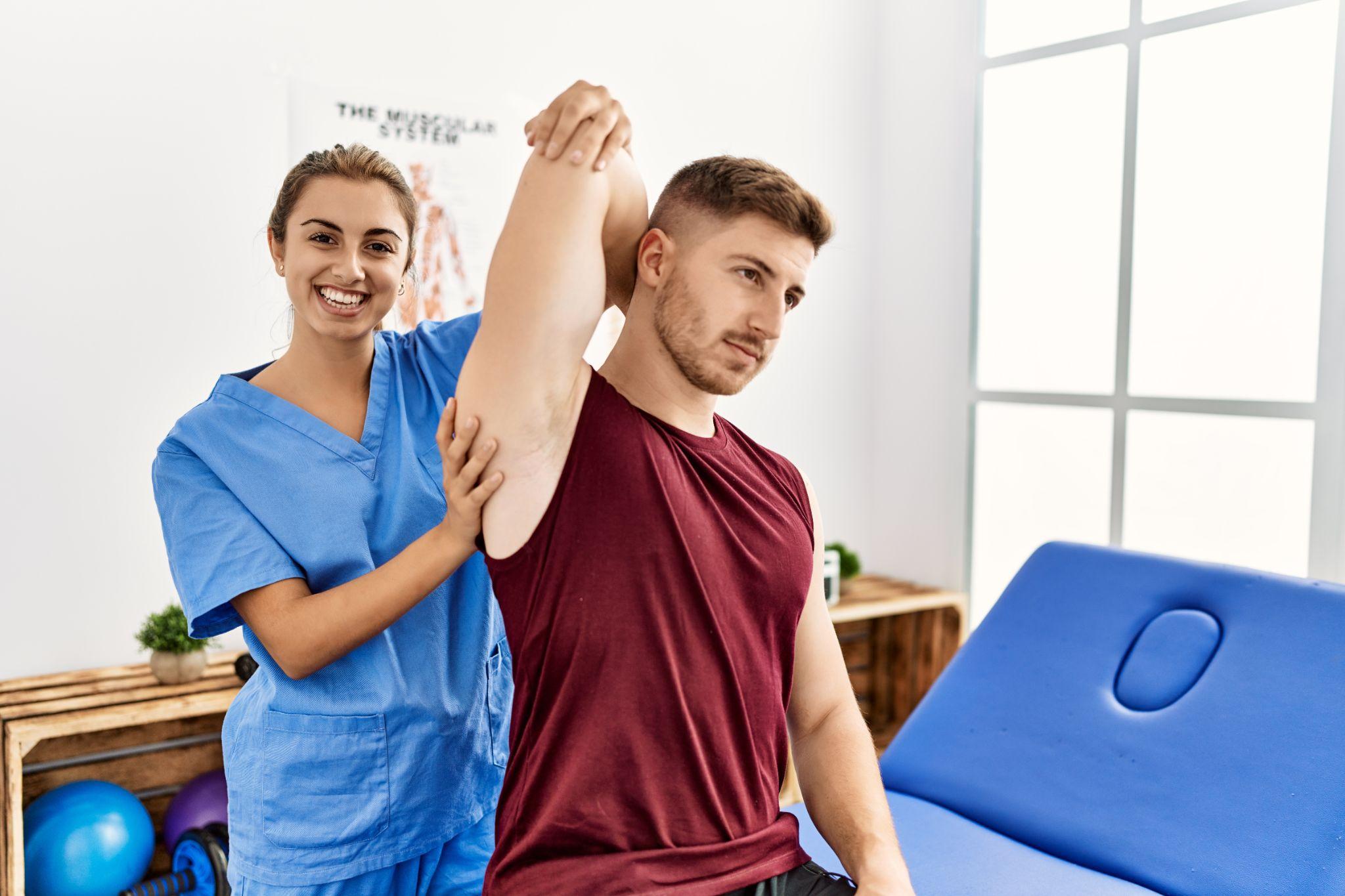
A physiotherapist assists a patient with guided shoulder mobility exercises during rehabilitation. The treatment aims to improve joint flexibility and reduce stiffness after injury.
3. Weeks 4–12
Active-assisted and then active range-of-motion exercises are introduced progressively. The shoulder begins to feel more like itself. Patients recovering from simpler procedures may resume light activities and driving during this phase. Patients recovering from rotator cuff repair are still building range of motion and waiting for the tendon to achieve adequate strength before active strengthening begins.
4. 3–6 Months
Strengthening exercises begin in earnest. The rotator cuff muscles, deltoid, and scapular stabilisers are trained progressively. Functional movements — reaching, lifting, pushing — are reintroduced carefully.
Most patients are able to return to daily activities, light work, and non-contact recreational activity by the three-to-four month mark. Return to sports or heavy manual work typically requires four to six months, sometimes longer for complex repairs.
5. 6–12 Months
Full recovery — including return to overhead sport, competitive cricket, swimming, or heavy physical work — can take up to a year after a major rotator cuff repair. This is not unusual and does not reflect a problem with the surgery. Rotator cuff tendons are slow to mature, and the strength gains in the later months of rehabilitation continue well beyond the point at which most patients feel functionally "normal."
When Is Shoulder Arthroscopy Recommended?
Surgery is not the first option. Most shoulder conditions are first treated with physiotherapy, anti-inflammatory medication, and, where appropriate, corticosteroid or PRP injections. Arthroscopy is recommended when:
- Conservative treatment has been tried for an appropriate period without adequate improvement
- Imaging (MRI or ultrasound) confirms structural damage that cannot heal without repair
- The patient's level of pain or functional limitation significantly affects daily life or work
- The patient wants to return to sport or physical activity and non-surgical management cannot achieve that goal
The decision is made on a case-by-case basis, after a thorough examination and review of imaging.

A woman is standing against a white background, holding her shoulder in pain.
Shoulder Arthroscopy at Dr. Ankur Singh's Clinic in Noida
Dr. Ankur Singh specialises in shoulder arthroscopy and shoulder reconstruction for patients across Noida, Greater Noida, and the Delhi-NCR region. As Director of Orthopedics at KDSG Superspeciality Hospital in Greater Noida, he brings extensive arthroscopic expertise to both routine and complex shoulder cases.
If you have been managing persistent shoulder pain, experienced a shoulder dislocation, or been told you have a rotator cuff or labral tear, a specialist evaluation will clarify whether surgery is necessary — and if so, what the right approach is.
To book a consultation for shoulder arthroscopy in Noida or Greater Noida, call the number listed on this website.
Frequently Asked Questions
1. Is shoulder arthroscopy painful?
The procedure is performed under anaesthesia, so there is no pain during surgery. Post-operative pain is managed with medication. Most patients describe the discomfort as manageable and better than the shoulder pain they lived with before surgery.
2. How soon can I drive after shoulder arthroscopy?
Driving is typically possible four to six weeks after surgery, once the sling is discontinued and the shoulder has sufficient strength and range of motion for safe vehicle control. Your surgeon will confirm when it is appropriate for you specifically.
3. Will I need physiotherapy after shoulder arthroscopy?
Yes — physiotherapy is essential. The surgical repair creates the structural foundation; physiotherapy rebuilds the strength and movement necessary to use it effectively. Skipping or rushing physiotherapy is one of the most common reasons outcomes fall short of expectations.
4. Can I have shoulder arthroscopy in Greater Noida rather than Delhi?
Yes. Dr. Ankur Singh performs shoulder arthroscopy at KDSG Superspeciality Hospital in Greater Noida, making specialist shoulder surgery accessible without having to travel into central Delhi.
Dr. Ankur Singh | Best Orthopedic Surgeon in Noida | Shoulder Arthroscopy | Rotator Cuff Repair | Shoulder Instability | KDSG Superspeciality Hospital, Greater Noida
Medical Disclaimer
The information provided on this website is for educational purposes only and should not be considered as medical advice. Please consult Dr. Ankur Singh or a qualified healthcare professional for personalized medical guidance.
Share this blog:
 Copy
Copy