Total Hip Replacement Recovery in India: Week-by-Week Guide for Patients and Families
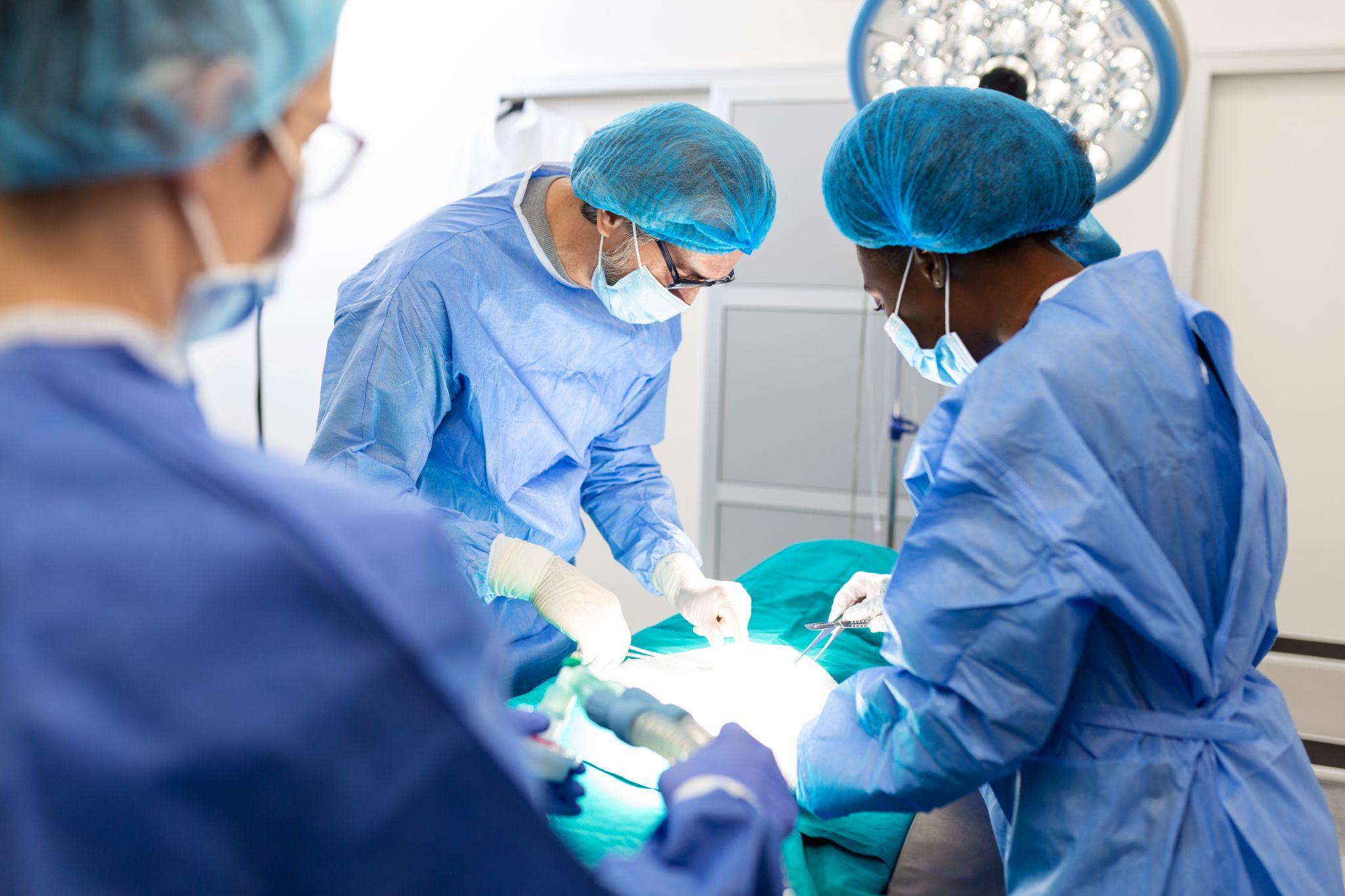
Orthopedic surgeons performing hip replacement surgery in a modern operation theatre.
Recovering from hip replacement surgery in India is not quite the same as recovering in a Western country — and most of the recovery guides available online are written for Western homes, Western daily routines, and Western family structures.
Indian homes have narrow corridors, floor-level bathrooms, low beds, and often staircases without railings. Indian daily life involves floor sitting, squat toilets, getting into autorickshaws, and family gatherings with floor seating. Indian families have adult children, spouses, and sometimes parents-in-law all involved in caregiving decisions. These are not complications — they are the context. Any honest recovery guide for Indian patients has to address them directly.
This guide covers total hip replacement recovery week by week for patients of Dr. Ankur Singh at KDSG Superspeciality Hospital in Greater Noida and Renew Orthopedic Clinic, Sector 47. It is written for both the patient and the family members who will share in the recovery.
Before Coming Home: The Indian Home Preparation Checklist
The week before surgery is when the home needs to be ready. Do not leave this for the day of discharge.
Bathroom — the most critical room:
The biggest practical issue for most Indian patients is toilet access. The following must be arranged:
- If you have an Indian squat toilet only: a portable commode chair (available at medical supply stores in Noida) must be placed over it, or set up as a standalone commode in the bathroom
- If you have a Western toilet: a raised toilet seat (commode riser adding 10-15 cm height) must be fitted. Bending to a low toilet requires hip flexion beyond 90 degrees — which is not allowed for the first 6 weeks after hip replacement
- A grab bar or sturdy railing within reach of the toilet for pushing to stand
- A shower chair for bathing — standing on one leg in an Indian bathroom without support is a fall risk
- Non-slip mat inside the bathroom
Bedroom:
- The bed height matters. If your feet do not touch the floor when sitting on the edge, the bed is too low. Add a firm mattress topper to raise height if needed. For patients sleeping on floor mattresses: a temporary elevated sleeping arrangement is essential for the first 6 weeks.
- Clear the floor around the sleeping area completely — the walker needs clear passage
- Keep frequently needed items at waist height or above — nothing requiring bending to the floor
Walking path:
- The route from bedroom to bathroom to main seating must be clear of rugs, bags, shoes, power cables, low furniture
- Move any furniture that narrows these paths
Clothing preparation:
- Loose pyjama bottoms or salwar that slip on without bending — no tight jeans for weeks
- Slip-on footwear — no bending to tie laces for several weeks
- Long-handled shoe horn (available at medical supply stores)
Hospital: Days 1 to 4
Day of surgery: After total hip replacement at KDSG Hospital, you will be monitored in the orthopaedic ward. The anaesthetic — typically spinal, with sedation — wears off over 2 to 4 hours. Pain management is active from the moment you arrive in the ward: nerve blocks, local infiltration, and oral medication combine to keep the first hours manageable.
A physiotherapist visits on the same day in most cases. The first session involves ankle pumps and simple breathing exercises. There is no walking on day of surgery.
Day 1 after surgery: You will be assisted to stand and take your first steps with a walking frame. The operated leg bears weight — you are not hopping. Most patients find this simultaneously difficult (weak, sore, uncertain) and more possible than they expected. The walking distance is short — to the bathroom and back is typical.
Days 2 and 3: Walking distance increases with each session. Physiotherapy twice daily. Key exercises:
- Ankle pumps: every hour while awake (DVT prevention)
- Heel slides in bed
- Hip abductor sets (tightening the buttock muscles without moving)
- Assisted standing hip exercises
Discharge (typically day 3-5): You go home when pain is manageable orally, you can walk safely with a frame, manage stairs with supervision, and the wound is clean.
Home: Weeks 1 and 2
These are the weeks when family support matters most. The patient is dependent for almost everything practical.
Pain and swelling: Pain is expected. Take medication on schedule — do not wait for pain to become severe before taking it. Swelling in the hip and thigh, and sometimes tracking down to the knee and calf, is normal. Ice wrapped in a cloth for 20 minutes several times daily reduces swelling. Keep the operated leg elevated when resting.
The hip precautions — critical for 6 weeks:
Three movements risk dislocating the hip prosthesis in the healing phase. Avoiding them is not optional:
- Do not bend the hip beyond 90 degrees (no bending forward to touch toes, no low seats, no raised leg getting into a car)
- Do not cross the operated leg across the midline (no crossing legs, no sleeping on the operated side without a pillow between the knees)
- Do not turn the toes of the operated leg inward (no internal rotation)
Family duties this fortnight:
- All meal preparation (patient cannot stand for extended periods)
- Dressing assistance — socks and shoes require bending that is currently restricted
- Driving to all appointments
- Wound inspection daily: call the clinic if you see spreading redness, any discharge, or the patient develops fever above 38.5°C
- Ensuring blood-thinning medication is taken daily at the same time
- Helping with bathing (sponge bath or assisted shower with shower chair)
- Assisting with stairs — the family member walks alongside, not in front or behind, so they can catch if needed
Physiotherapy at home (twice daily):
- Ankle pumps: 20 repetitions hourly while awake
- Gluteal sets: tighten the buttock, hold 5 seconds, release. 10 repetitions
- Heel slides: lying on back, slide the heel toward the buttock gently. 10 repetitions
- Supported standing hip abduction: standing holding the walker, lift the operated leg sideways a few inches. 10 repetitions
- Short walks: 5 to 10 minutes three to four times daily with the walking frame
Weeks 3 and 4: Growing Independence
By week 3, most patients have a clear sense that they are improving. Pain is reducing. Walking feels more confident. Family members start getting some of their own life back.
Physiotherapy progress:
- Walking distances increasing (aim for 15 to 20 minutes total daily, broken into sessions)
- Transition from two-handed walker to one elbow crutch may begin — guided by Dr. Ankur Singh's team at the follow-up appointment
- Standing exercises increasing in difficulty: side leg raises with support, gentle weight shifting
Indian daily life milestones at this stage:
- Getting in and out of a car: this requires technique. Reverse toward the seat, lower yourself down while keeping the operated leg extended forward (not bending it past 90 degrees), then swing both legs in together. This is teachable and becomes easy with practice.
- Using the raised toilet independently
- Bathing with minimal assistance
Weeks 5 and 6: The Six-Week Milestone
The six-week follow-up appointment is a key clinical checkpoint. X-rays confirm implant position and early bony integration. Range of motion is assessed. The hip precautions are reviewed — for many patients, some restrictions can be relaxed at this point.
What usually happens at six weeks:
- Transition from walker to walking stick typically happens around now
- Many patients are cleared to drive (if the right hip was operated, driving requires 6-8 weeks; left hip, some patients are cleared earlier but Indian manual transmission vehicles require a discussion — clutch operation with left foot is a hip flexion movement)
- Gentle swimming can begin once the wound is fully healed
Floor sitting:
Floor sitting remains restricted at six weeks. This is culturally significant for many Indian patients — it affects prayer, family gatherings, and daily habits. The honest timeline: many patients regain modified floor-level activity between 3 and 6 months, depending on the surgical approach and their progress. Full sukhasana (deep cross-legged) is achievable for some after robotic hip replacement with anterior approach; not for all.
Discuss the floor-sitting goal specifically with Dr. Ankur Singh before surgery, so the surgical plan (choice of approach, cup positioning) can incorporate this lifestyle goal.
Months 2 and 3: Progressive Return to Normal
By month 2, most patients have stopped needing a stick for walking at home and use it only for uneven ground or longer distances. Pain is intermittent rather than constant. The operated hip feels increasingly like their own.
Physiotherapy in this phase:
- Stationary cycling (seat raised to keep hip flexion below 90 degrees initially)
- Progressive strengthening: resistance band exercises for hip abductors and extensors
- Balance training: standing on one leg briefly (supported nearby for safety)
- Gentle hydrotherapy if pool access is available
Return to work:
Desk-based office workers: typically cleared at 6 to 10 weeks. The commute — particularly crowded metro or bus travel — requires independent assessment. Assess whether the commute involves sustained standing, risk of jostling, or very long sit times.
Active or standing occupations: 10 to 16 weeks, or longer depending on nature of work.
Month 4 to 6: Towards Full Independence
By month 4 to 6, most patients describe their hip as something they are no longer thinking about constantly. Pain is rare. Mobility is close to what they expected from the surgery.
Activities typically achievable by month 6:
- Walking unlimited distances on flat ground
- Climbing stairs without a railing
- Driving in all conditions (including manual transmission with comfortable clutch use)
- Swimming
- Cycling on flat terrain
- Golf
- Attending family functions and religious occasions (with seating modifications where needed)
- Light gardening and household tasks
The Indian toilet question revisited:
Some patients regain the ability to manage an Indian squat toilet at 4 to 6 months — with appropriate grab support and after specific clearance from Dr. Ankur Singh. This is individual and depends on hip flexion range achieved, surgical approach, and implant positioning. It should not be attempted without explicit discussion and clearance.
A Note for Family Caregivers
Indian family caregiving is one of the most powerful recovery assets a hip replacement patient has. The support of family members who understand the restrictions, manage the practical tasks, and provide encouragement without enabling over-reliance produces better outcomes than any device or medication.
A few practical notes for caregivers:
- Encourage independence progressively — doing everything for the patient indefinitely delays recovery of confidence and muscle strength
- Watch for low mood or anxiety, which are common in the first 4 to 6 weeks and usually improve as mobility returns. If significant, mention it to Dr. Ankur Singh's team
- Take care of yourself too. Caregiving is physically and emotionally demanding. Ask for help from other family members. The patient's recovery benefits from a caregiver who is not exhausted.
Frequently Asked Questions
When can my elderly parent use an autorickshaw after hip replacement?
Autorickshaw entry requires careful technique (not a casual movement) and requires the hip to flex to approximately 80-90 degrees. Most patients manage this after 3 to 4 months with practice and support. Car travel with a higher seat is recommended before this.
Can my mother attend a religious ceremony two months after hip replacement?
Attending a ceremony while seated on a chair is possible at two months for many patients. Sitting on the floor, prostrating, or kneeling is not appropriate at this stage. Arrange chair seating in advance and ensure someone accompanies the patient.
How do I know if the hip has dislocated?
Hip dislocation after surgery is usually unmistakeable: sudden severe pain, an audible sound at the moment of dislocation, the leg looking shorter than the other side, and inability to move the hip at all. It is an emergency — go to A&E at KDSG Hospital immediately without trying to reposition the leg.
Dr. Ankur Singh | Best Hip Replacement Surgeon in Noida | Hip Replacement Recovery India | KDSG Superspeciality Hospital Greater Noida | Renew Orthopedic Clinic Sector 47 Noida
Medical Disclaimer
The information provided on this website is for educational purposes only and should not be considered as medical advice. Please consult Dr. Ankur Singh or a qualified healthcare professional for personalized medical guidance.
Share this blog:
 Copy
Copy