Simple Posture Fixes to Prevent Neck and Back Pain
Keeping your ears, shoulders, and hips in a straight line helps distribute body weight evenly and prevents strain on your neck and back.
Do you feel stiffness in your neck or pain in your back after sitting for long hours? The hidden reason may be poor posture.
Living in today's world, most of us are glued to our screens for hours together; posture-related pains rank among the most common health problems. If your posture goes out of alignment, your muscles and spine have to endure additional stress, which may cause fatigue, tension, and chronic pain.
Good posture is not just a matter of standing straight; it involves training the body to move efficiently to keep muscles and joints in balance.
In this blog, we outline a few simple posture fixes that anyone can make in an instant to avoid neck and back pain, improve spinal health, and feel more confident performing daily activities.
Understanding the Link Between Posture and Pain
The way you stand affects every part of your spine, from your neck all the way down to your lower back. Slouching can make your spine lose its natural shape, the so-called “S” shape. This puts uneven pressure on muscles, which then have to work harder, especially in your neck, shoulders, and lower back.
Poor posture is usually caused by:
- Sitting at a desk or computer for hours
- Technology neck: continuous use of the phone
- Poor core and back muscles
- Not moving or stretching
All these little habits have a tendency to culminate in chronic back pain, muscle stiffness, and spinal misalignment over time. As we get older or remain sedentary, our problems with posture worsen, making it a very difficult task for the body to maintain balance without pain.
Signs That You Have Poor Posture
You may not even realize that your posture is the cause of your pain. Look for these signs:
- Hunched back or rounded shoulders
- Forward head posture (head jutting out)
- Neck or upper back stiffness, often persistent
- One shoulder is higher than the other, or one hip is higher than the other.
Feeling tired or sore after a few hours of sitting
Quick self-check:
Standing with heels, back, and head against a wall, ensure that there are no gaps and discomfort in maintaining that position; otherwise, you probably need to work on your posture.

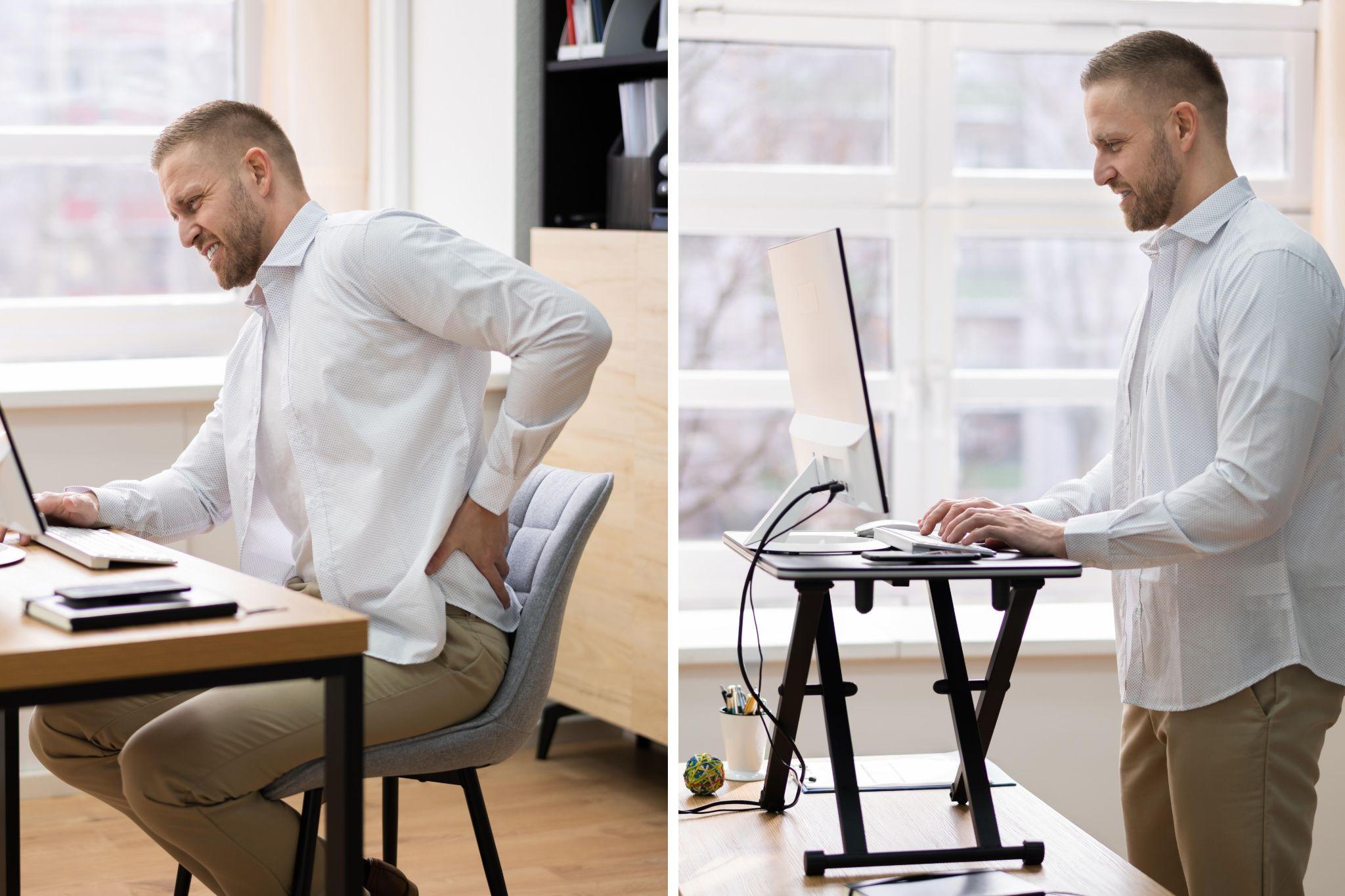
Position your computer screen at eye level and use a chair with proper lumbar support to avoid slouching and forward head posture.
Position your computer screen at eye level and use a chair with proper lumbar support to avoid slouching and forward head posture.
Best Sitting Posture for Neck and Back Health
Desk and chair set up.
Most posture problems begin with poor habits while sitting at work or study desks. Here's how to fix that:
- Keep your feet flat on the floor and your knees at a 90-degree angle.
- Sit back in a manner that your lower back is supported by the chair or a small lumbar cushion.
- Move the monitor or laptop screen to eye level; do not look downward.
- Keep your shoulders relaxed- neither up nor hunched.
If you do not have an ergonomic chair, take a towel and roll it up. Place it at your lower back.
Laptop and Mobile Use
- Smartphones and laptops are major posture destroyers.
- Don't bend your neck down towards the phone; instead, bring it up to eye level.
- When using a laptop for more than a short period, consider using a laptop stand or an external keyboard.
- Take mini breaks every 30-45 minutes to stretch your neck and shoulders.
Standing the Right Way
When standing:
- Stand with your weight evenly on both feet.
- Keep your shoulders relaxed, chest open, and spine naturally straight.
- Avoid locking your knees or leaning on one leg for long periods.
- A line drawn straight down from the ears should pass through the shoulders, hips, and ankles; that’s good posture!
Walking Posture Tips
Pull your shoulders slightly back and down.
Swing your arms to keep your balance.
Mindful walking strengthens not only your muscular strength but also your spinal alignment.
Easy Exercises to Improve Your Posture
You actually don't have to go to a gym in order to improve your posture. Every day, a few minutes of stretching and strengthening will do wonders.
Best Exercises to Improve Your Posture:
- Shoulder Rolls: Release tension from the upper back and loosen tight muscles.
- Chest openers: help balance the front of your shoulders to offset slouching.
- Chin tucks can strengthen the neck and also reduce the forward head posture.
- Cat-cow stretch: This pose enhances flexibility and mobility around your spine.
- The bridge pose strengthens the glutes and lower back.
- Planks and Bird-Dogs: Engage your core, the basis of good posture.
These exercises should be followed each day for only 10-15 minutes, and the differences will be noticed in a few weeks.

A strong core supports your spine, helping you maintain good posture and reducing the risk of chronic back and neck pain.
A strong core supports your spine, helping you maintain good posture and reducing the risk of chronic back and neck pain.
Daily Habits to Maintain Good Posture
Good posture is not something that is built overnight; it's maintained through small daily habits.
Here are a few simple posture tips you can incorporate into your daily routine:
- Take posture breaks every 30-45 minutes. Get up, stretch, or walk around for 1-2 minutes.
- Set a reminder on your phone to correct your sitting position.
- Sleep on a medium-firm mattress; use a supporting pillow that will keep your spine aligned.
- Avoid carrying heavy bags on one shoulder; instead, carry your things in a backpack with two straps.
Ergonomic Adjustments for Work and Home
Your posture is greatly influenced by your environment. By making a few ergonomic tweaks, you can save yourself from years of pain.
Keep your monitor an arm's length away from you with the top of the screen at eye level. Your elbows should be close to your body and bent at 90 degrees. Adjust the chair height so that your feet are flat on the floor.
On long drives, use a lumbar support cushion to maintain the curve of your lower back. Ergonomic awareness is likely to be beneficial for students, those working remotely, and drivers, too. It's one of the easiest ways to avoid posture-related back pain.
Mindfulness and Body Awareness
Correction of posture is not strictly a physical matter, but a mental one, too. Awareness of your body keeps you from reverting to bad habits. Practice mindful sitting--check in with your body throughout the day. Deep breathing can help relax your muscles and release tension from the shoulders and back. Try yoga, Pilates, or meditation to improve your flexibility, core strength, and body awareness. By being mindful of your posture, your body will automatically adjust itself to a better position.
Conclusion
Your posture defines not just how you look but how your body feels every single day. You can get rid of neck and back pain naturally by making a few changes in the way you sit, stand, and move, and maintain a strong spine for life. Remember that better posture today means a pain-free tomorrow. Start with just one small change today, your future self will thank you.
Frequently Asked Questions
1. Can poor posture really cause long-term neck and back pain?
Yes. Poor posture is constantly stressing your muscles and joints, and if left unchecked, results in chronic neck and back pain.
2. How long does it take to correct posture naturally?
You should be able to notice changes in 3–6 weeks if you practice regularly.
3. Do posture corrector belts or braces really work?
They work as temporary aids but are not the long-term correction, which is to improve the muscles and raise awareness.
4. What is the best sleeping position to maintain good posture?
Sleeping on your back or side with a supportive pillow maintains natural alignment of the spine.
5. Can stretching alone fix bad posture?
Stretching does help, but you also need core and back strengthening exercises, plus mindful sitting habits for full correction.
Medical Disclaimer
The information provided on this website is for educational purposes only and should not be considered as medical advice. Please consult Dr. Ankur Singh or a qualified healthcare professional for personalized medical guidance.
Share this blog:
 Copy
Copy