Road Accident Bone Injuries: Immediate Orthopedic Care

Road accident knee injury with pain and bleeding
Road accidents are one of the primary worldwide reasons for serious bone injuries. A sudden crash, fall, or strike can lead to fractures, dislocations, ligament destruction, or even crushing injuries that might need quick medical care. Orthopedic treatment in these moments can be a deciding factor between total recovery and long-term disablement. The guide describes different types of bone injuries caused by road accidents, the emergency measures to be taken, and the reason for the necessity of early orthopedic intervention.
Understanding Bone Injuries in Road Accidents
Injuries to bones as a result of road accidents happen because of the high-impact forces exerted on the body. Such forces may go beyond the strength limit of the bones, muscles as well as joints, resulting in severe injuries.
Common Types of Bone Injuries
Injuries resulting from a traffic accident differ in their severity but the orthopedic injuries that are most commonly seen are:

Knee joint fracture shown in X-ray after accident
- Fractures of long bones such as the femur, tibia, humerus, and forearm bones
- Pelvic and hip fractures, especially in high-speed collisions
- Spinal fractures involving the cervical, thoracic, or lumbar vertebrae
- Joint dislocations of the shoulder, knee, hip, or elbow
- Crush injuries when bones and adjacent tissues are compressed
- Open fractures where the bone goes through the skin, thus escalating the danger of infection
All these injuries need treated differently with urgency and the selection of treatment also different.
Why Immediate Orthopedic Care Is Critical
The initial hours post road accident are known in medical terms as “golden hours.” Early orthopedic treatment given in this time frame can dramatically enhance the results.
Preventing Further Damage
Improper management of the limb fracture can aggravate the injury. If the limb is allowed to move without being stabilized, the bone pieces may cut through the nerves, blood vessels, or muscles and cause more pain. An immediate visit to an orthopedic doctor guarantees that the fracture is properly immobilized and that no other complications occur.
Reducing Pain and Shock
Bone injuries of such a severity are very painful and may even cause the patient to go into shock from either the loss of blood or the impact. Immediate management of pain, splinting, and intravenous fluids can help the patient to be stable and prevent the risks that are fatal.
Lowering the Risk of Infection
Infections are very likely to occur in the case of open fractures and deep wounds. Through early cleaning, antibiotics and surgery, the chances of complications such as osteomyelitis being formed are greatly diminished. Osteomyelitis can, in turn, slow down healing and jeopardize the function of the limb.
First Aid Steps After a Road Accident
While waiting for medical help a certain set of first aid measures can protect the injured person.
Immobilization of the Injured Area
In case of a suspected fracture, it is important that the affected limb be kept immobile. The use of improvised splints, boards, or rolled-up cloth is to ensure that the limb does not move unnecessarily.
Control of Bleeding
The first action to be taken in the case of heavy bleeding is to put a clean cloth on the wound and apply direct pressure to control the bleeding. In the case of open fractures, do not attempt to push the bone back inside.
Avoiding Unnecessary Movement
The injured person should remain in place unless it is absolutely necessary to move him/her, particularly if there is a suspected spinal injury. Incorrect handling can lead to more severe spinal damage.
Seeking Immediate Medical Help
Call for emergency services immediately. Even if the injuries do not seem to be serious, there might be internal damage to bones or joints that isn't detected right away.
Diagnosis of Bone Injuries After Accidents
The orthopedic evaluation begins immediately after the patient reaches a medical facility.
Clinical Examination
An orthopedic doctor looks at the symptoms and signs of the person in pain, namely: pain, swelling, and also the movement of the affected part that is restricted, and the possible involvement of nerves or blood vessels. This very first assessment will lead to the decision of what other tests will be done.
Imaging Techniques
- X-rays are the primary imaging method used to diagnose fractures and dislocations
- CT scans give comprehensive images of intricate fractures, particularly in the spine or pelvis
- MRI scans are useful in determining the extent of damage to soft tissue such as ligaments, tendons, and cartilage

An X-ray machine.
Treatment Options for Road Accident Bone Injuries
The treatment options are dealt with according to its nature, position and intensity.
Non-Surgical Management
Non-displaced stable fractures could be cast in plaster, restrain by a brace or splint. However, the patient must be consistently visited to properly monitor healing and the position of the bone.
Surgical Intervention
Surgery is often the treatment option with severe fractures. One of the most common methods performed surgically is:
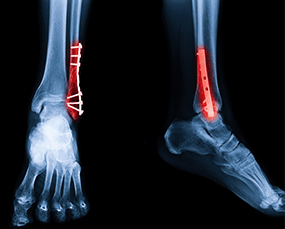
- Fixation from inside by means of plates, screws, or rods
- Fixation from outside for complicated or open fractures
- Reconstruction or replacement of the joint in cases of severe joint destruction
- Surgery to stabilize the spine in cases of fracture of the vertebra
Surgical intervention, if it’s performed early, will not only aid in restoring correct anatomy but also in making it healing faster and lessening the likelihood of complications in the long run.
Rehabilitation and Recovery
Orthopedic care does not end with fracture healing. Rehabilitation plays a vital role in restoring function.
Physiotherapy and Mobility Training
After the fracture has started to heal, the physiotherapy applied in this way will benefit by increasing the strength, flexibility, and movement of the joint. Early rehabilitation prevents the occurrence of stiffness and the wastage of the muscles.
Physiotherapy rehabilitation after knee injury in an accident
Pain Management and Follow-Up
Pain management continues to be a part of the treatment and orthopedic reviews are conducted regularly, thus assuring that the healing process is taking place as planned. Any issue can be dealt with without delay.
Psychological Recovery
Apart from the physical injuries, road accidents may lead to psychological trauma as well. In such cases, support and counseling could be of help, especially for those who have to go through a long recovery or who have sustained a permanent injury.
Long-Term Complications if Care Is Delayed
The consequences of postponing orthopedic treatment may be serious and even include the following:
- Bone healing that is not proper and results in deformity
- Pain that is chronic and mobility that is reduced
- Stiffness of the joints and arthritis
- Damage to the nerves and loss of feeling
- The chance of getting an infection is higher
The timely orthopedic treatment will greatly cut down these risks and will also improve the quality of life.
Preventing Road Accident Injuries
Although accidents may be sometimes inevitable, practicing certain measures can lower the severity of the resulting injuries.
Road Safety Measures
- Use of helmets and seatbelts at all times
- Complying with speed limits and traffic regulations
- Not driving if under the influence of alcohol or drugs
- Strengthening bone health
A healthy bone status can be maintained by including a good diet, exercising, and having regular check-ups, which in turn will make the bones more resilient to the trauma.
Conclusion
Bone injuries resulting from road accidents are emergencies that require orthopedic intervention right away. Every step of the way, from first aid and diagnosis to treatment and rehab, plays a significant role in the recovery process. Getting orthopedic help early not only prevents amputation and death but also guarantees a faster and more complete return to normal activities.
If you need an expert assessment, quick treatment, and complete orthopedic care after road accident injuries, Dr. Ankur Singh should be your go-to professional. His unique approach of putting the patient first helps him manage complex bone and joint trauma.
Medical Disclaimer
The information provided on this website is for educational purposes only and should not be considered as medical advice. Please consult Dr. Ankur Singh or a qualified healthcare professional for personalized medical guidance.
Share this blog:
 Copy
Copy


.jpg)
/1.jpg)
